
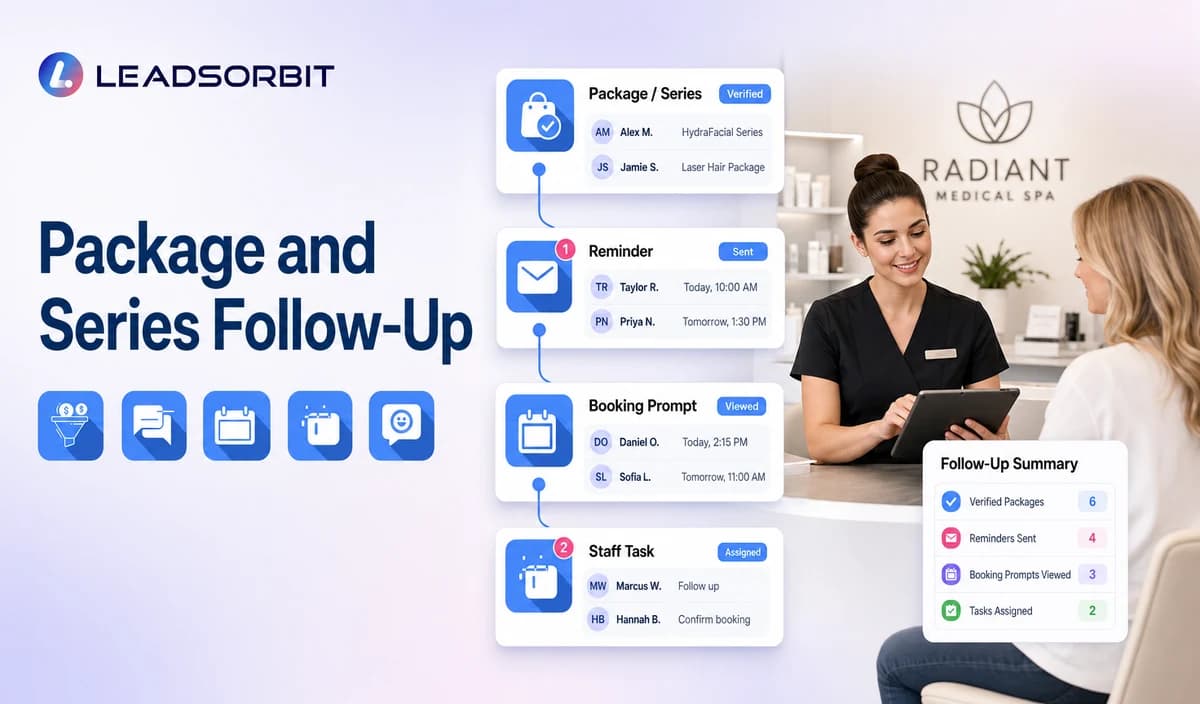

A package or treatment series reminder can become misleading when the practice cannot confirm the remaining sessions, approved timing, expiration, provider, location, or current suitability. Automation should not create those facts from old appointments or treatment names.
Medical spa package follow up automation should begin with a verified administrative status from the practice’s package system, approved integration, export, or staff review. It may offer booking or staff help, but it must not recommend treatment frequency or make medical decisions. The broad retention framework remains with customer retention management.

Who This Guide Is For
- Medical spas with a verified package or series tracking system.
- Practice managers who need clear ownership of remaining session communication.
- Front desk teams routing booking, expiration, payment, or suitability questions.
- Multi location practices managing the correct office and provider path.
- Healthcare organizations reviewing HIPAA enabled package communication.
The Workflow Needs a Verified Status Source
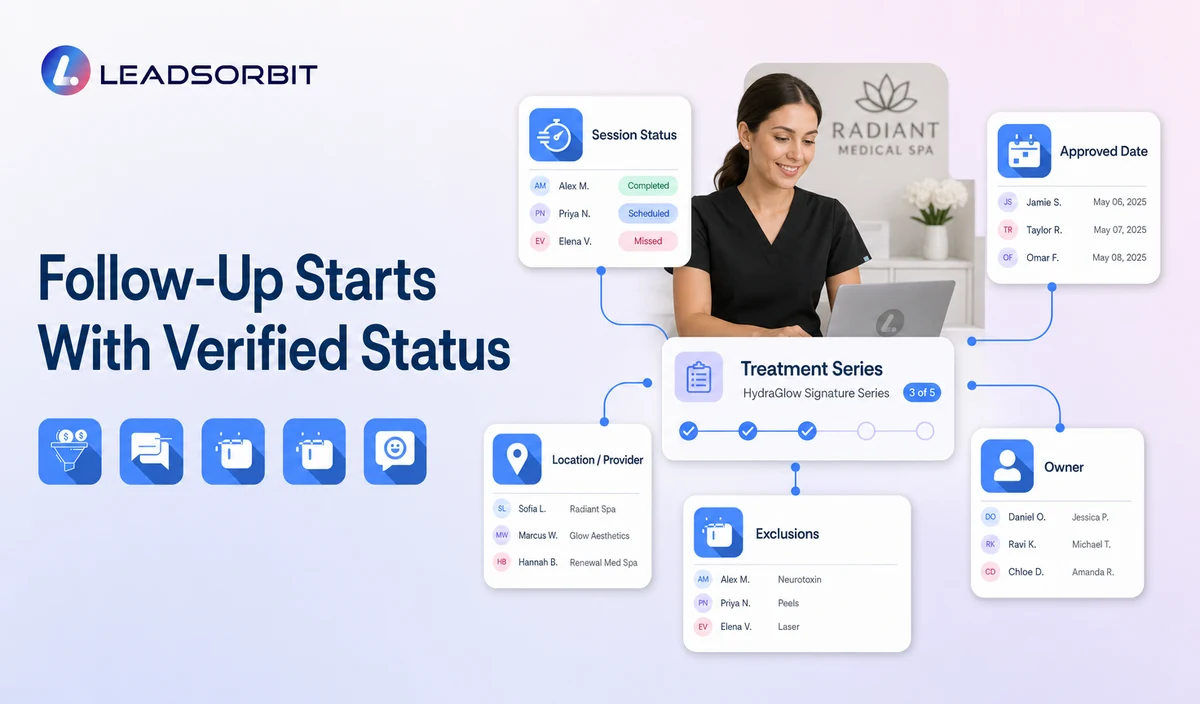
| Data element | Why it matters | Required validation |
|---|---|---|
| Active package or series status | Determines whether the record belongs in the workflow. | Confirm source, sync/export timing, permissions, and corrections. |
| Remaining session or completion status | May control the administrative next step. | Do not state a balance unless the source is verified. |
| Approved booking category | Routes the request to the correct calendar or staff team. | Do not infer the next treatment or interval. |
| Location/provider association | Supports the correct owner and booking path. | Do not promise provider availability. |
| Expiration or review date | May affect message timing when verified. | Do not invent or generalize expiration rules. |
| Payment/refund status | May require staff or external system handoff. | Do not collect or decide payments, credits, or refunds in routine automation. |
| Closed, completed, paused, or declined status | Stops messaging. | Define who can update the status and how it writes back. |
What Automation May and May Not Do
| Administrative workflow may | Automation must not |
|---|---|
| Send a reminder from a verified package or series status. | Recommend how often treatment should occur. |
| Offer an approved booking or callback path. | Assess suitability, contraindications, complications, or treatment results. |
| Create a task for balance, expiration, payment, refund, or treatment questions. | Invent package balances, remaining sessions, or expiration dates. |
| Record booked, completed, later, declined, opt out, or closed. | Change a treatment plan, procedure, provider, or clinical schedule. |
| Stop reminders after a verified outcome. | Pressure the patient to complete a series with fear or outcome claims. |
| Keep minimum administrative context in the CRM. | Copy unnecessary photos, records, consents, or clinical details into messages. |
A Practical Package and Series Follow Up Workflow
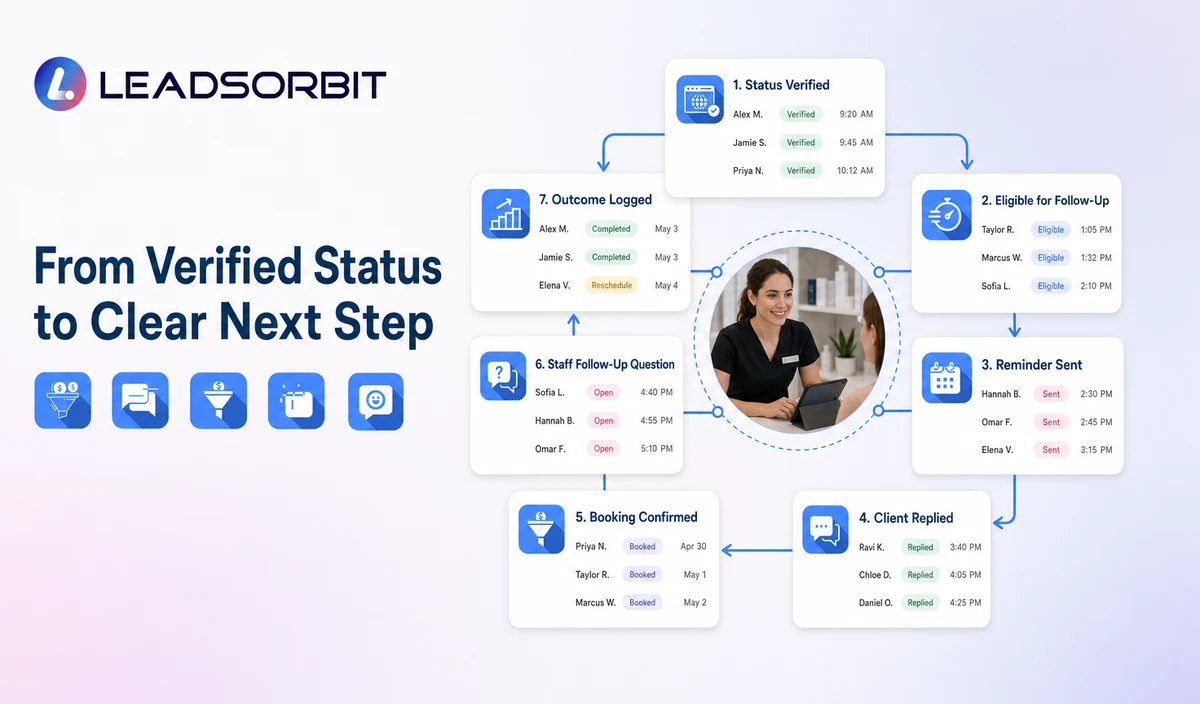
| Stage | Workflow action | Human responsibility | Stop condition |
|---|---|---|---|
| 1. Receive verified status | Import or create the package/series status from the approved source. | Review sync, export, or staff entry quality. | Do not activate uncertain records. |
| 2. Apply eligibility and exclusions | Remove completed, closed, paused, opted out, invalid, duplicate, complaint, and open conversation records. | Review exceptions and medical questions. | Exclude records that should not receive routine reminders. |
| 3. Assign owner and path | Connect the correct office, provider/team, booking category, and staff owner. | Correct location or provider conflicts. | Move uncertain ownership to staff review. |
| 4. Send neutral reminder | Offer booking or a staff callback without clinical claims. | Monitor delivery failures and sensitive replies. | Stop after booking, completion, decline, opt out, complaint, or takeover. |
| 5. Route replies | Handle BOOK, CALLBACK, LATER, QUESTION, DECLINE, or STOP. | Qualified staff owns suitability, treatment, payment, refund, balance, and expiration questions. | Pause after any complex reply. |
| 6. Booking or staff task | Offer the approved booking path or create a named task. | Validate appointment category, provider, location, and time. | Stop after a valid booking or documented resolution. |
| 7. Outcome update | Record booked, completed, later, declined, invalid, opt out, complaint, or closed. | Update the source system where required. | Do not leave completed or closed records active. |
| 8. Audit | Review status accuracy, messages, tasks, errors, and complaints. | Approve changes before the next cycle. | Pause when source, clinical, or privacy risk appears. |
Package and Series Message Templates
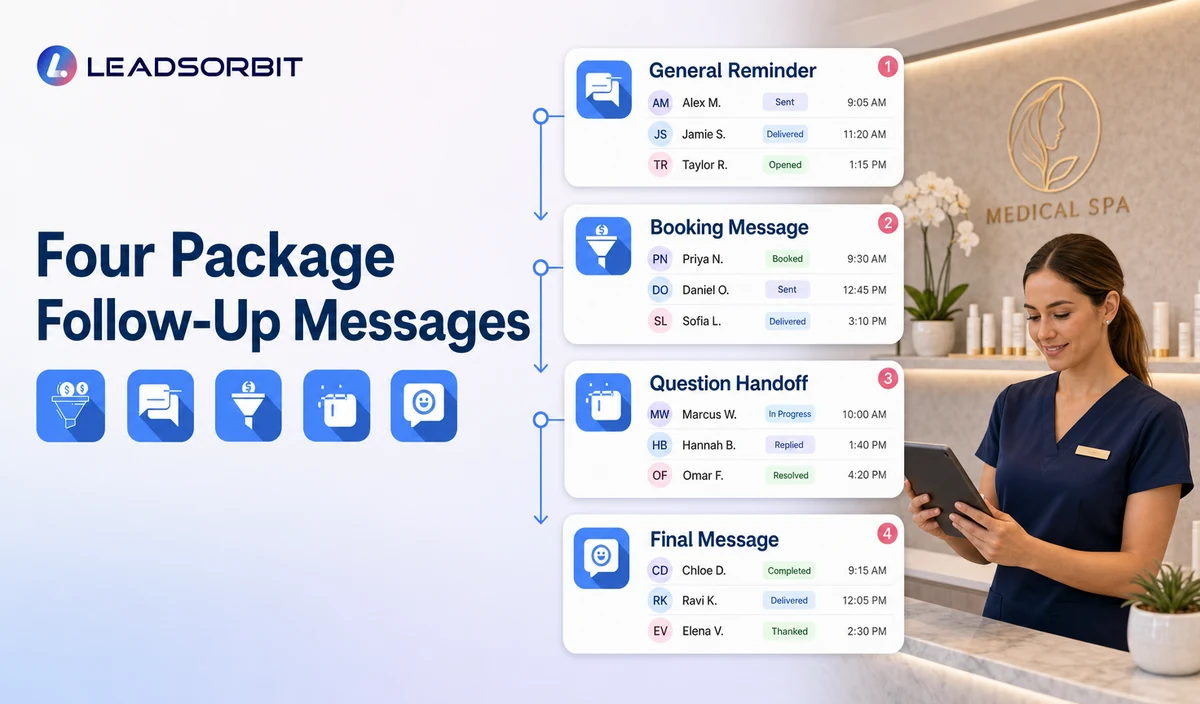
General Reminder
Booking Prompt
Question Handoff
Final Active Message
Reply Handling
| Reply | Workflow action | Staff responsibility |
|---|---|---|
| BOOK | Offer the approved booking path. | Resolve appointment category, provider, location, or calendar exceptions. |
| CALLBACK | Create a named staff task. | Complete or reassign the callback. |
| LATER | Pause active reminders and record the approved future status. | Confirm whether the source system needs an update. |
| QUESTION | Pause routine automation. | Handle balance, expiration, payment, refund, suitability, or treatment questions. |
| DECLINE | Stop the active sequence and record the outcome. | Confirm the approved closure or future contact rule. |
| STOP | Stop applicable automated outreach. | Use another channel only when permitted and necessary. |
Treatment Frequency and Suitability Stay With Qualified Staff
- Do not calculate a treatment interval from the last appointment.
- Do not say the patient is overdue for a procedure or series session.
- Do not assess contraindications, medications, pregnancy, symptoms, complications, or medical history.
- Do not promise that the original treatment remains appropriate.
- Do not interpret photos, records, consent forms, or results.
- Route all treatment, timing, preparation, or safety questions to qualified staff.
Expiration, Balance, Payment, and Refund Claims Need Verification
A message may mention an expiration date, remaining session, credit, payment, or refund only when the exact source, integration, permissions, wording, and practice policy are verified. This guide does not claim native package ledger or financial functionality.
- Confirm the system that owns the package data.
- Do not calculate balances in the CRM from assumptions.
- Do not collect payment card or bank information through routine messages.
- Do not promise refunds, credits, extensions, or transfers.
- Create a named staff task for disputes or exceptions.
- Stop reminders after the verified outcome.
HIPAA and Data Handling
LEADSORBIT supports HIPAA compliant administrative workflows for eligible healthcare organizations through HIPAA enabled HighLevel subaccounts. Compliant use depends on maintaining the active HIPAA package, applicable agreements, approved account configuration, user permissions, integrations, retention settings, and the healthcare organization’s own procedures.
Package or series status, appointment history, remaining session questions, provider/location data, replies, and booking activity may be PHI. Use minimum contact and operational information and review every package system, payment provider, calendar, channel, AI tool, permission, retention rule, and data destination.
Common Package Follow Up Mistakes
- Using an unverified session balance or expiration date.
- Inferring treatment timing from the last appointment.
- Sending reminders to completed, closed, paused, or opted out records.
- Using treatment pressure or outcome based language.
- Collecting medical, photo, payment, or record details in routine messages.
- Leaving questions without a qualified owner.
- Claiming package ledgers, payments, refunds, or automatic series scheduling without verification.
- Failing to update the source system after resolution.
Package Follow Up Setup Checklist
- Name the source system for package or series status.
- Confirm field mapping, sync/export timing, permissions, corrections, and write back.
- Define active, booked, completed, later, declined, paused, invalid, opt out, and closed statuses.
- Approve reminder, booking, question handoff, decline, and final messages.
- Assign primary, qualified, booking, financial, and backup owners.
- Validate any balance, expiration, payment, credit, or refund information before use.
- Keep medical and payment details outside routine channels.
- Confirm HIPAA enabled account status, permissions, retention, and integrations.
- Test incorrect status, duplicates, failed messages, complex questions, and staff takeover.
- Keep the article in review until package and financial capabilities are verified.
See the Workflow With Your Package System
Start 14 Days Free Trial to set up and explore your verified package status, reminders, booking prompts, staff questions, stop rules, and CRM outcomes inside LEADSORBIT.
What to Measure
- Verified records entering the workflow.
- Records excluded because of completed, paused, invalid, duplicate, complaint, or opt out status.
- Messages delivered or failed.
- Replies by booking, callback, later, question, decline, or opt out.
- Valid appointments connected with the workflow.
- Staff tasks created and resolved.
- Source system outcomes updated correctly.
- Complaints, privacy concerns, and status errors.
How LEADSORBIT May Support Package Follow Up
LEADSORBIT’s AI powered CRM can support verified segments, neutral messages, booking paths, tasks, and operational outcomes alongside the appropriate source systems.
- Workflow AI: configurable triggers, messages, conditions, timing, tasks, and stop logic.
- Conversation AI: reply visibility, routing, staff takeover, and CRM synchronization.
- AI Appointment: booking, calendar connections, confirmations, rescheduling, and cancellation.
- CRM fields and tasks: verified status, owner, next action, and outcome visibility.
Package ledgers, remaining session balances, expiration tracking, payment/refund processing, and treatment series scheduling are not verified as native LEADSORBIT capabilities in this article.
Try LEADSORBIT free for 14 days
FAQs
It is an administrative workflow that uses a verified package or series status to send reminders, offer booking or staff help, and record a clear outcome.
Final Thoughts
Medical spa package follow up automation should organize verified administrative status and staff ownership. It must not invent balances, prescribe treatment timing, or replace qualified medical and financial conversations.
Start 14 Days Free Trial to review how LEADSORBIT can support package communication, booking, staff tasks, and CRM visibility alongside your verified systems.

Start Your Free 14 Day Trial
Try LEADSORBIT and see how it captures missed calls, follows up instantly, and turns leads into booked appointments for your business.