
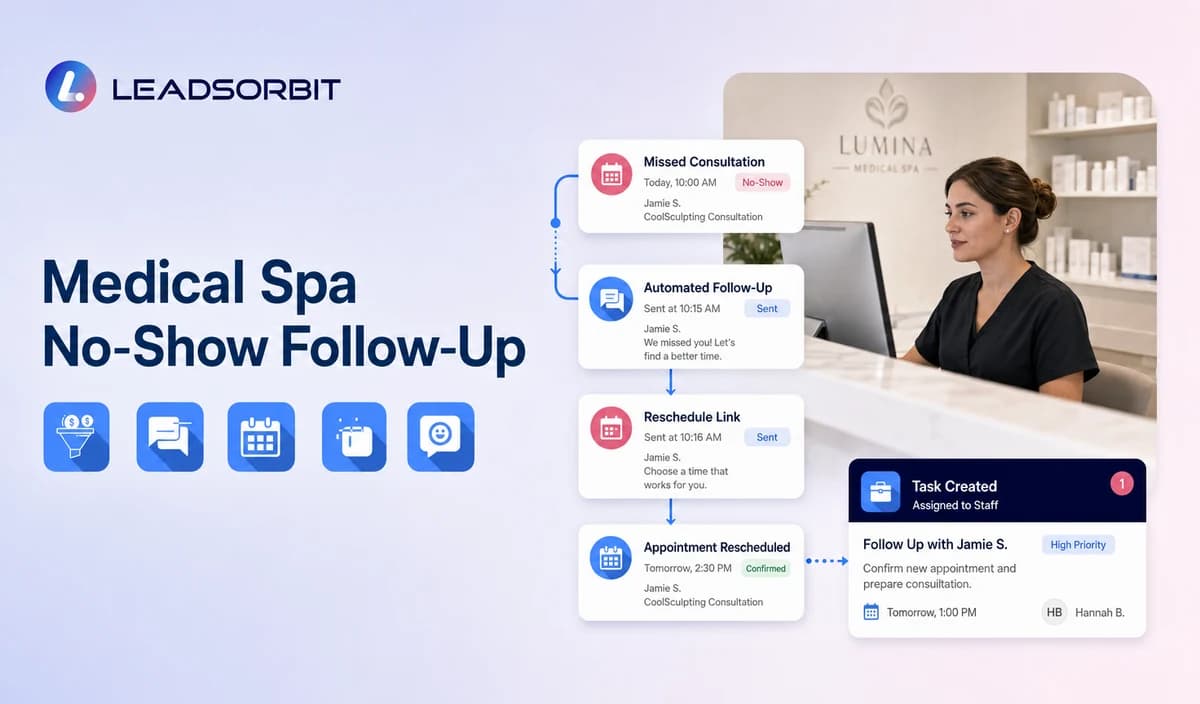

A missed medical spa consultation or appointment creates several administrative risks at once. The old reminder sequence may still be active, the patient may want a new time, the front desk may need context, and nobody may own the next step.
A useful medical spa no show follow up process starts only after the missed status is verified. It should stop obsolete reminders, use respectful language, offer rescheduling or staff help, and record the outcome. The broad scheduling owner remains appointment booking CRM.

Who This Guide Is For
- Medical spas that want a consistent process after missed consultations or appointments.
- Front desk teams currently working from voicemail or memory.
- Consultation coordinators who need replies, rescheduling, and tasks visible in the CRM.
- Multi location practices routing patients back to the correct office and provider.
- Healthcare organizations configuring HIPAA enabled appointment recovery.
Recovery Starts After the Status Is Verified
A late check in, reschedule, cancellation, or staff error should not trigger a no show message. The practice needs a reliable appointment status before automation begins.
| Status | Correct action | Avoid |
|---|---|---|
| Completed | Stop reminders and use only the approved post visit process. | Sending a missed appointment message. |
| Rescheduled | Confirm the new valid time and suppress old messages. | Continuing reminders for the original time. |
| Cancelled | Record the cancellation and offer the approved future path. | Calling it a no show. |
| No Show / Did Not Attend | Start the approved recovery workflow. | Using blame or clinical pressure. |
| Uncertain / Needs Review | Create a staff task. | Allowing automation to guess the outcome. |
A Practical Medical Spa No Show Workflow
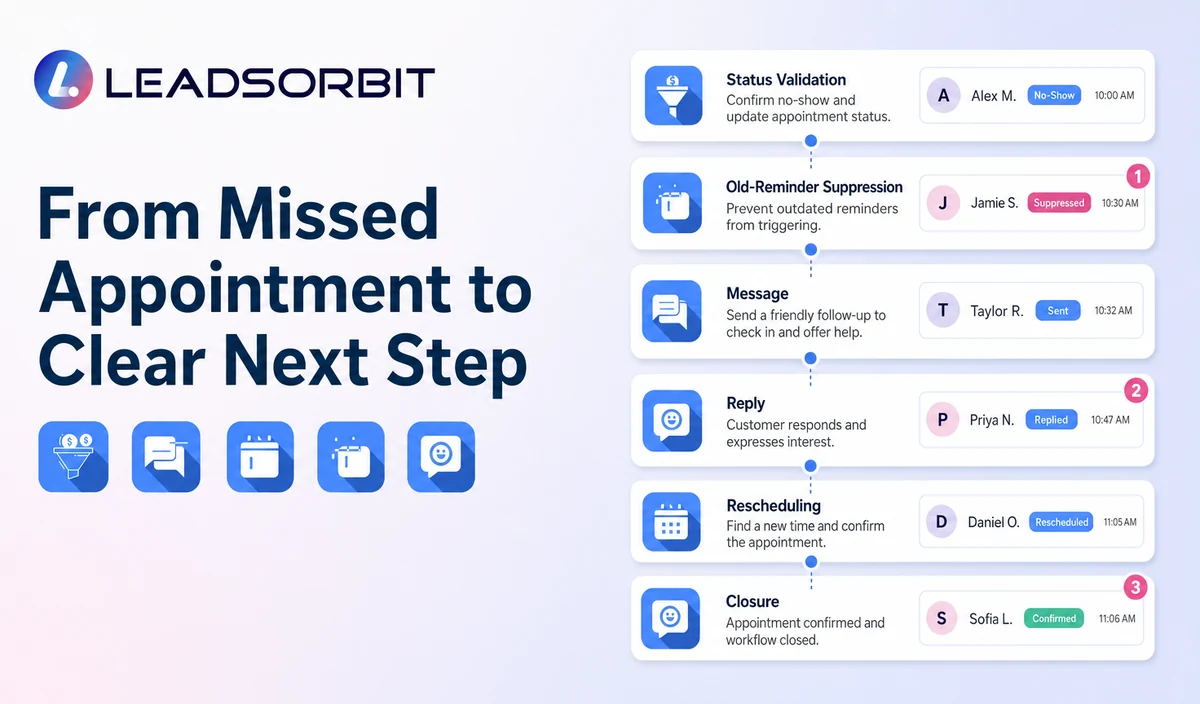
| Stage | Workflow action | Staff responsibility | Stop condition |
|---|---|---|---|
| 1. Validate status | Confirm the appointment was missed rather than completed, moved, cancelled, or marked incorrectly. | Correct calendar and CRM errors first. | Do not send recovery from an uncertain status. |
| 2. Stop old messages | Suppress confirmations, reminders, and arrival links tied to the old appointment. | Review duplicate workflows and integrations. | Stop obsolete sequences immediately. |
| 3. First recovery message | Send a neutral message with rescheduling or callback options. | Review delivery failures and sensitive replies. | Stop after booking, opt out, complaint, or staff takeover. |
| 4. Route replies | Handle supported actions such as BOOK, CALLBACK, LATER, HELP, or STOP. | Own unclear, clinical, membership, package, payment, or complaint replies. | Move non routine replies to staff. |
| 5. Reschedule or task | Offer the approved booking path or create a scheduling task. | Resolve location, provider, category, and calendar exceptions. | Stop after a valid appointment or documented resolution. |
| 6. Repeat no show review | Flag repeated missed visits for the practice’s human process. | Review relationship, policy, accessibility, and communication issues. | Do not increase message pressure automatically. |
| 7. Limited follow up | Send one approved reminder when appropriate. | Decide whether the record moves to later, nurture, or closure. | Stop at the attempt limit. |
| 8. Outcome | Record rebooked, later, declined, no response, invalid, complaint, opt out, or staff review status. | Audit unowned and incorrect records. | Close only with a clear reason. |
Consultation and Treatment Appointment Recovery Paths
| Appointment type | Recovery emphasis | Likely next step | Avoid |
|---|---|---|---|
| New consultation | Reopen the scheduling conversation. | Consultation booking or callback. | Treatment qualification or promises. |
| Existing patient consultation | Route to the approved coordinator or provider team. | Staff reviewed scheduling. | Discussing medical history or treatment advice in routine SMS. |
| Confirmed treatment appointment | Offer rescheduling or staff contact. | Scheduling task or approved booking path. | Preparation instructions, clinical urgency, or suitability claims. |
| Repeated missed visits | Move to the practice’s human process. | Staff conversation, later status, or closure. | Escalating message frequency automatically. |
| Sensitive reply | Stop routine recovery. | Qualified staff handoff. | Analyzing symptoms, complications, records, or payments. |
Respectful No Show Text Templates
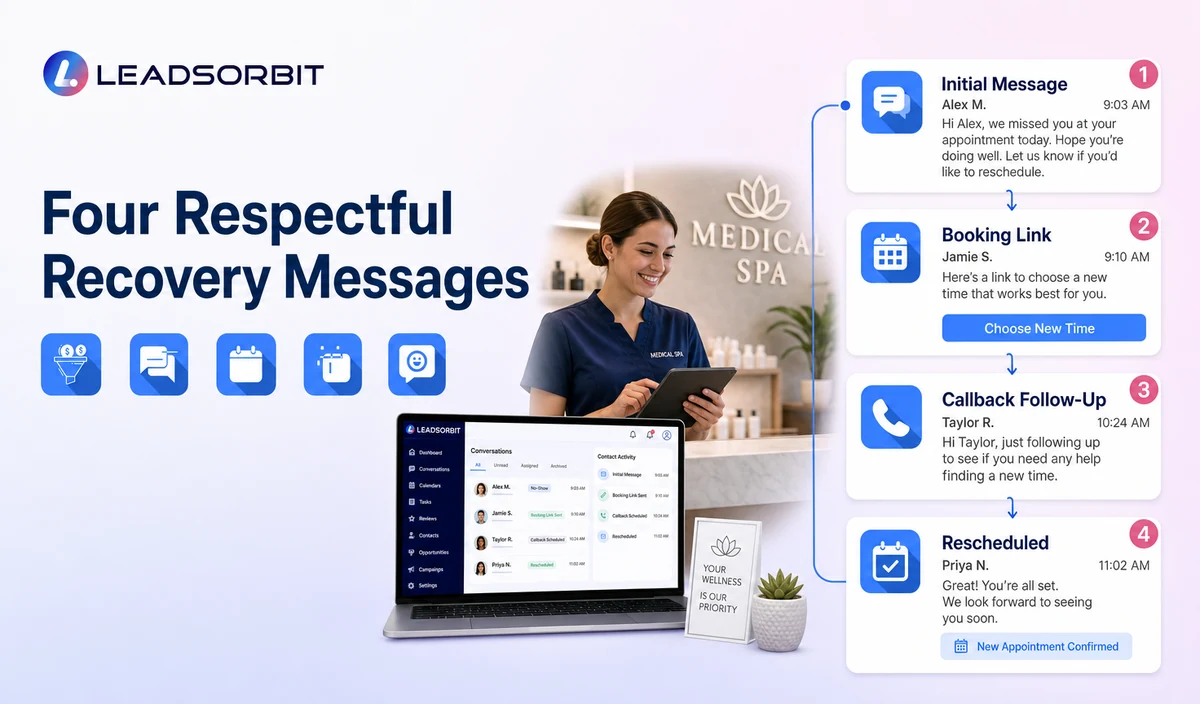
Initial Missed Appointment Message
Booking Link Message
Staff Callback Message
Final Active Message
Repeat No Shows Need Human Review
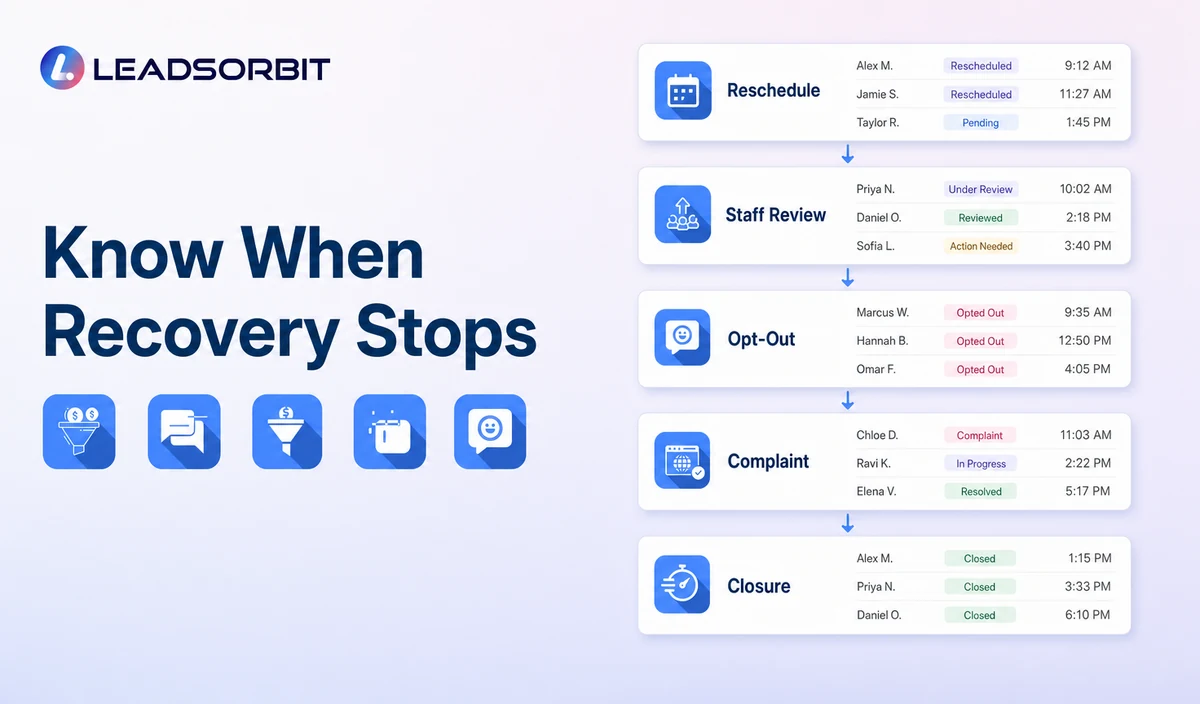
- Confirm the appointment record and communication history.
- Check whether the patient has requested another channel, language, accessibility, or timing accommodation.
- Review whether the booking and reminder information was correct.
- Do not make the AI decide whether the practice should refuse future appointments.
- Do not apply deposits, fees, forfeiture, or refund rules unless the exact policy and product workflow are verified.
- Record the approved human decision and stop generic automation.
Consent, Opt Outs, and PHI
The FCC’s TCPA guidance discusses consent and reasonable revocation methods for certain automated communications. The practice should review its exact message type, consent source, technology, and jurisdiction.
LEADSORBIT supports HIPAA compliant administrative workflows for eligible healthcare organizations through HIPAA enabled HighLevel subaccounts. Compliant use depends on maintaining the active HIPAA package, applicable agreements, approved account configuration, user permissions, integrations, retention settings, and the healthcare organization’s own procedures.
Names, appointment dates, missed status, replies, rebooking activity, and staff notes may be PHI depending on context. Use minimum contact and operational information and review every calendar, messaging provider, AI tool, permission, retention rule, and data destination.
Common Recovery Mistakes
- Starting recovery before the missed status is verified.
- Continuing reminders for the old appointment.
- Using blame based or guilt based wording.
- Sending unlimited messages without a stop condition.
- Treating every missed appointment as a sales opportunity.
- Leaving HELP, CALLBACK, complaint, or sensitive replies unassigned.
- Claiming deposits, fees, forfeiture, refunds, or payment recovery without verification.
- Promising a numeric reduction in no shows.
Setup Checklist
- Define missed, cancelled, completed, rescheduled, and needs review statuses.
- Stop every message tied to the old appointment.
- Approve the first recovery message and one limited follow up.
- Define BOOK, CALLBACK, LATER, HELP, complaint, and STOP paths.
- Assign primary and backup owners.
- Confirm booking links, calendars, categories, and location rules.
- Create a human process for repeated no shows.
- Confirm consent, permissions, retention, HIPAA enabled account status, and integrations.
- Validate any deposit, fee, payment, or refund workflow before mentioning it.
See the Recovery Workflow With Your Practice’s Rules
Book a Demo to map your no show trigger, recovery messages, rescheduling, staff owners, repeat case review, stop rules, and CRM statuses inside LEADSORBIT.
What to Measure
- Verified no shows entering the workflow.
- Incorrect statuses corrected before outreach.
- Messages delivered or failed.
- Replies by booking, callback, later, help, complaint, or opt out.
- Valid rebookings.
- Unresolved staff tasks.
- Old reminders suppressed after changes.
- Repeated no shows moved to human review.
How LEADSORBIT Supports Medical Spa No Show Recovery
LEADSORBIT’s AI powered CRM can connect appointment status, recovery messages, replies, booking, tasks, and conversation history.
- AI Appointment: booking, calendar connections, confirmations, reminders, rescheduling, and cancellation.
- Workflow AI: status based actions, messages, timing, tasks, and stop logic.
- Conversation AI: reply visibility, routing, staff takeover, and CRM synchronization.
- CRM records and tasks: missed status, owner, next action, and outcome.
Exact no show triggers, calendar statuses, channels, timing, deposit/payment rules, permissions, retention, and integrations must be confirmed.
Try LEADSORBIT free for 14 days
FAQs
It is the administrative recovery process used after a verified missed consultation or appointment to offer rescheduling, route replies, create ownership, and update the outcome.
Final Thoughts
A useful medical spa no show workflow verifies the status, stops obsolete reminders, offers one clear next step, and gives staff ownership of anything automation cannot resolve.
Book a Demo to map your no show trigger, recovery messages, rescheduling, staff owners, repeat case review, stop rules, and CRM statuses inside LEADSORBIT.

Start Your Free 14 Day Trial
Try LEADSORBIT and see how it captures missed calls, follows up instantly, and turns leads into booked appointments for your business.