
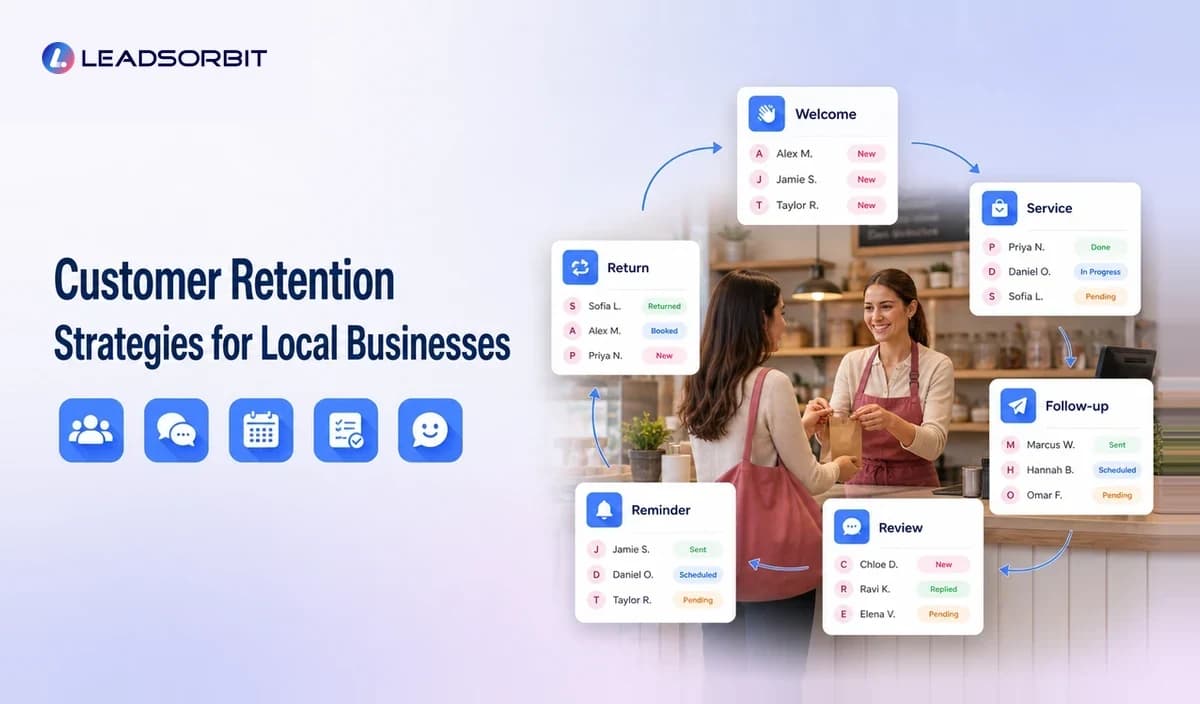

Local businesses compete on more than price. Customers remember whether the team responded, kept appointments organized, resolved problems, recognized prior visits, and made the next step easy.
Retention is therefore not one campaign. It is a collection of operational habits that help suitable customers continue the relationship. A customer retention management software platform can support those habits, but the strategy should be built around the realities of a local service business.
What Customer Retention Means for a Local Business
Customer retention means keeping appropriate customers engaged over time through reliable service, relevant communication, easy next steps, and organized follow up.
For a local business, retention may show up as:
- A patient returning for the next recommended appointment
- A pet owner rebooking grooming
- A homeowner scheduling seasonal maintenance
- A med spa client continuing an appropriate service plan
- An auto detailing customer booking again
- A satisfied customer referring a neighbor
- An inactive customer responding to a useful reminder
The business should not assume every customer will or should return. The goal is to reduce avoidable loss caused by poor communication, missed follow up, difficult booking, or unresolved concerns.
Strategy 1: Make the First Experience Easy
The retention process begins with the first inquiry and first appointment.
Customers should know what to expect, how to prepare, where to go, how to contact the team, and what happens after the service. Confusion at the beginning makes future trust harder to build.
Review the first customer journey for:
- Response time
- Appointment instructions
- Confirmation and reminder messages
- Directions or access information
- Staff handoff
- Payment expectations
- Service summary
- Next step explanation
A connected AI powered CRM can help organize these touchpoints, but the content and service standards still need to be defined by the business.
Strategy 2: Record Useful Customer Context
Local businesses often build strong personal relationships, but customer knowledge may remain with one employee.
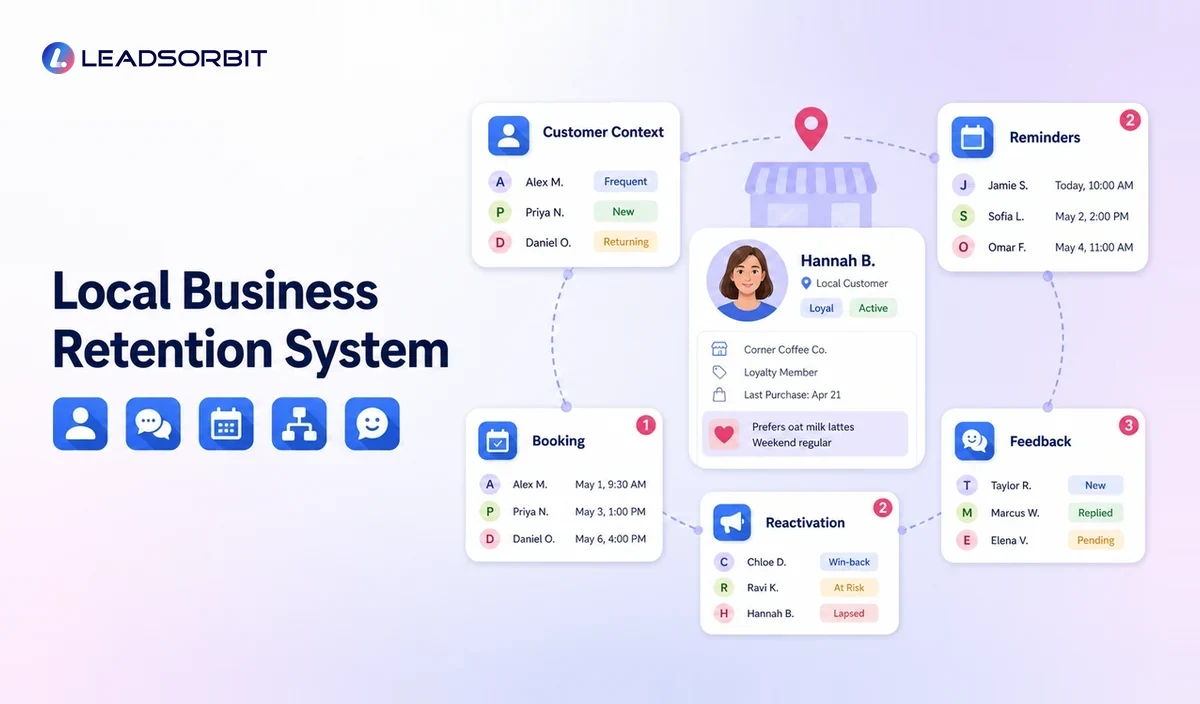
Record the details the team genuinely needs, such as service history, appointment status, relevant preferences, communication history, open issues, and future timing.
The purpose is continuity. When another employee helps the customer, the relationship should not restart from zero.
Avoid collecting unnecessary or sensitive information. Use appropriate access controls and follow the requirements that apply to your industry and location.
Strategy 3: Create a Clear Next Step
Many customers do not return because no next step was established.
At the end of a service, explain whether another appointment, maintenance task, check in, or follow up may be needed. Where appropriate, offer to schedule the next appointment before the customer leaves.
For customers who are not ready to book, record a reasonable reminder date. Connected appointment booking workflows can support reminders, confirmations, and rescheduling.
Strategy 4: Follow Up After Important Moments
Post service follow up should help the customer, not immediately push another sale.
A local business can use customer follow up automation for predictable actions such as:
- Thank you messages
- Care or maintenance instructions
- Check ins
- Internal call tasks
- Feedback requests
- Review requests
- Future service reminders
- Cancelled appointment recovery
Automation should stop when the customer replies, books, opts out, or raises a concern.
Strategy 5: Use Feedback for Service Recovery
A customer concern is a retention moment.
The business should provide a simple way to share feedback and make sure negative or uncertain responses reach a person. Staff need authority and a process for investigating the issue, responding, and documenting the outcome.
Once the issue is resolved, the customer record should reflect what happened so the next interaction has context.
Do not send a standard review request while a concern remains open.
Strategy 6: Build an Honest Review Process
Reviews influence local trust, but review requests should be part of a real customer experience.
Google's official Business Profile review guidance explains that verified businesses can read, reply to, and request reviews. The FTC's consumer reviews and testimonials guidance addresses deceptive practices involving reviews and testimonials.
A practical review workflow should:
- Ask customers for an honest review
- Avoid requiring positive sentiment
- Avoid misleading incentives
- Make the review link easy to access
- Monitor responses
- Reply professionally where appropriate
- Route service concerns to the team
Reviews AI can help organize requests and response workflows, while the business remains responsible for honest practices and platform compliance.
Strategy 7: Use Service Timing Reminders
Local service businesses often have natural repeat cycles.
Examples include:
- Dental recall visits
- Chiropractic care plans
- Pet grooming intervals
- Seasonal HVAC or home maintenance
- Auto detailing schedules
- Med spa treatment plans
- Subscription or membership renewals
- Annual inspections or recurring services
The reminder should be based on the actual service and customer relationship. Arbitrary monthly campaigns can feel irrelevant.
Strategy 8: Make Rebooking and Rescheduling Simple
Retention falls when customers must work too hard to book again.
Offer a clear path through a booking link, reply option, or front desk process. When a customer cancels, provide a respectful rescheduling option and follow up only when appropriate.
Check whether customers encounter:
- Limited booking visibility
- Slow callbacks
- Long forms
- Repeated questions
- Confusing appointment types
- No confirmation
- No easy rescheduling option
Fixing these operational issues can improve the experience without adding more marketing.
Strategy 9: Segment Customers by Need
Not every customer should receive the same message.
Useful local business segments may include:
- New customers
- Active repeat customers
- Customers due for another service
- Customers without a future booking
- Cancelled appointments
- Inactive customers
- Customers with an open concern
- Customers who completed a specific service
- Customers who opted out
Segmentation should remain simple enough for the team to maintain. A few accurate groups are better than many outdated ones.
Strategy 10: Reactivate Customers With a Real Reason
Inactive customers may still be appropriate to contact when the business has a useful reason.
A customer reactivation campaign may reference a recurring service, seasonal need, unfinished estimate, cancelled appointment, or relevant update.
Clean the segment first. Exclude opt outs, invalid records, active complaints, and customers who have already booked.
Strategy 11: Train the Team on Ownership
Software cannot fix unclear responsibility.
Employees should know:
- Who monitors replies
- Who handles cancellations
- Who follows up on feedback
- Who resolves complaints
- Who reviews inactive customer lists
- Who updates customer stages
- Who checks workflow errors
Retention improves when tasks have owners and deadlines.
Strategy 12: Review the Customer Journey Regularly
Customer behavior, services, staff responsibilities, and communication rules change. Retention workflows should change with them.
A monthly or quarterly review may examine:
- Customers due for follow up
- Customers without future bookings
- Open concerns
- Unanswered conversations
- Workflow completion
- Review request status
- Reactivation activity
- Duplicate or outdated records
- Opt out handling
- Booking friction
The review should lead to action, not only reporting.
Local Business Retention Strategy by Industry
| Industry | Important Retention Moments |
|---|---|
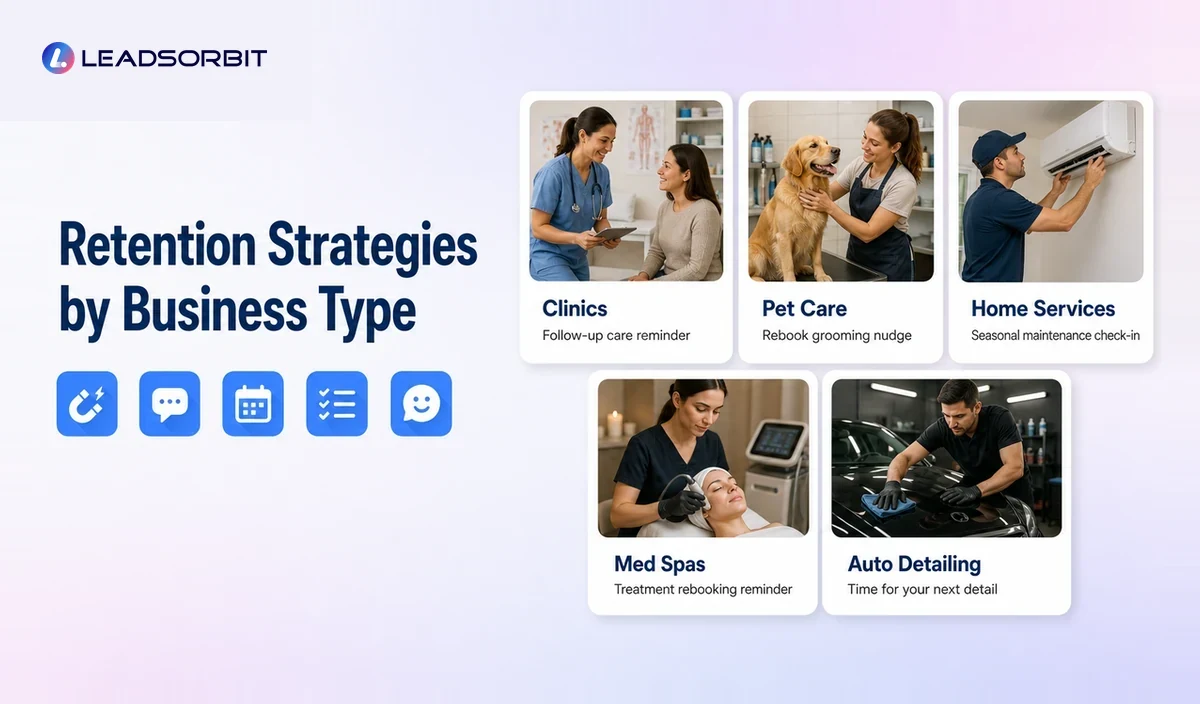
| Dental and chiropractic | Recall timing, care instructions, appointment reminders, unresolved concerns |
| Med spa and wellness | Consultation follow up, aftercare, next service timing, rebooking |
| Pet care and grooming | Pet service history, preferred interval, reminders, easy booking |
| Home services | Project follow up, seasonal maintenance, warranty or service reminders |
| Auto detailing | Seasonal timing, repeat service reminders, memberships, reviews |
| Professional services | Deliverable follow up, renewal dates, relationship check ins, referrals |
These examples should be adapted to each business's actual service cycle and compliance requirements.
How to Measure Retention Without Inventing a Perfect Metric
A local business does not need a complicated analytics program to start.
Useful operational measures may include:
- Customers with a next appointment
- Customers due for follow up
- Repeat bookings
- Cancelled appointments that were rescheduled
- Inactive customers contacted
- Reactivation replies
- Open service concerns
- Review requests completed
- Unanswered customer conversations
- Staff tasks completed
The business should define how it identifies an active, inactive, repeat, or reactivated customer. Consistent definitions make reporting more useful.
Common Local Retention Mistakes
Focusing Only on New Leads
New customer acquisition is important, but existing customer relationships also need a clear operating process.
Sending Generic Promotions
A message tied to service history or timing is usually more useful than a broad promotion.
Ignoring Operational Friction
Poor booking, slow replies, and unresolved issues cannot be fixed by another campaign.
Depending on One Employee
Customer information and follow up ownership should be visible to the team.
Asking for Reviews Without Listening
Feedback and service recovery should be part of the same customer care system.
Automating Without Stopping Rules
Messages should stop when the customer books, responds, opts out, or needs human support.
How LEADSORBIT Supports Local Customer Retention
LEADSORBIT helps local businesses connect customer records, conversations, appointments, workflows, reviews, and tasks in one CRM platform.
Teams can manage reminders, follow up, booking, feedback, review requests, and reactivation while keeping customer replies visible to staff.
The platform provides structure. The business still creates retention through good service, relevant communication, and consistent follow through.
Try LEADSORBIT free for 14 days
Frequently Asked Questions
Begin with reliable service, a clear next step, organized customer information, relevant follow up, easy rebooking, and fast resolution of concerns.
Final Thoughts
Customer retention strategies work when they connect service quality, customer context, easy booking, useful follow up, feedback, reviews, and reactivation.

Start Your Free 14 Day Trial
Try LEADSORBIT and see how it captures missed calls, follows up instantly, and turns leads into booked appointments for your business.