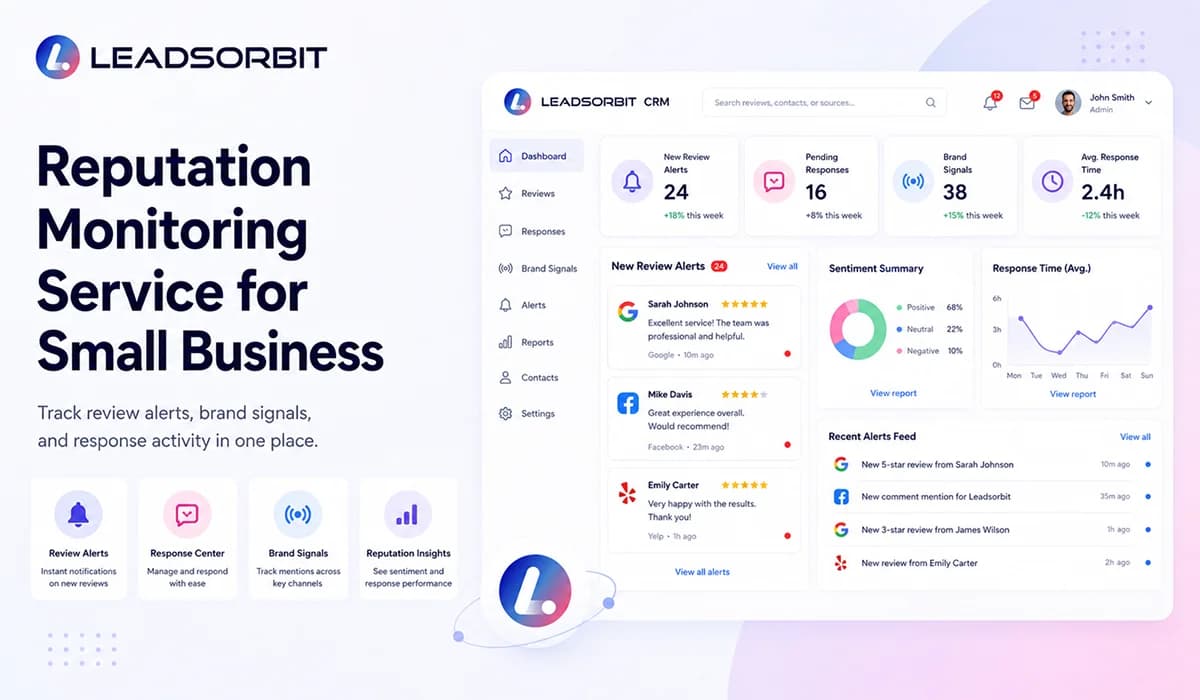

A reputation monitoring service helps a small business track new reviews, rating changes, customer complaints, brand mentions, and response activity before those signals turn into bigger trust problems. For local businesses, this matters because many customers check reviews before they call, book, or visit.
The problem is that most small businesses do not lose reputation control in one big moment. It usually happens quietly. A new review appears. A complaint sits unanswered. A team member forgets to reply. A rating drops. A business owner only notices the issue after a customer, prospect, or manager points it out.
This guide explains what a reputation monitoring service should do, what small businesses should monitor, why fast response protects trust, and how LEADSORBIT Reviews AI can help reputation signals stay visible inside the CRM. For the broader strategy, read Online Reputation Management for Small Business.
What Is a Reputation Monitoring Service?
A reputation monitoring service is a system or process that helps a business watch the public signals that shape customer trust. These signals may include Google reviews, Facebook reviews, Yelp feedback, rating changes, comments, complaints, and other mentions that can influence how people see the business.
For a small business, reputation monitoring should not feel like another complicated dashboard. It should make the important signals easier to see, easier to assign, and easier to respond to. The goal is not only to know that a review exists. The goal is to know what should happen next.
A practical reputation monitoring setup should help the business notice new feedback quickly, understand whether it needs a response, assign ownership to the right person, and keep the status visible until the issue is handled.
- Track new reviews from important review platforms.
- Watch rating changes and customer sentiment trends.
- Identify reviews or mentions that need a response.
- Notify the right team member when action is needed.
- Keep response status visible inside the CRM.
When reputation monitoring is connected to your review management process, it becomes part of daily operations instead of a task someone remembers only when there is a problem.
Why Reputation Monitoring Matters for Small Businesses
Small businesses rely heavily on trust. A new customer may not know your team yet, but they can see your reviews, rating, response style, and recent customer feedback. If those signals look strong, the business feels safer to contact. If they look ignored or inconsistent, the customer may hesitate.
This is especially important for appointment based businesses like clinics, dental practices, wellness centers, pet care businesses, and local service providers. A customer may be deciding between multiple businesses. If one business responds to reviews professionally and another leaves concerns unanswered, the difference can influence the call or booking decision.
Reputation monitoring matters because it helps owners and managers act earlier. Instead of finding out about a negative review days later, the team can be alerted while the situation is still fresh.
- A fast reply can show that the business is listening.
- A missed complaint can make the business look careless.
- A pattern of similar feedback can reveal a service issue.
- A steady stream of positive reviews can support local trust.
- A visible response process can make the business feel more professional.
The purpose is not to panic over every review. The purpose is to stay aware, respond with care, and use reputation signals to improve the customer experience.
What Should Be Monitored?
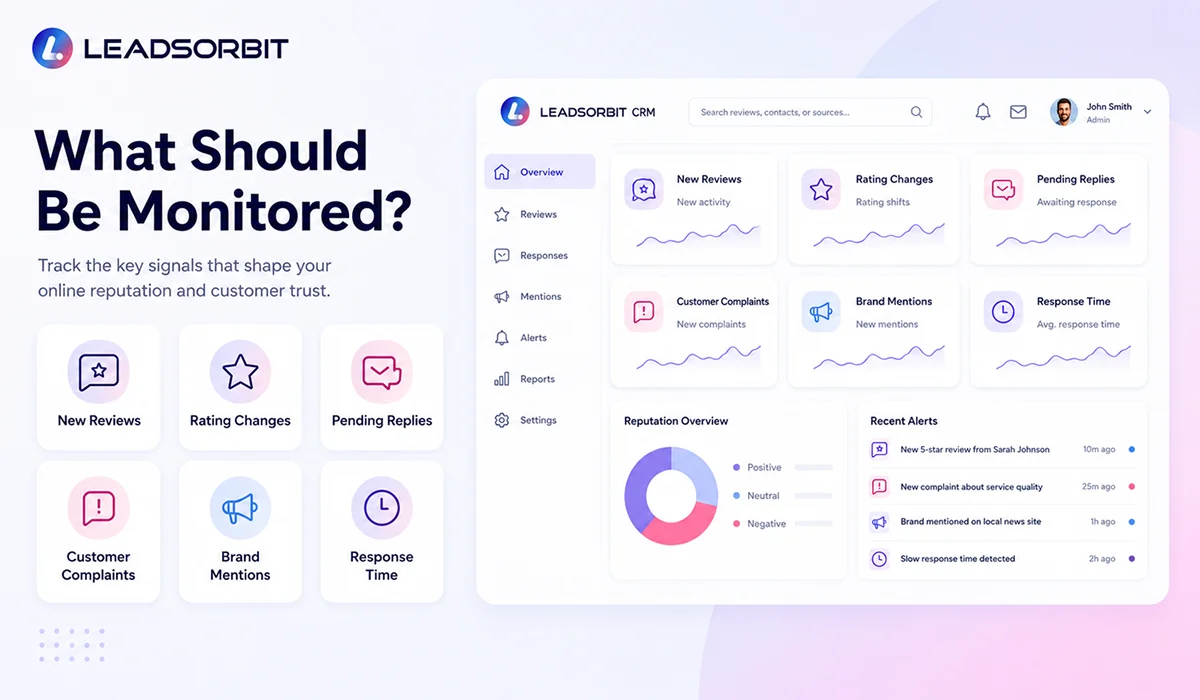
A good reputation monitoring service should not only track star ratings. Star ratings matter, but they are only one part of the reputation picture. A small business also needs to understand what customers are saying, where feedback is coming from, what needs a response, and whether the same issues keep appearing.
The most useful monitoring setup should focus on signals that create action. If a signal does not help the team make a decision, it may not need to be on the main dashboard.
| Signal to Monitor | Why It Matters |
|---|---|
| New reviews | Helps the team respond while the customer experience is still fresh. |
| Rating changes | Shows whether reputation is improving, staying flat, or declining. |
| Negative feedback | Helps the team address concerns before they damage trust further. |
| Pending replies | Shows which reviews still need attention. |
| Brand mentions | Helps the business understand where people are talking about it. |
| Response time | Shows whether the team is replying quickly enough. |
For most small businesses, the best reputation monitoring system is not the one with the most charts. It is the one that shows the owner what changed, what needs attention, and who should handle it.
How Fast Response Protects Your Brand
Fast response does not mean replying emotionally or rushing a public answer. It means the business sees the signal quickly, understands the situation, and takes the right next step before the issue sits unattended.
Google's review guidance encourages businesses to reply to reviews and says that replies are public and can help build relationships with customers. Google also recommends being professional, short, relevant, and timely when replying, especially when feedback is negative.
You can review Google’s guidance on asking for and replying to reviews here: Google Business Profile review tips.
A fast response protects your brand because it shows customers and future customers that the business is active, listening, and willing to handle concerns. Even when the issue cannot be fixed publicly, the response can show professionalism.
- Acknowledge the review or concern quickly.
- Avoid arguing or exposing private customer details.
- Move complex issues into a private conversation when needed.
- Update the CRM so the team knows the issue is being handled.
- Track whether the situation was resolved or still needs follow up.
This is where a monitoring service becomes valuable. It helps the team move from "we saw it too late" to "we saw it, assigned it, and handled it."
Reputation Monitoring Service vs Manual Checking
Manual checking can work when the business is very small and has only a few reviews. But as the business gets more leads, appointments, customers, and review sources, manual checking becomes inconsistent. Someone may remember to check Google but forget Facebook. Someone may read a review but forget to reply. A manager may not know which review is still pending.
A reputation monitoring service creates a more repeatable process. Instead of depending only on memory, the system can surface new activity, organize response status, and make ownership clear.
| Area | Manual Checking | Reputation Monitoring Service |
|---|---|---|
| Review discovery | Team manually checks platforms | New reviews and alerts are surfaced in one place |
| Response tracking | Easy to forget what was handled | Status shows pending, replied, or follow up needed |
| Team ownership | Usually informal | Reviews can be assigned or routed to the right person |
| Visibility | Owner may not see issues in time | Managers can see reputation activity and trends |
| Consistency | Depends on habits | Process becomes repeatable and easier to manage |
The biggest difference is not only speed. It is control. A service based business needs a reputation process that does not disappear when the team is busy.
How Reviews AI Helps Track Reputation Signals
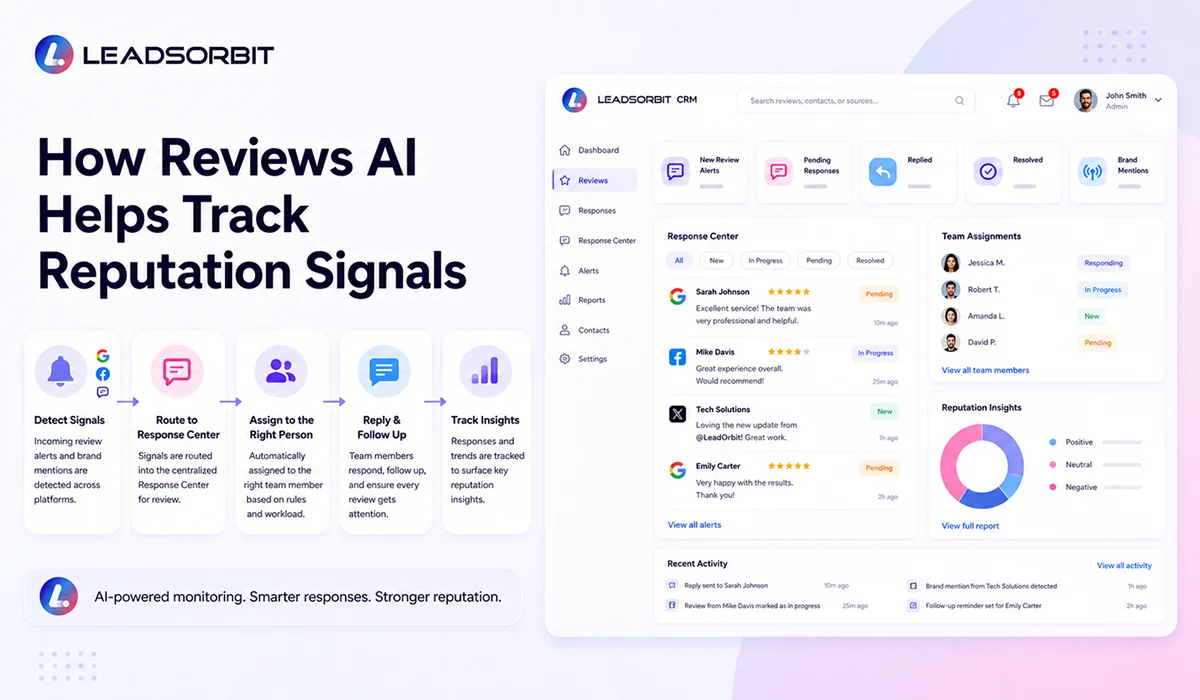
LEADSORBIT Reviews AI is designed to help small businesses make reputation signals easier to see and easier to act on. Instead of treating review activity as a separate task, Reviews AI can support the review and reputation workflow inside the broader CRM journey.
For example, when a new review or reputation signal needs attention, the system should help the team know what happened, where it happened, whether a response is needed, and who should handle the next step. This helps the business avoid missed reviews, delayed replies, and scattered follow up.
Reviews AI should connect naturally with Workflow AI and Conversation AI because review activity often leads to a workflow or a conversation. A happy customer may receive a review request. A negative review may need a response task. A customer complaint may need private follow up.
- Track new review activity and reputation signals.
- Create visibility for pending responses and follow up needs.
- Support team notifications when a review needs attention.
- Connect review activity with customer records where appropriate.
- Help managers see trends, response activity, and reputation performance.
The goal is not to replace human judgment. The goal is to make sure important reputation signals do not get missed and that the team can respond with more confidence.
Compliance and Trust Considerations
A reputation monitoring service should help a business build trust, not manipulate trust. That means the system should support honest review practices, professional responses, and clear team accountability.
The FTC provides business guidance around soliciting and paying for online reviews. Your team should avoid fake reviews, misleading incentives, or review practices that make feedback look more balanced or genuine than it really is. You can review the FTC guidance here: Soliciting and Paying for Online Reviews: A Guide for Marketers.
For LEADSORBIT content and implementation, the safest positioning is simple: ask real customers for honest feedback, respond professionally, avoid private information in public replies, and make reputation activity easier for the team to manage.
When a Small Business Should Use Reputation Monitoring
A business should consider reputation monitoring when reviews are becoming important to customer decisions, when feedback is coming from multiple platforms, or when the owner cannot personally check every review source every day.
This is common for businesses that depend on appointments, local searches, referrals, or repeat visits. If reviews influence whether someone calls, books, or trusts the business, reputation monitoring should be part of the operating system.
- The business receives reviews from more than one platform.
- The team is slow to notice or reply to new reviews.
- The owner wants better visibility into customer feedback.
- Negative reviews are being handled inconsistently.
- The business wants to connect review activity with CRM follow up.
Reputation monitoring does not need to be complicated. It needs to make the right signals visible at the right time.
Try LEADSORBIT free for 14 days
FAQs About Reputation Monitoring Service
A reputation monitoring service helps a business track new reviews, rating changes, brand mentions, customer complaints, response status, and other public feedback signals that can affect customer trust.
Final Thoughts
A reputation monitoring service helps small businesses stay aware of the signals that shape trust. It gives owners and teams a cleaner way to track reviews, rating changes, pending replies, customer complaints, and response activity before those items become bigger problems.
The real value is not only seeing reviews. The value is creating a process where the team knows what changed, what needs a response, who owns the next step, and how the business reputation is trending over time.
For small businesses that depend on calls, bookings, referrals, and local trust, reputation monitoring should not be treated as a side task. It should be part of the customer journey and connected to the CRM.

Start Your Free 14 Day Trial
Try LEADSORBIT and see how it captures missed calls, follows up instantly, and turns leads into booked appointments for your business.
Personal Message From Faisal Zulfiqar
Reputation is not only about how many reviews a business has. It is also about how quickly the business notices feedback, how professionally it responds, and how seriously the team treats customer experience.
My recommendation is to not wait until reviews become a problem. Build a simple monitoring system early. Track the important signals, assign ownership, and make sure every review that needs attention has a clear next step.
When reputation activity is visible inside the CRM, the team can respond with more confidence and the business can protect trust before it is damaged.