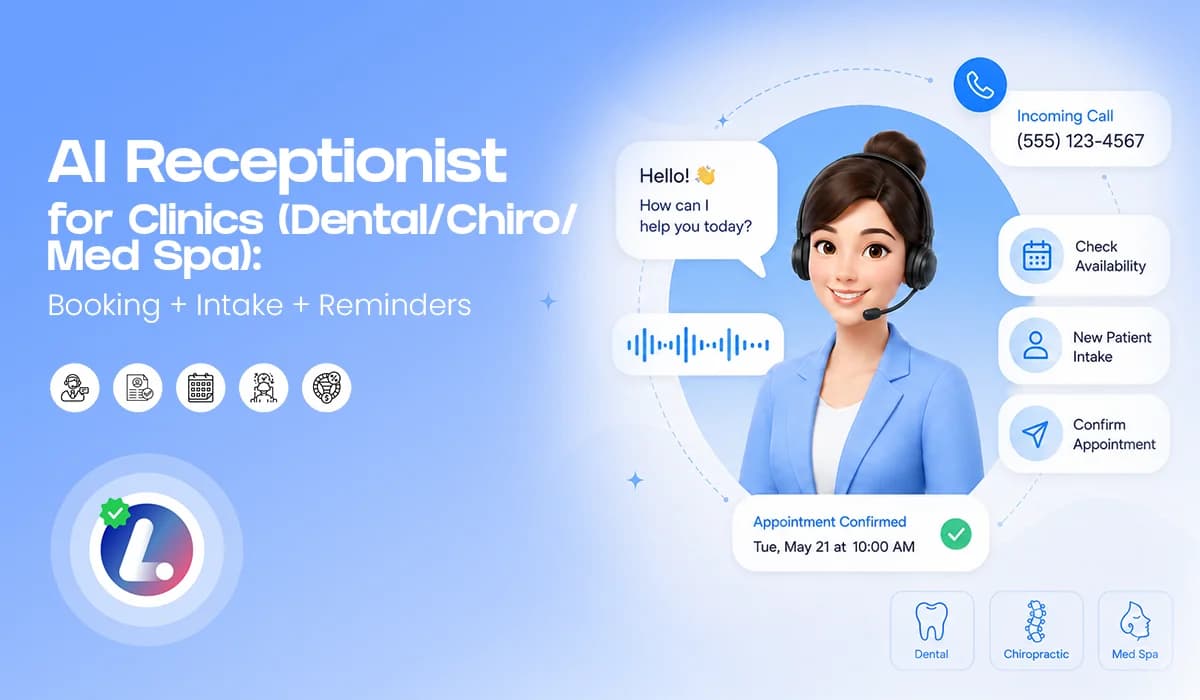

Clinic teams lose time in the same places every day: missed calls during patient care, repetitive front desk questions, slow callback loops, and appointment requests that arrive after hours. That is why an ai receptionist for clinics is becoming more relevant for dental offices, chiropractic clinics, and med spas. The core use case is practical, not theoretical: answer routine questions, capture caller intent, help with clinic appointment booking, and route urgent or complex cases to the right person. RingCentral’s healthcare communications page specifically positions AI Receptionist for scheduling appointments, answering patient questions, and routing urgent callers 24/7, while its AI Receptionist page describes support for lead capture, appointment booking, and overflow handling.
This does not mean a clinic should automate every conversation. It means the clinic should use automation where it reduces friction for staff and patients. In this guide, I’ll break down how an AI receptionist for clinics fits into booking, intake, reminders, and follow up, what dental, chiro, and med spa teams should expect, and how to build a setup that actually helps instead of creating another front desk headache. I’ll also keep the focus practical: what the system should do, what it should ask, and what to track after launch.
Why Clinics Feel The Pain Of Missed Calls Faster Than Many Other Businesses
Clinics usually operate on a tighter front desk workflow than many service businesses.
A missed call in a clinic is rarely just “someone tried to reach us.” It may be:
- A new patient asking about availability
- An existing patient trying to reschedule
- A lead asking whether a treatment is offered
- Someone comparing two clinics before booking
- A caller with a time sensitive question
That is the reason response quality matters so much in this category. RingCentral’s healthcare solution page explicitly frames the goal as making sure calls do not go unanswered, while also routing urgent callers appropriately and helping with appointment scheduling.
For clinic teams, the front desk is often balancing:
- Check ins and check outs
- Incoming calls
- Provider schedules
- Reminders and reschedules
- Paperwork or billing questions
- Treatment room coordination
So the issue is usually not that the team does not care. It is that too many small communication tasks pile up at once.
Where An AI Receptionist Helps Most In Dental, Chiro, And Med Spa Clinics
A clinic does not need an AI receptionist for every part of patient communication.
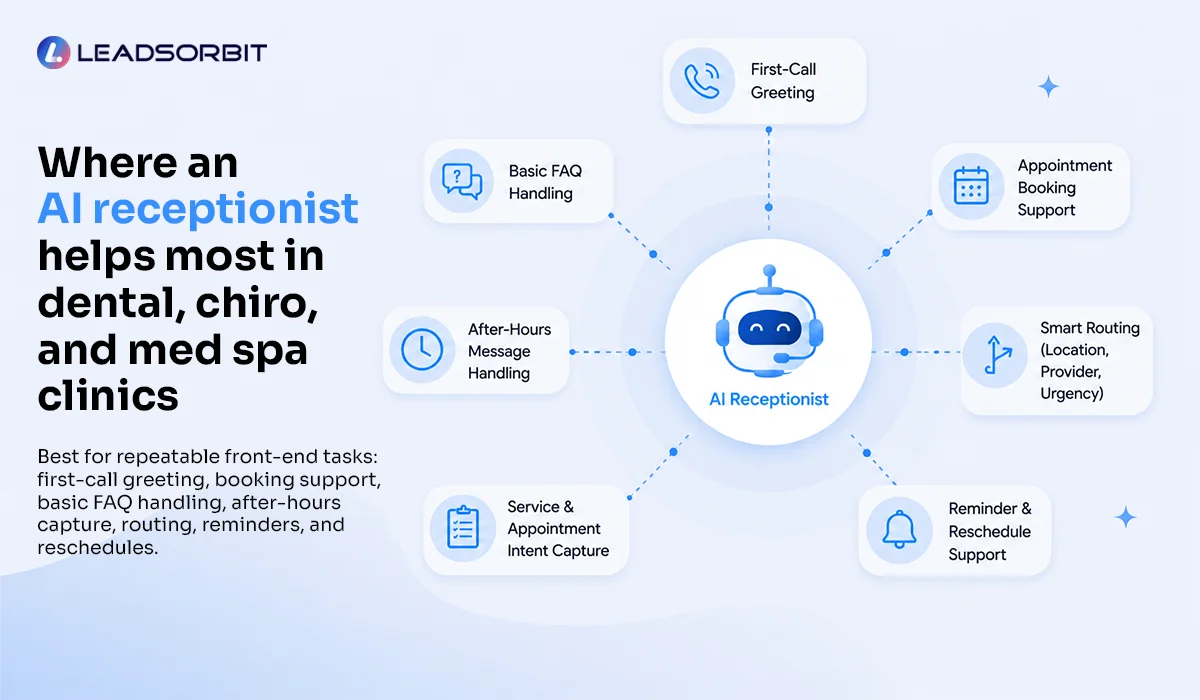
It helps most in repeatable front end interactions such as:
- First call greeting
- Service or appointment intent capture
- Basic FAQ handling
- After hours message handling
- Clinic appointment booking support
- Routing by location, provider, or urgency
- Reminder and reschedule support
RingCentral’s AI Receptionist and healthcare pages both highlight appointment scheduling, answering routine questions, and urgent call routing as core use cases. Its newer AIR Pro healthcare page goes further, mentioning booking appointments by location and priority and handling follow ups and billing related questions.
That makes this a strong fit for:
- A busy AI receptionist for dental office setup that needs better new patient intake and scheduling support
- An AI receptionist for chiropractor workflow that needs cleaner booking and follow up handling
- A Med Spa Phone Answering workflow that needs better consultation capture and reminder support
What A Clinic AI Receptionist Should Actually Do
The best clinic setups are clear and narrow. They do not try to do everything.
A useful clinic AI receptionist should help with these jobs.
1. Answer Routine Front Desk Questions
Examples:
- Are you open today?
- Do you offer this service?
- What is your location?
- How do I schedule?
- Can I reschedule?
This reduces repetitive interruptions for staff.
2. Capture Booking Intent
A good system should identify whether the caller wants:
- A new appointment
- A consultation
- A reschedule
- Information before deciding
- A transfer to staff
This is where AI Receptionist becomes practical. The goal is not just “answer the phone.” The goal is to understand why the caller reached out.
3. Collect The Right Intake Details
The system should gather enough information to help the next step happen smoothly.
That may include:
- Name
- Callback number
- New or existing patient/client
- Service needed
- Preferred time
- Provider or location preference
- Urgency if relevant
If you want the deeper version of this piece, your related internal guide is AI Receptionist Intake Questions.
4. Support Reminders And Reschedules
Clinic teams often lose time chasing confirmations and reschedules manually. SimplePractice’s appointment reminder page shows how healthcare practices value automated text, voice, and email reminders as a built in part of practice operations.
That is why booking and reminders should not be treated as separate systems if you can avoid it.
How Booking, Intake, And Reminders Work Together In Clinics
This is where many clinics get stuck. They treat these as separate admin jobs:
- Answering calls
- Collecting intake
- Scheduling
- Reminding patients
- Following up after no shows or reschedules
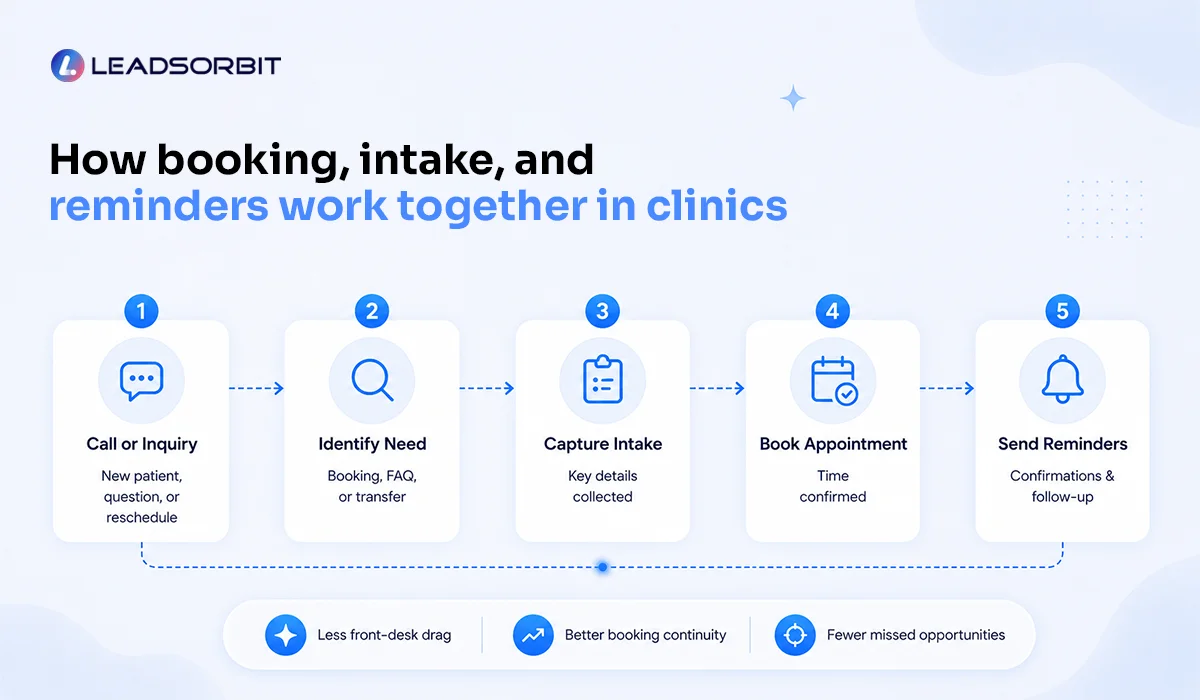
In practice, these belong in one flow. A better clinic workflow looks like this:
Step 1: The Call or Inquiry Comes In
The caller says what they need:
- New patient appointment
- Consultation
- Question about service
- Reschedule
- Callback request
Step 2: The System Identifies The Next Step
The AI receptionist helps classify the request:
- Booking
- Intake
- Transfer
- FAQ
- After hours follow up
Step 3: Intake Details Are Captured
Only the key details are collected.
Step 4: The Lead Moves Into Scheduling
This is where AI Appointment matters. The receptionist side and the booking side should not feel disconnected.
Step 5: Reminder and Follow Up Logic Takes Over
Appointment reminders, confirmation flow, and reschedule options should support the booking so the front desk does not have to manually carry everything.
Calendly’s routing forms help illustrate the general principle here: collect details first, then route the person to the right booking or next step flow based on the answers.
What Clinics Should Ask During The First Interaction
A clinic intake flow should stay light enough to keep momentum, but detailed enough to support the next step.
For most clinics, the first interaction should capture:
- Full name
- Best callback number
- New or existing patient/client
- Service needed
- Preferred day or time
- Provider or location preference if relevant
- Any time sensitive note if it changes routing
The exact wording changes by clinic type.
1. For Chiropractic Clinics
Useful first step questions:
- Are you a new or existing patient?
- Are you looking to book an appointment or ask a question?
- What day or time works best for you?
That fits a Chiropractic Software flow well because it keeps the intake focused on scheduling readiness.
2. For Dental Clinics
Useful first step questions:
- Are you a new or existing patient?
- What service or appointment do you need?
- Do you have a preferred location or provider?
That aligns naturally with a Dental Software workflow where provider, location, and appointment type often matter.
3. For Med Spas
Useful first step questions:
- Are you looking to book a consultation or treatment?
- What service are you interested in?
- What day or time works best for you?
That works well for a Medical Spa Software setup because many callers are still deciding and need a clean path into consultation booking.
A Simple Clinic AI Receptionist Workflow You Can Use
Here is a practical version.
Clinic Booking Workflow
- Caller reaches the clinic
- AI receptionist greets and identifies the need
- System captures basic intake details
- Caller is routed to booking, reschedule, staff transfer, or after hours callback path
- Appointment reminder flow supports the booking afterward
- Lead or patient status is visible to the team
This is where Conversation AI also matters. The clinic should be able to continue the conversation cleanly, not lose context after the first contact.
If you want to see the bigger system behind this, connect it back to the parent pillar: AI Receptionist for Small Business.
Scripts Clinics Can Actually Use
General Clinic Greeting

New Patient Intake Script
Reschedule Script
After Hours Clinic Message
A Practical Clinic Setup Checklist Before Launch
Use this before turning the system on:
- Define business hours and after hours behavior
- Decide which calls should route to staff vs. stay automated
- List the top 5 to 10 routine questions the system should handle
- Finalize new patient and existing patient intake fields
- Decide what counts as urgent
- Define provider or location routing rules
- Connect the booking flow
- Turn on reminder logic
- Test a new patient call, reschedule call, and after hours call
- Review real transcripts or call outcomes during the first week
This part matters because clinic workflows are sensitive to small front desk errors. A cleaner launch usually means fewer corrections later.
Try LEADSORBIT free for 14 days
What To Track After Launch
You should judge the system by workflow outcomes, not only by whether it sounds modern.
Track these metrics:
Booking Conversion Rate
- Definition: The percentage of inbound clinic calls that become booked appointments or qualified next steps.
- What improvement looks like: More phone inquiries turning into actual appointments.
Intake Completeness
- Definition: How often the system captures the key fields the clinic needs.
- What improvement looks like: Fewer missing details and fewer repeated questions.
Reminder Effectiveness
- Definition: Whether reminders are actually supporting attendance and reducing admin burden.
- What improvement looks like: Fewer manual reminder tasks and fewer preventable gaps.
Reschedule Handling Speed
- Definition: How quickly reschedule requests move into the right next step.
- What improvement looks like: Less front desk drag and fewer dropped conversations.
After Hours Capture Rate
- Definition: The percentage of off hours inquiries that still enter the workflow properly.
- What improvement looks like: Fewer overnight opportunities disappearing.
How LEADSORBIT Helps Clinics Use AI Receptionists More Practically
The point is not to make the clinic sound high tech.
The point is to make front end communication easier to manage.
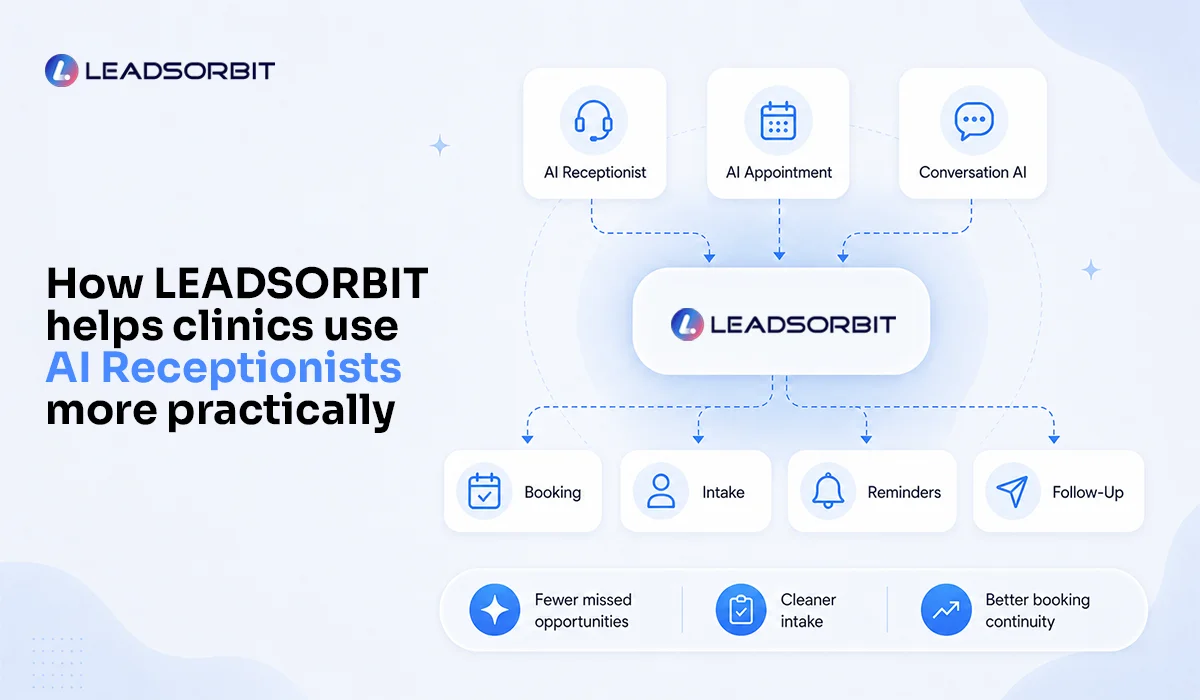
Here is the practical mapping:
- AI Receptionist helps answer and route routine clinic calls more consistently
- AI Appointment helps connect inquiry flow to actual scheduling
- Conversation AI helps keep the follow up and reminder side organized
- LEADSORBIT helps bring booking, intake, reminders, and follow up into one cleaner operating flow
For clinics, that usually means:
- fewer missed opportunities
- less front desk interruption
- cleaner new patient intake
- better booking continuity
- more consistent reminder support
If you want to see what that could look like in your clinic, the next practical step is to Book a Demo.
FAQs
It is a phone based front end system that helps answer calls, capture caller intent, collect intake details, route inquiries, and support scheduling or follow up for clinics. RingCentral’s healthcare communications materials explicitly position it for appointment scheduling, patient questions, and urgent call routing.
Final Thoughts
Here are the key takeaways:
- an AI receptionist for clinics works best when it supports booking, intake, reminders, and routing together
- dental, chiro, and med spa teams usually benefit most from handling repetitive front desk interactions more consistently
- the system should ask only the questions that change the next step
- clinic booking flow and reminder flow should not feel disconnected
- after hours handling matters because clinics lose opportunities outside normal desk coverage
- the real value is less interruption for staff and a cleaner experience for callers
- the best setup is practical, not overly complicated

Start Your Free 14 Day Trial
Try LEADSORBIT and see how it captures missed calls, follows up instantly, and turns leads into booked appointments for your business.
Personal Message from Faisal Zulfiqar
Clinic teams already carry a lot on the front desk side.
Calls come in while patients are being checked in, schedules are moving, and staff are trying to keep the day organized.
That is exactly why I think clinic communication systems should reduce friction, not add more of it.
For me, the value of an AI receptionist in a clinic is not that it sounds impressive.
It is that it helps your team stay more responsive, more organized, and less interrupted by repetitive front end tasks.
LEADSORBIT is built with that practical mindset.
If we can help your clinic handle calls, intake, reminders, and booking in a cleaner way, that usually creates value quickly.
And for many clinics, that value starts with fewer missed opportunities and a better caller experience.