
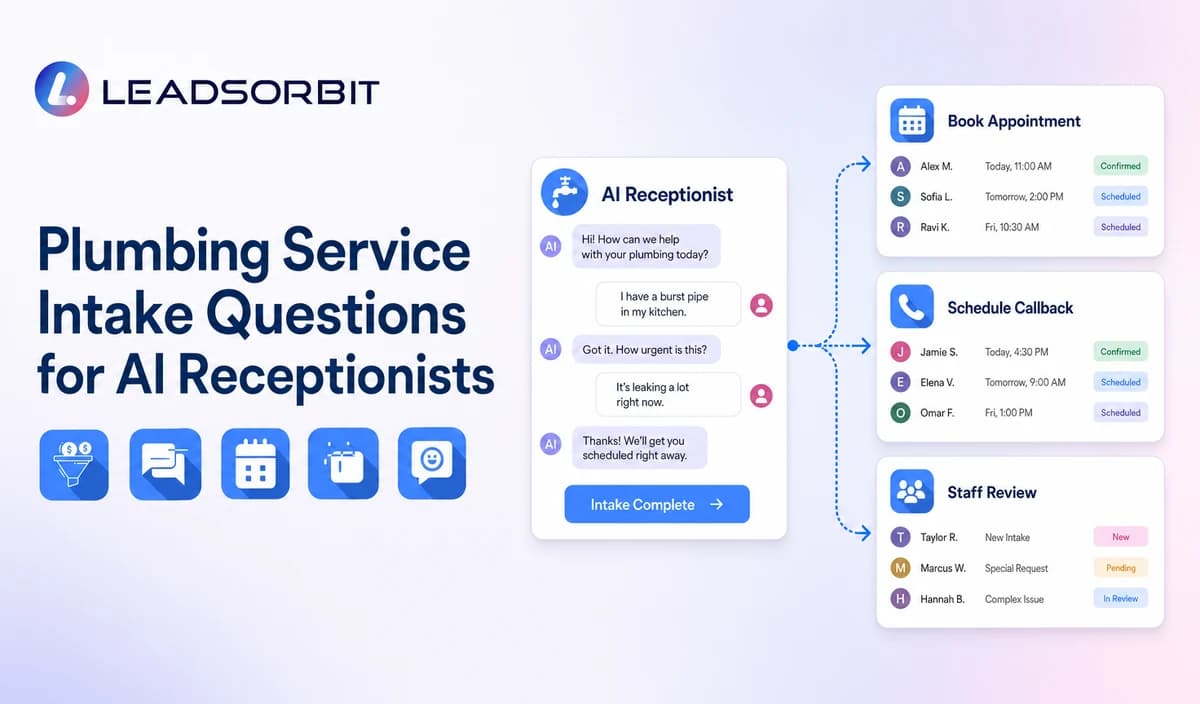

A plumbing intake conversation should collect only the details needed to route the request, schedule the next step, or create a useful callback task. Long technical interviews create friction and can push the AI into diagnosis.
This guide applies the broader AI receptionist intake questions framework to plumbing service requests.

Who This Guide Is For
- Plumbing companies configuring an AI receptionist or web chat intake.
- Office teams standardizing phone and booking questions.
- Businesses routing by service area, issue category, or customer status.
- Managers who want useful callbacks without collecting unnecessary technical detail.
Every Intake Question Needs a Routing Purpose
Only ask a question when the answer changes service area review, booking, escalation, task ownership, or the next message.
- Identify the customer and reliable callback method.
- Capture the service address before promising availability.
- Use a broad issue category rather than diagnosing.
- Record safe access context without giving repair advice.
- Capture preferred day or time without guaranteeing arrival.
- Identify existing appointment, estimate, warranty, or service plan context.
- End with a booking, callback, or human escalation outcome.
A Practical Plumbing Service Intake Questions for AI Receptionists Workflow
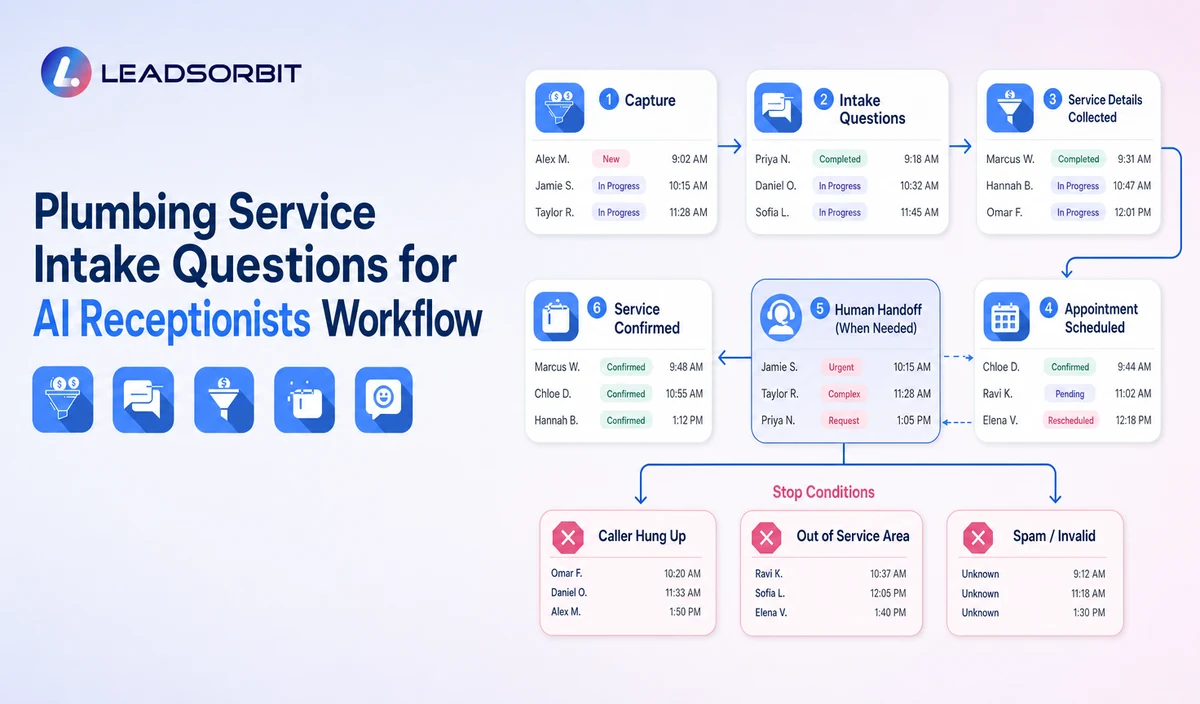
| Stage | Workflow action | Staff responsibility | Stop or escalation rule |
|---|---|---|---|
| 1. Identity | Confirm name and callback information. | Use existing contact data carefully. | Do not request unnecessary personal details. |
| 2. Service address | Capture the address and location context. | Check service area and duplicates. | Do not promise service before validation. |
| 3. General category | Ask the caller to choose an approved broad issue type. | Maintain clear categories and escalation rules. | Do not diagnose cause or severity. |
| 4. Access context | Capture tenant/owner status, gate instructions, or availability where needed. | Review sensitive or unusual access situations. | Do not request access codes unless the process is approved and secure. |
| 5. Timing | Collect preferred appointment or callback period. | Resolve capacity and scheduling exceptions. | Do not guarantee arrival or dispatch. |
| 6. Existing relationship | Ask about current appointments, estimates, prior work, or service plan when relevant. | Route to the right owner. | Do not claim warranty or plan coverage without source data. |
| 7. Next step | Offer booking or staff callback. | Own unresolved requests. | Stop when the caller requests a person. |
Core Plumbing Intake Question Bank
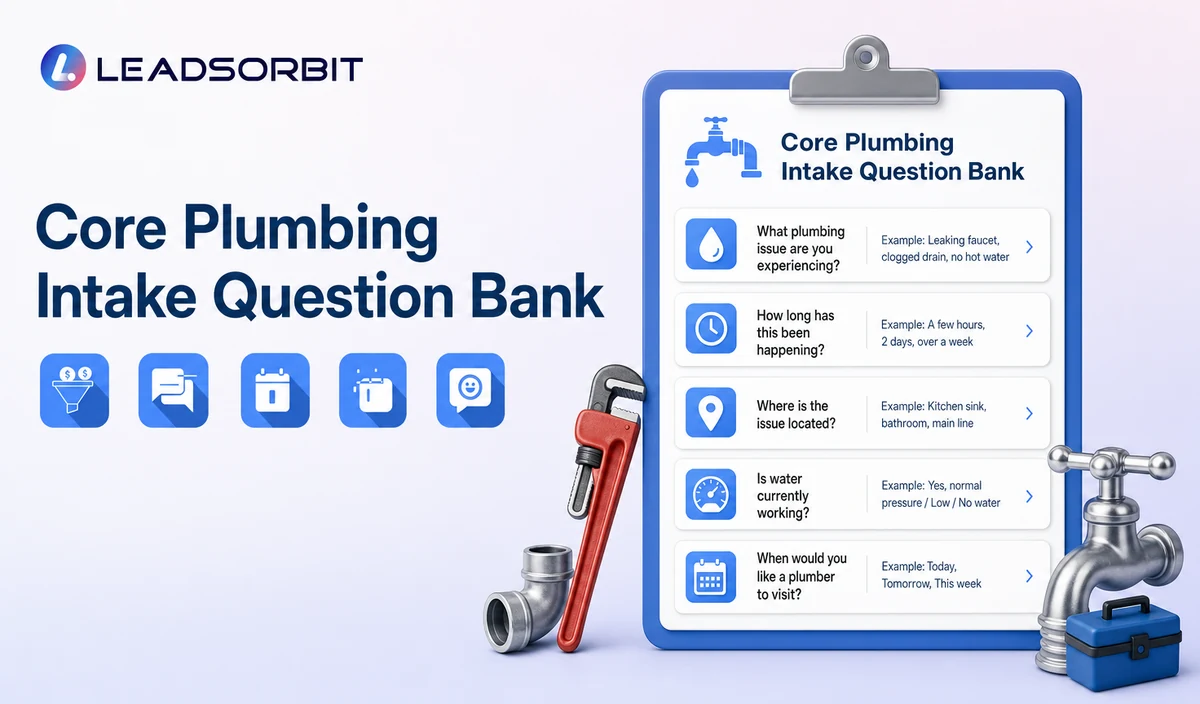
The question order can change by channel, but the language should remain easy to answer and non diagnostic.
| Contact | What is your name and best callback number? | Create or update the contact. |
|---|---|---|
| Address | What is the service address, including unit or suite if relevant? | Check service area and routing. |
| General issue | Which category is closest: leak or fixture, drain, water heater, installation, existing job, or other? | Choose the approved branch. |
| Access | Is there anything the office should know about reaching the property or contacting you? | Create useful staff context. |
| Timing | What day or general time works best? | Offer booking or callback review. |
| Existing status | Is this related to an appointment, estimate, prior job, warranty, or service plan? | Route to the correct owner. |
| Next step | Would you like an appointment request or staff callback? | Create a clear outcome. |
Practical Scripts and Templates
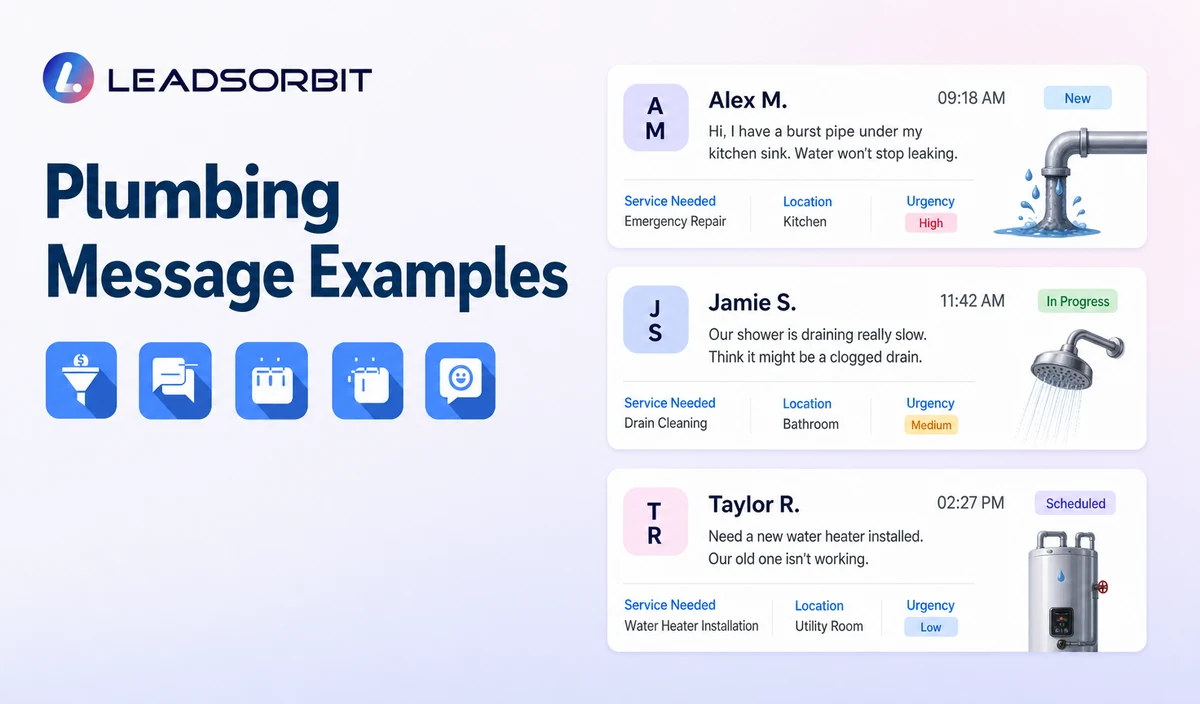
Opening
Issue Category
Timing
Escalation
Important Boundaries
- Do not ask the AI to identify the cause of a leak, blockage, odor, pressure issue, or equipment failure.
- Do not estimate damage or price.
- Do not give repair, shutoff, electrical, gas, or safety instructions.
- Do not guarantee emergency response, dispatch, or arrival time.
- Do not claim warranty, service plan, or prior job coverage without verified data.
- Move uncertain, safety related, complaint, vulnerable customer, and out of area situations to staff.
Privacy, Consent, and Customer Data
Customer names, phone numbers, service addresses, access notes, appointment details, estimate status, conversation history, and service plan information are personal business data. Collect only what the workflow needs, limit staff access, keep consent and opt out status visible, and review every form, calendar, phone or messaging provider, AI tool, integration, retention setting, and data destination separately.
LEADSORBIT is positioned in this article as the communication, booking, follow up, CRM, review, and task layer. Do not present it as a complete field service management, dispatch, route optimization, work order, estimating, invoicing, inventory, payroll, job costing, permit, price book, accounting, or technician tracking system.
Common Plumbing Workflow Mistakes
- Asking technical questions that do not change routing.
- Using diagnosis oriented language.
- Collecting extensive access or property detail before confirming the next step.
- Treating a preferred time as a booking.
- Assuming warranty or service plan eligibility.
- Continuing the intake after the customer asks for a person.
Plumbing Workflow Setup Checklist
- List the approved issue categories.
- Define service area and address validation rules.
- Choose the minimum contact, address, access, and timing fields.
- Create existing appointment, estimate, prior job, warranty, and service plan branches.
- Define safety, complaint, out of area, and human escalation paths.
- Confirm booking, callback, permissions, and retention.
- Test incomplete answers, ambiguous issues, and staff takeover.
See the Workflow With Your Company's Rules
Start 14 days free trial to map the exact triggers, messages, service area rules, booking or callback paths, owners, data sources, permissions, and stop rules for your plumbing company inside LEADSORBIT.
What to Measure
- Intake completion rate.
- Correct service area and issue routing.
- Appointment or callback outcomes.
- Questions repeated by staff after handoff.
- Drop off points in phone, chat, or form paths.
- Incorrect diagnosis, pricing, or promise language detected in QA.
How LEADSORBIT Supports This Plumbing Workflow
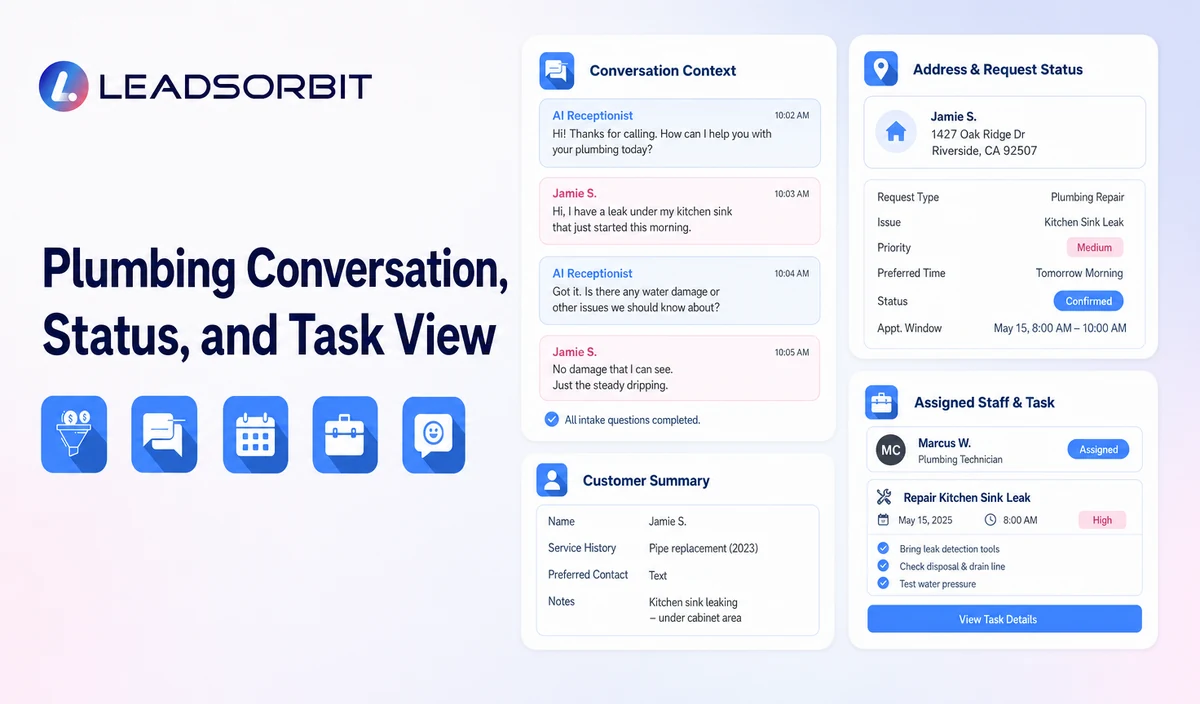
LEADSORBIT’s AI powered CRM can connect approved plumbing conversations, appointment activity, follow up, tasks, and operational statuses.
- AI Receptionist: supports approved call answering, contact capture, booking paths, after hours handling, and human escalation.
- Conversation AI: supports configured channel conversation visibility, routing, staff takeover, and CRM synchronization.
- AI Appointment: supports appointment requests, calendar connections, confirmations, reminders, rescheduling, and cancellation where configured.
Exact channels, fields, scripts, calendars, service areas, appointment rules, estimate or plan data, permissions, retention, integrations, and account behavior require implementation validation. LEADSORBIT is positioned in this article as the communication, booking, follow up, CRM, review, and task layer. Do not present it as a complete field service management, dispatch, route optimization, work order, estimating, invoicing, inventory, payroll, job costing, permit, price book, accounting, or technician tracking system.
Try LEADSORBIT free for 14 days
FAQs
Ask for contact information, service address, general issue category, access context, preferred timing, existing job context, and the requested next step.
Final Thoughts
Plumbing service intake questions should capture the customer's name and callback number, service address, general issue category, access context, preferred time, existing appointment or estimate status, and whether the person wants booking or a staff callback. The strongest setup uses accurate source data, gives staff clear ownership, avoids technical promises, and stops automation at the right time.
Start 14 days free trial to see how LEADSORBIT can support this plumbing workflow with conversations, appointment requests, automation, tasks, and CRM visibility.

Start Your Free 14 Day Trial
Try LEADSORBIT and see how it captures missed calls, follows up instantly, and turns leads into booked appointments for your business.