
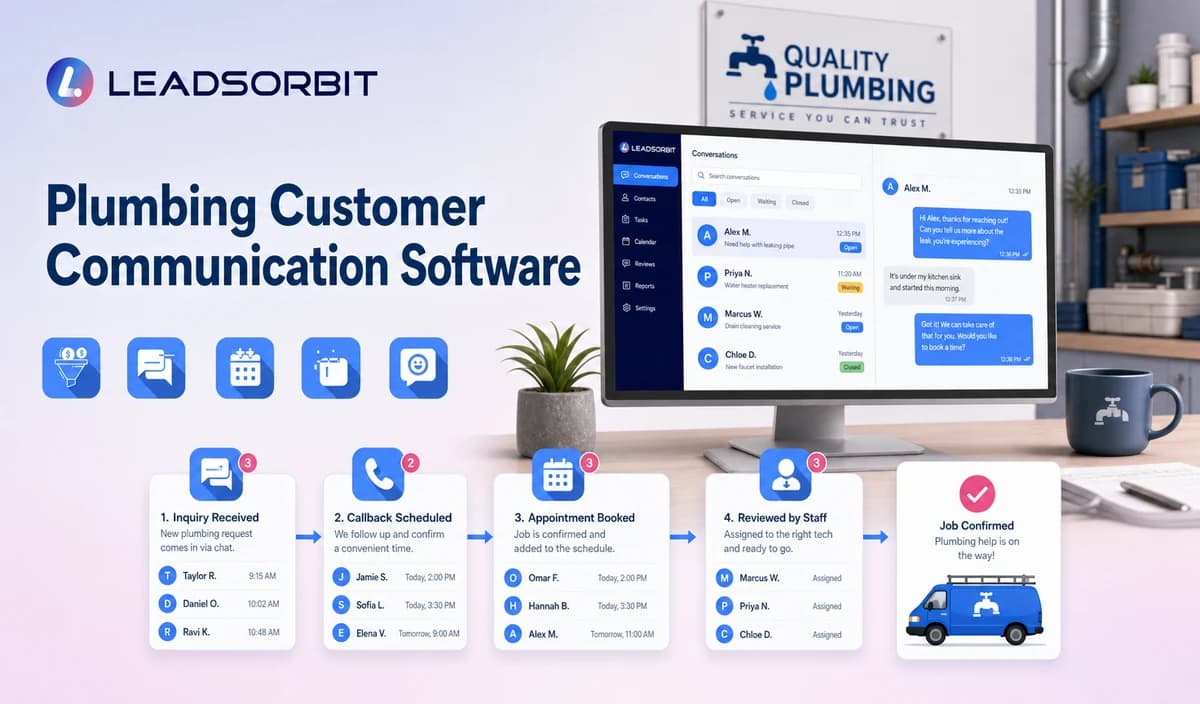

Running a plumbing business is not only about completing service jobs successfully. The way a company communicates before, during, and after a service request has a major impact on customer trust and long term relationships.
A customer may contact a plumbing company through a phone call, website form, text message, email, or online chat. As the business grows, managing these conversations becomes more challenging because customer information, appointment details, follow up requests, and team communication can become spread across different tools.
This creates common operational problems. A customer may have already explained their issue through a website chat but need to repeat the same information when calling the office. A team member may miss an important follow up request because the conversation history is not visible. An estimate inquiry may remain unanswered because there is no clear ownership of the next action.
Plumbing customer communication software helps plumbing companies organize customer conversations, maintain communication history, manage follow ups, and connect customer interactions with business workflows.
Instead of managing every phone call, message, and customer request separately, businesses can create a more connected communication process where teams have better visibility into customer needs and the actions required.
For plumbing companies, this type of software can support the complete customer communication journey, from the first inquiry to appointment coordination, follow up conversations, and post service engagement.
A connected AI powered CRM can help businesses organize customer interactions by bringing conversations, customer records, tasks, and workflow activities into a more structured system.
Who This Guide Is For
This guide is designed for plumbing companies that want to improve how they manage customer communication and internal follow up processes.
It is especially useful for:
- Plumbing business owners who want better visibility into customer interactions.
- Office managers handling calls, messages, scheduling requests, and customer updates.
- Service teams managing multiple customer conversations at the same time.
- Growing plumbing businesses that need consistent communication processes across locations or teams.
A small plumbing company may manage communication effectively when customer volume is low. However, as more customers contact the business through different channels, the challenge changes from simply responding to messages to managing the entire customer relationship.
For example, a plumbing office may have one customer asking about a new service request, another waiting for an estimate response, and another requesting an appointment change. Without a structured system, these conversations can become difficult to track.
Customer communication software helps teams maintain context by connecting:
- Customer conversations
- Contact information
- Appointment details
- Follow up tasks
- Previous interactions
This allows teams to understand what happened previously and what needs to happen next.
Why Plumbing Companies Need Better Customer Communication
Customer communication is one of the most important parts of the plumbing service experience.
A customer’s first interaction with a plumbing company often happens before any service is scheduled. The customer may need answers about availability, request an estimate, ask about a previous job, or follow up on an existing appointment.
The challenge is that every conversation contains important business information.
For example, a homeowner may contact a plumbing company through a website chat about a leaking fixture. Later, they may call the office to ask about scheduling. If the previous conversation is unavailable, the customer may need to explain the situation again, creating unnecessary friction.
A better communication process allows plumbing teams to understand the full customer context, including:
- What the customer originally requested.
- Which conversations have already happened.
- Whether an appointment or follow up task exists.
- Which team member is responsible for the next action.
The goal of customer communication software is not simply to send more messages. It is to help businesses create organized, consistent, and meaningful interactions with customers.
What Plumbing Customer Communication Software Helps Manage
Plumbing customer communication software connects different parts of customer interaction that are often managed separately.
A modern communication platform may support:
Customer Conversations Across Multiple Channels
Customers do not always communicate through one channel. Some prefer phone calls, while others use text messages, email, or website chat.
Managing these conversations in separate systems can make it difficult for teams to maintain customer context.
A connected communication system helps businesses organize conversations across supported channels and provides better visibility into previous interactions.
For example, when a customer replies to a follow up message, the team should be able to understand the previous discussion instead of starting from the beginning.
Customer Records and Communication History
A strong customer relationship management (CRM) process depends on having accurate customer information and interaction history.
For plumbing businesses, useful information may include:
- Customer contact details
- Previous conversations
- Appointment requests
- Follow up status
- Internal notes
- Assigned team ownership
This information helps office teams provide more consistent communication because they can understand the customer’s situation before responding.
Appointment Communication and Scheduling Updates
Appointments are an important part of plumbing customer communication.
Customers may need:
- Appointment confirmations
- Schedule updates
- Rescheduling assistance
- Reminder messages
- Follow up communication
When appointment details are connected with customer conversations, teams can respond more efficiently.
For example, if a customer sends a message asking about an appointment change, the office team should have enough context to understand the request and determine the correct next step.
Estimate and Follow Up Communication
Many plumbing businesses communicate with customers before and after providing an estimate.
A customer may need time to decide, ask additional questions, or request clarification. Without an organized follow up process, these conversations can easily be overlooked.
A structured communication workflow helps businesses manage:
- Estimate follow ups
- Customer questions
- Callback requests
- Pending customer decisions
- Next actions
The purpose is not to create aggressive sales communication. The purpose is to ensure customers receive timely and helpful responses.
A Practical Plumbing Customer Communication Workflow
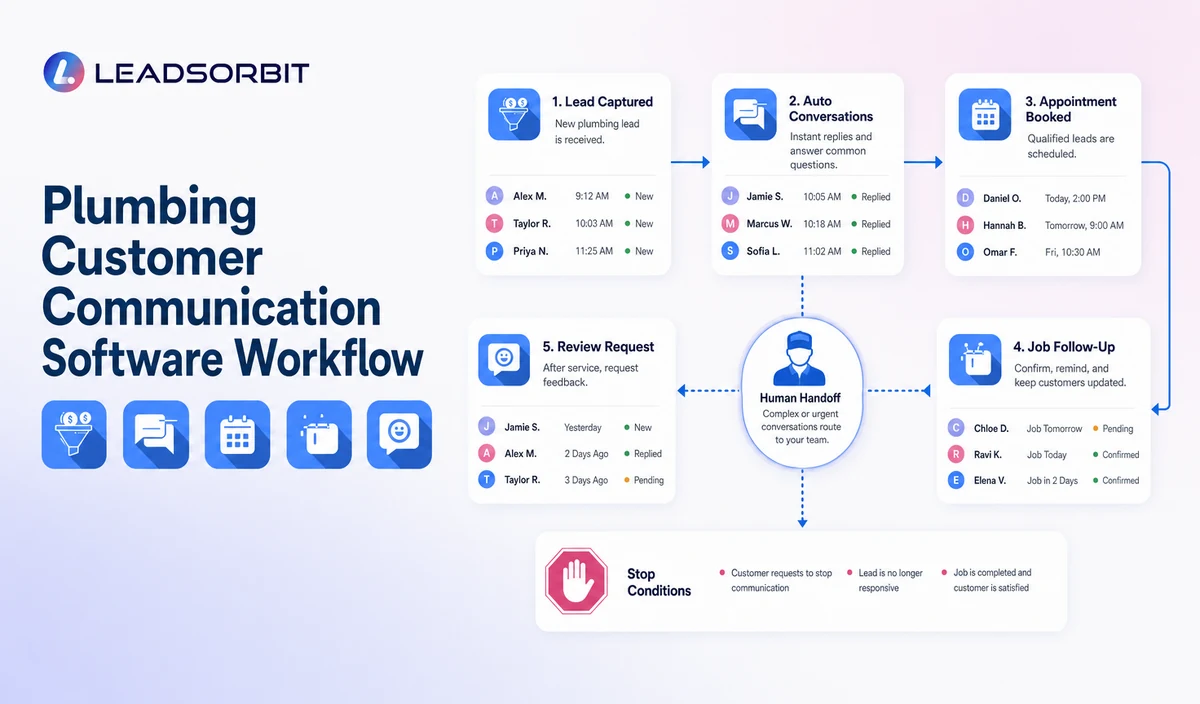
Effective communication software works best when it supports a clear customer journey.
A typical plumbing communication workflow may follow this process:
Customer inquiry → Conversation management → Appointment or follow up action → Continued communication → Customer relationship management
When a customer contacts a plumbing company, the first step is understanding the request and capturing the necessary information. The conversation should then move toward a clear next action, such as scheduling, assigning a callback task, or requesting additional review.
A well organized workflow helps teams answer important questions:
- Who is the customer?
- What information has already been provided?
- What action is required next?
- Who owns the follow up?
This reduces communication gaps and helps plumbing businesses provide a more consistent customer experience.
The purpose of automation is not to remove human involvement. Instead, it helps teams spend less time managing repetitive communication tasks and more time handling customer situations that require personal attention.
How AI Helps Improve Plumbing Customer Communication
As plumbing companies grow, managing every customer conversation manually becomes more difficult. Office teams may spend significant time answering repeated questions, checking previous conversations, updating customer records, and making sure follow ups are completed.
AI powered communication tools can support these workflows by helping businesses organize conversations, identify customer requests, and connect communication activities with approved business processes.
For example, when a customer contacts a plumbing company through a website chat or messaging channel, an AI supported system can help collect basic information, organize the conversation, and route the request according to the company’s workflow.
However, AI should support the team, not replace business judgment.
Plumbing companies still need human involvement for situations that require experience, such as:
- Complex customer concerns
- Service related decisions
- Complaints
- Special requests
- Situations requiring company approval
The strongest communication workflows combine automation for repetitive tasks with human support where personal attention is required.
Key Features to Look for in Plumbing Customer Communication Software
Choosing communication software depends on the needs of the plumbing business. A useful platform should support the way the company already communicates with customers rather than forcing teams into complicated processes.
Important capabilities include:
Centralized Customer Conversations
A plumbing business may receive customer requests from multiple sources, including phone calls, messages, email, and website interactions.
A centralized communication system helps teams understand the full conversation history instead of searching across different platforms.
This is especially useful when multiple employees handle customer communication. A team member should be able to understand previous interactions before responding.
Customer Relationship Management (CRM) Visibility
A plumbing CRM helps businesses maintain organized customer information and communication history.
Instead of storing customer details only as individual contacts, CRM systems help connect information such as:
- Customer conversations
- Previous requests
- Appointment activity
- Follow up tasks
- Communication status
This gives teams better context when managing customer relationships.
Automated Follow Up Workflows
Follow up is an important part of plumbing customer communication.
Customers may need additional communication after:
- Requesting an estimate
- Asking about availability
- Completing a service
- Rescheduling an appointment
- Leaving a question unanswered
A workflow based approach helps businesses create consistent follow up processes while allowing teams to define when automation should stop and when human involvement is required.
Appointment and Customer Updates
Customers often want clear communication about their service request.
A communication platform can support workflows around:
- Appointment confirmations
- Reminder messages
- Scheduling updates
- Customer questions
- Follow up communication
The important factor is accuracy. Messages should only communicate information that has been approved by the business.
For example, if a plumbing company provides a scheduled service window instead of an exact arrival time, customer communication should reflect the same approved information.
How Plumbing Customer Communication Software Supports the Customer Journey
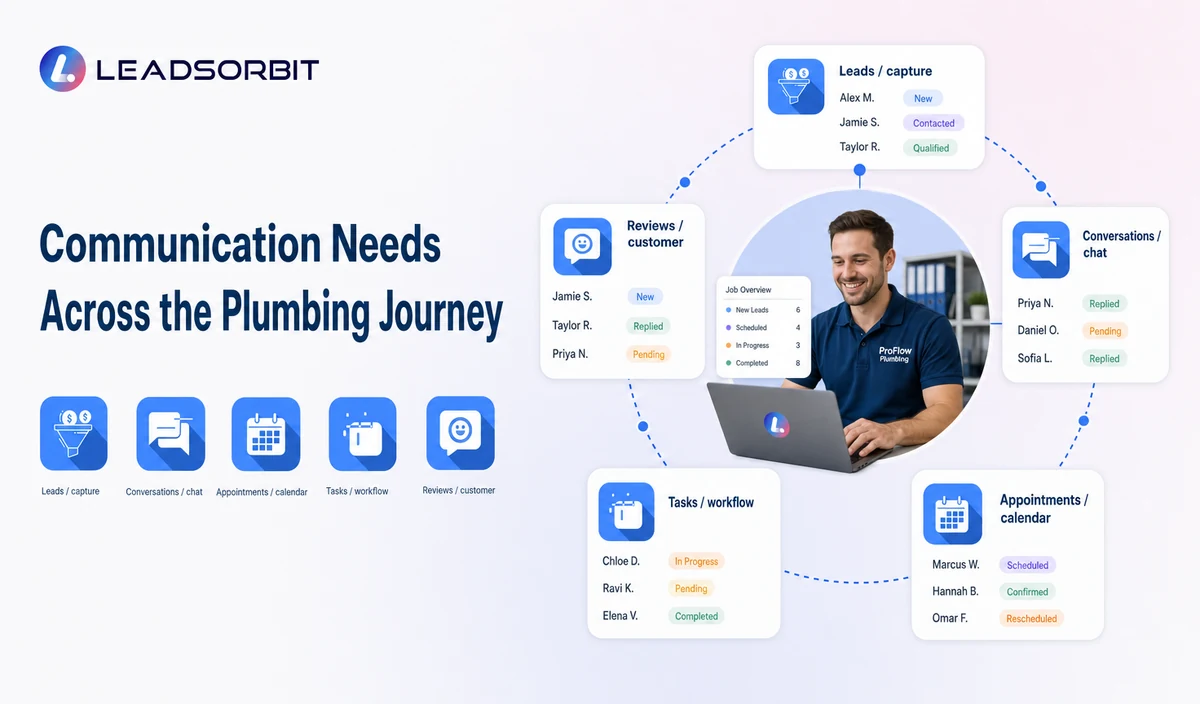
A customer relationship with a plumbing company does not begin when a technician arrives. It starts with the first conversation.
A typical customer journey may include:
Initial Customer Inquiry
The customer may contact the business through a phone call, website form, chat, or message.
At this stage, the business needs to understand:
- Who the customer is
- What service they are requesting
- What information is needed next
Conversation and Qualification
The business continues the conversation to understand the request and determine the appropriate next step.
This may include:
- Scheduling a consultation
- Creating a callback task
- Answering questions
- Connecting the customer with the right team member
Appointment and Service Communication
After a customer moves forward, communication continues through:
- Appointment updates
- Confirmations
- Schedule changes
- Follow up messages
Keeping these conversations connected improves consistency.
Post Service Engagement
Communication does not end after the service is completed.
Businesses may continue engagement through:
- Customer feedback requests
- Review requests
- Future service reminders
- Relationship building communication
A complete communication workflow helps plumbing companies maintain stronger customer relationships over time.
How LEADSORBIT Supports Plumbing Customer Communication Workflows
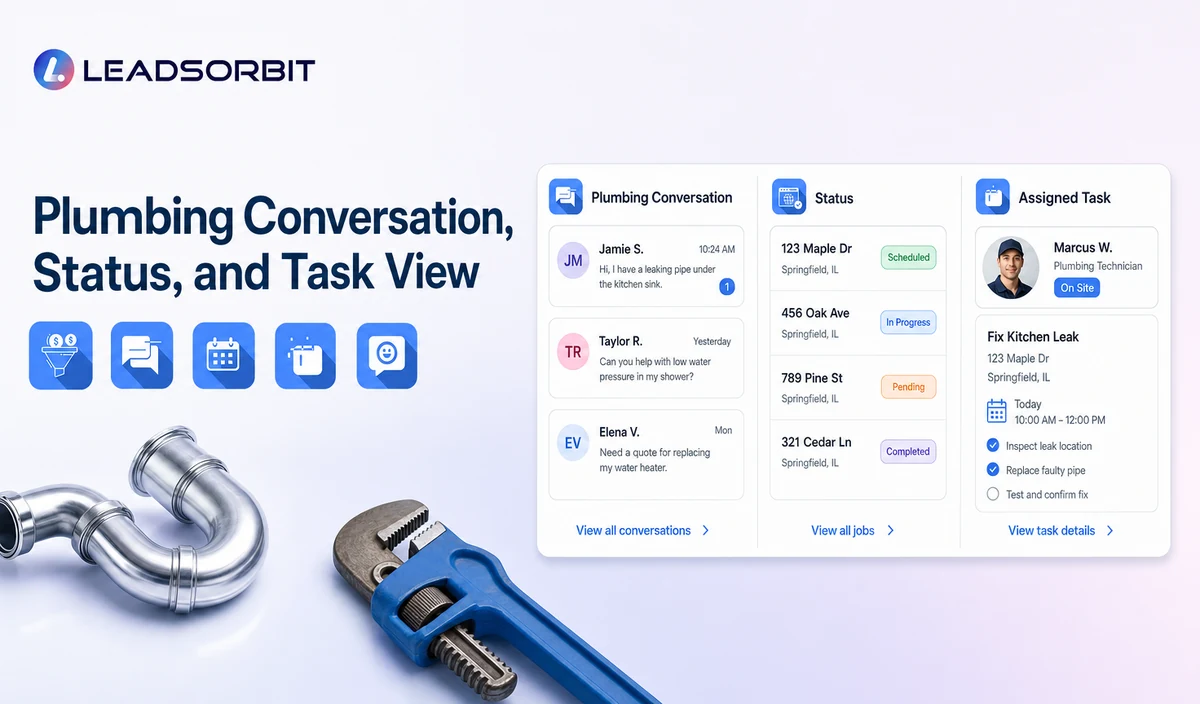
LEADSORBIT’s AI powered CRM helps businesses organize customer conversations, follow up activities, tasks, and workflow visibility through connected communication processes.
For plumbing companies, LEADSORBIT supports the communication layer between customer interactions and business operations.
This includes helping teams manage:
- Customer conversations
- Communication history
- Follow up activities
- Appointment related communication
- Task ownership
- Workflow visibility
Conversation AI supports configured communication channels by helping businesses manage conversation visibility, routing, staff takeover, and CRM synchronization where configured.
AI Appointment supports appointment related workflows, including appointment requests, calendar connections, confirmations, reminders, rescheduling, and cancellation handling where configured.
Workflow AI supports workflow automation by helping businesses create structured processes for communication, follow up, and task management based on approved business rules.
The exact channels, fields, calendars, workflows, integrations, permissions, retention settings, and account behavior depend on implementation configuration.
LEADSORBIT should be viewed as the communication, booking, follow up, CRM, review, and task management layer. It is not positioned as a complete field service management system, dispatch platform, technician tracking system, estimating platform, invoicing system, inventory system, payroll system, accounting system, or work order management system.
Common Mistakes When Choosing Plumbing Customer Communication Software
Selecting software only based on the number of features can create problems. The most effective solution should match the actual workflow of the plumbing business.
Common mistakes include:
Choosing Software Without Understanding Communication Needs
Every plumbing company has different processes. Some businesses need stronger follow up workflows, while others need better visibility into conversations and customer records.
The right solution should solve actual communication problems.
Automating Every Customer Interaction
Automation is useful for repetitive tasks, but every customer situation is different.
A good workflow should allow human involvement when:
- A customer has a complaint
- A situation requires approval
- A request is unclear
- A customer asks for personal assistance
Separating Communication From Customer Data
When conversations, customer information, and tasks are disconnected, teams lose context.
A connected CRM approach helps businesses understand the complete customer relationship.
Try LEADSORBIT free for 14 days
FAQs
Plumbing customer communication software helps plumbing companies manage customer conversations, follow ups, appointment communication, and customer information through organized workflows.
Final Thoughts
Plumbing customer communication software helps businesses create a more organized way to manage customer conversations, follow ups, appointments, and relationships.
As plumbing companies grow, communication becomes more complex. Customers expect timely responses, clear updates, and consistent support across every interaction.
The most effective approach combines organized customer data, communication workflows, automation, and human support. By connecting conversations with customer records and business processes, plumbing companies can improve visibility, reduce communication gaps, and create better customer experiences.
For businesses evaluating communication solutions, the focus should not only be on available features. The most important question is whether the platform helps the team communicate clearly, maintain customer context, and manage every interaction with the right level of automation and personal support.
Start 14 days free trial to see how LEADSORBIT can support plumbing appointment workflows with conversations, booking requests, automation, tasks, and CRM visibility.

Start Your Free 14 Day Trial
Try LEADSORBIT and see how it captures missed calls, follows up instantly, and turns leads into booked appointments for your business.