
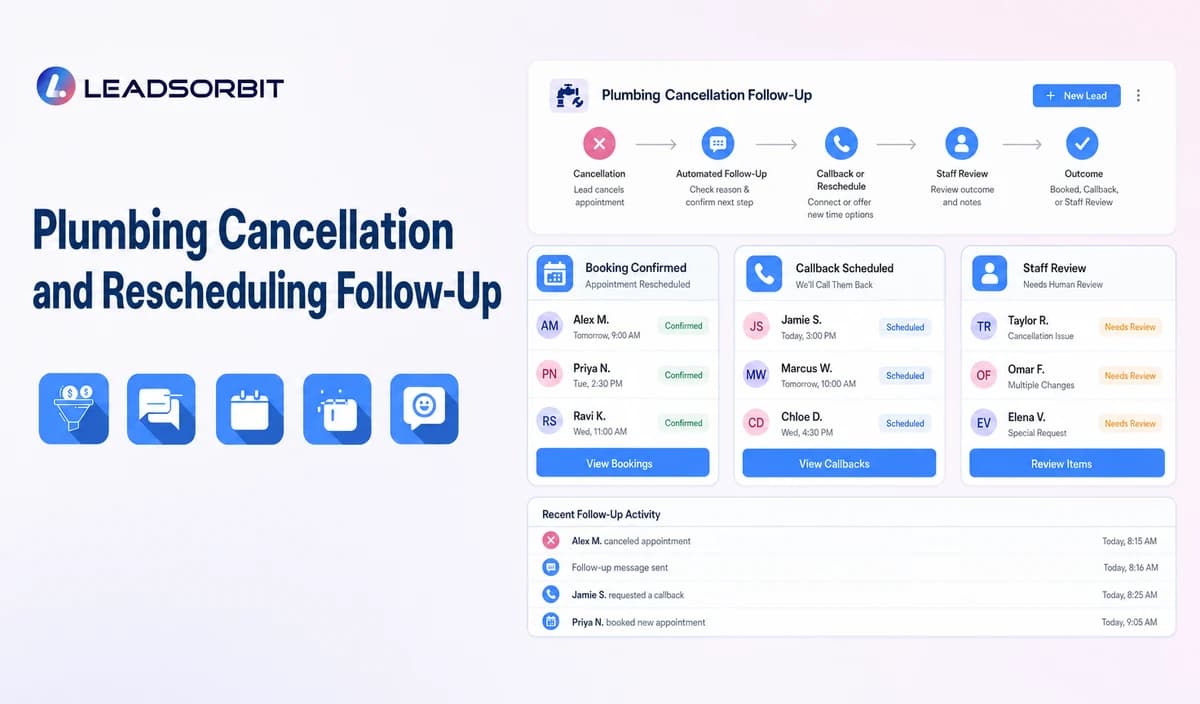

A cancelled plumbing appointment is not only a scheduling issue. It affects the customer’s expectations, office workload, technician planning, and the next opportunity to complete the requested service. When a customer cancels, cannot provide property access, or needs a different appointment time, the business needs a clear process to handle the request correctly.
A plumbing cancellation follow up workflow helps teams confirm what happened, stop outdated appointment messages, communicate the next available option, and make sure someone owns the next step. Without a structured process, customers may continue receiving reminders for cancelled appointments, staff may lose track of open requests, and potential bookings may be missed.
Plumbing cancellation follow up should begin only after the appointment status is verified. The broader booking foundation remains with appointment booking CRM for small business.
A well designed workflow does not try to replace the judgment of a plumbing team. Instead, it helps organize customer communication, reduce confusion, and make sure important requests reach the right person.

Who This Guide Is For
This guide is designed for plumbing businesses that want a more organized way to manage cancelled appointments, rescheduling requests, and missed service opportunities.
It is useful for:
- Plumbing companies creating consistent cancellation and rescheduling workflows.
- Office teams managing customer schedule changes, failed access situations, and repeat booking requests.
- Businesses that need staff review for cancellation policies, deposits, fees, or special scheduling situations.
- Multi location plumbing companies that need clear ownership between branches or teams.
For example, a small plumbing company may have one office employee managing calls, texts, and calendar updates throughout the day. Without a defined process, a cancelled appointment can easily become an unresolved customer request. A structured workflow helps ensure the customer receives the right response while the office team maintains visibility.
Recovery Starts After Status Verification
The first step in any plumbing cancellation follow up process is confirming the actual appointment status.
A recovery message should not be sent until the business knows what happened with the original appointment. A customer cancellation, a technician access issue, an internal scheduling mistake, and a completed service require different responses.
Before sending any follow up communication, the workflow should verify:
- Whether the appointment was cancelled, rescheduled, completed, missed, or incorrectly marked.
- Whether previous reminders connected to the original appointment have been stopped.
- Whether the change came from the customer, the company, or an access related issue.
- Whether the next step should be a new booking request, a callback, or staff review.
- Whether a specific situation requires a team member instead of automated communication.
For example, if a homeowner cancels a water heater repair appointment because they are unavailable, the customer should not continue receiving reminders about the original visit. The correct process is to confirm the cancellation, stop previous appointment messages, and provide a simple option to request another time.
Similarly, if a technician could not complete a visit because property access was unavailable, the follow up should not assume the reason or create a new appointment automatically. The request should be recorded correctly and routed based on the company’s approved process.
The purpose of verification is simple: send the right message for the right situation.
A Practical Plumbing Cancellation and Rescheduling Follow Up Workflow
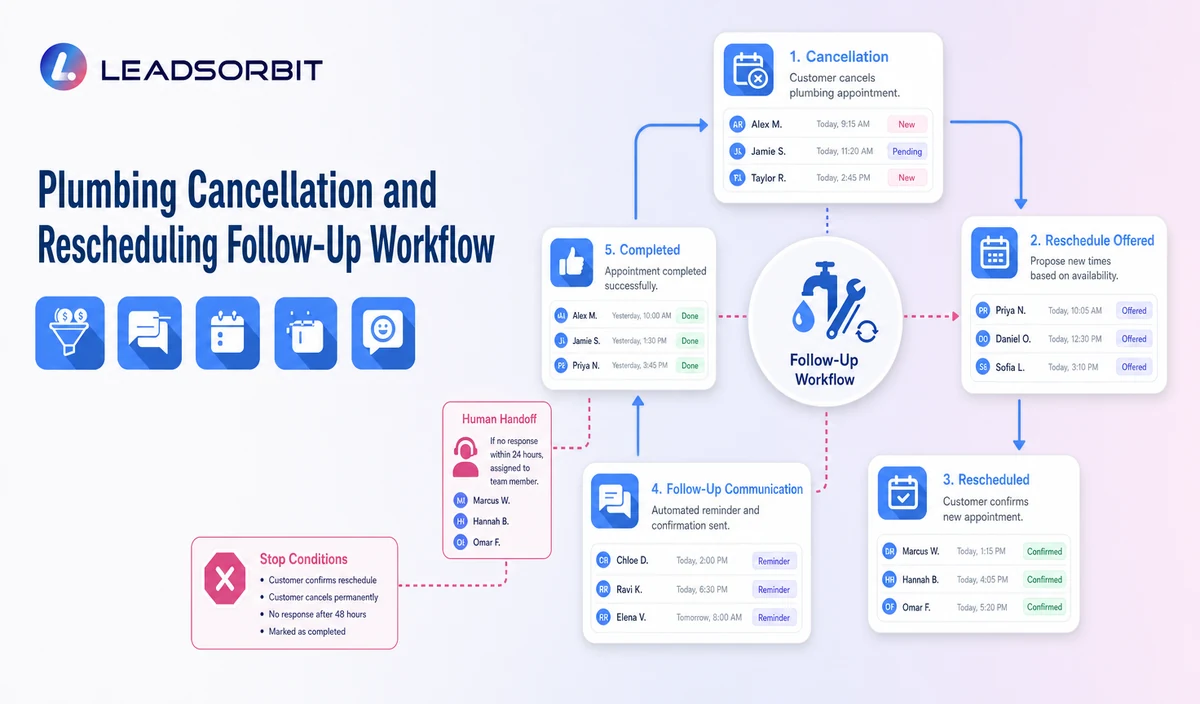
A reliable plumbing cancellation workflow should focus on accurate information, clear ownership, and the right customer outcome.
Each stage should answer one important question:
What happened, what should happen next, and who is responsible?
| Stage | Workflow action | Staff responsibility | Stop or escalation rule |
|---|---|---|---|
| 1. Validate status | Confirm the actual appointment outcome before recovery begins. | Correct calendar or CRM errors and confirm the source information. | Do not begin recovery from an uncertain appointment status. |
| 2. Stop old messages | Remove reminders and confirmations connected with the cancelled appointment. | Review duplicate workflows or outdated communication. | Stop messages related to the previous appointment. |
| 3. Send recovery message | Send the appropriate cancellation, failed access, or rescheduling message. | Monitor replies, complaints, and unusual situations. | Stop automation after booking, customer reply, opt out, or staff takeover. |
| 4. Route replies | Handle customer responses such as booking requests, callbacks, later contact, help requests, or opt outs. | Manage policy questions, fees, access concerns, or operational issues. | Pause automated communication when human review is needed. |
| 5. Reschedule or create a task | Provide an approved booking path or create a follow up task. | Resolve availability and exceptions. | Close the workflow after a valid next step is confirmed. |
| 6. Limited follow up | Send only approved follow up communication when appropriate. | Decide whether the request remains open or moves to closure. | Stop after the approved attempt limit. |
| 7. Record outcome | Mark the final result, such as rebooked, later request, no response, complaint, opt out, or closed. | Review unresolved records and ownership. | Do not keep completed requests active unnecessarily. |
Core Plumbing Cancellation Follow Up Message Examples
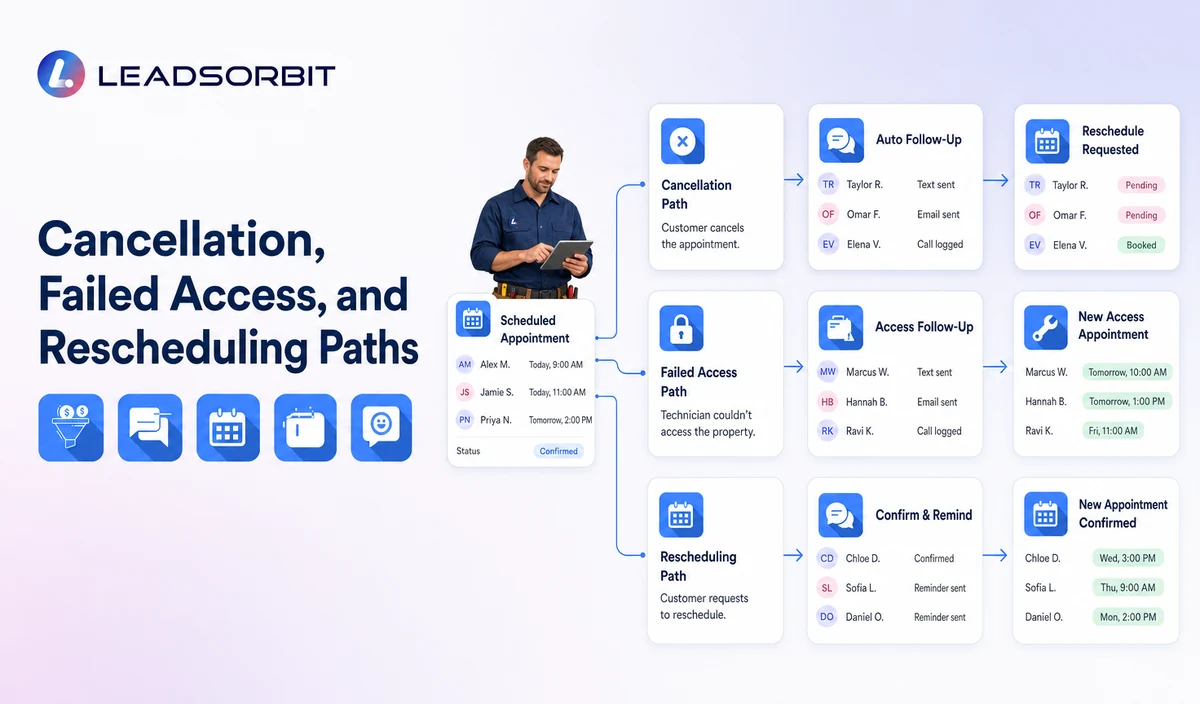
The message sent after a cancelled plumbing appointment can influence whether the customer schedules again or moves on to another company. A good follow up message should be clear, respectful, and focused on the next available action.
The purpose of a cancellation follow up is not to pressure the customer into booking immediately. It is to maintain a helpful conversation, confirm the customer’s needs, and make it easy to continue when they are ready.
A plumbing company should adjust messages based on the actual appointment situation.
Customer Cancellation Message
When a customer cancels an appointment, the first message should acknowledge the cancellation and provide a simple path for future scheduling.
Example:
This type of message:
- Confirms the cancellation.
- Avoids unnecessary pressure.
- Keeps the conversation open.
- Gives the customer control over the next step.
A plumbing company should avoid sending messages that assume the customer still wants service or that create urgency without approval.
Rescheduling Request Message
When a customer wants a different appointment time, the workflow should move from cancellation recovery to appointment coordination.
Example:
The message should reflect approved scheduling information.
For example, if a plumbing company provides a service window instead of an exact arrival time, the reminder or follow up message should communicate the same approved appointment details.
The goal is to maintain accurate expectations between the customer and the business.
Failed Access Follow Up Message
Sometimes an appointment cannot be completed because the team could not access the property. This situation requires careful communication.
Example:
The workflow should not assume:
- Why access was unavailable.
- Whether another person can provide access.
- Whether the appointment should automatically be rescheduled.
Those decisions should follow the plumbing company’s approved process.
Common Plumbing Cancellation Follow Up Mistakes
A cancellation workflow can create a poor customer experience when communication rules are not clearly defined.
Continuing Messages After Cancellation
One common mistake is allowing old reminders to continue after an appointment has already been cancelled.
For example, a customer cancels a plumbing repair appointment in the morning but receives a reminder later saying the technician will arrive soon.
This creates confusion and reduces trust.
A proper workflow should update the appointment status before additional messages are sent.
Treating Every Cancellation the Same Way
Not every cancellation has the same reason.
Examples:
- A customer may need a different appointment time.
- A customer may no longer need the service.
- A customer may have questions before continuing.
- A customer may request a staff member.
Each situation may require a different next step.
A strong plumbing appointment recovery process uses clear categories instead of sending the same message to every customer.
Creating Promises That Are Not Confirmed
Automated communication should only share information that is available and approved.
Avoid messages that:
- Guarantee arrival times.
- Promise immediate availability.
- Confirm services that require staff approval.
- Provide pricing without verified information.
For example, if the system only has a request for a new appointment, the message should not state that the appointment has been confirmed.
Keeping Customers in Automation After They Request Help
Automation should support the customer experience, not prevent human assistance.
If a customer asks:
- "Can someone call me?"
- "I have a question about my appointment."
- "I need help with another issue."
The workflow should create the appropriate task or route the conversation to the correct team member.
Plumbing Cancellation Recovery Checklist
Before publishing or activating a cancellation and rescheduling workflow, plumbing companies should review:
- Confirm the appointment status before sending follow up messages.
- Stop reminders connected to cancelled appointments.
- Define approved cancellation and rescheduling message templates.
- Create clear paths for booking requests, callbacks, and staff review.
- Identify situations requiring human involvement.
- Ensure customer information is handled according to company privacy requirements.
- Review follow up limits to avoid unnecessary communication.
- Track final outcomes such as rebooked, waiting for customer response, or closed requests.
A checklist helps teams maintain consistent communication while still allowing flexibility for unique customer situations.
How LEADSORBIT Supports This Plumbing Workflow
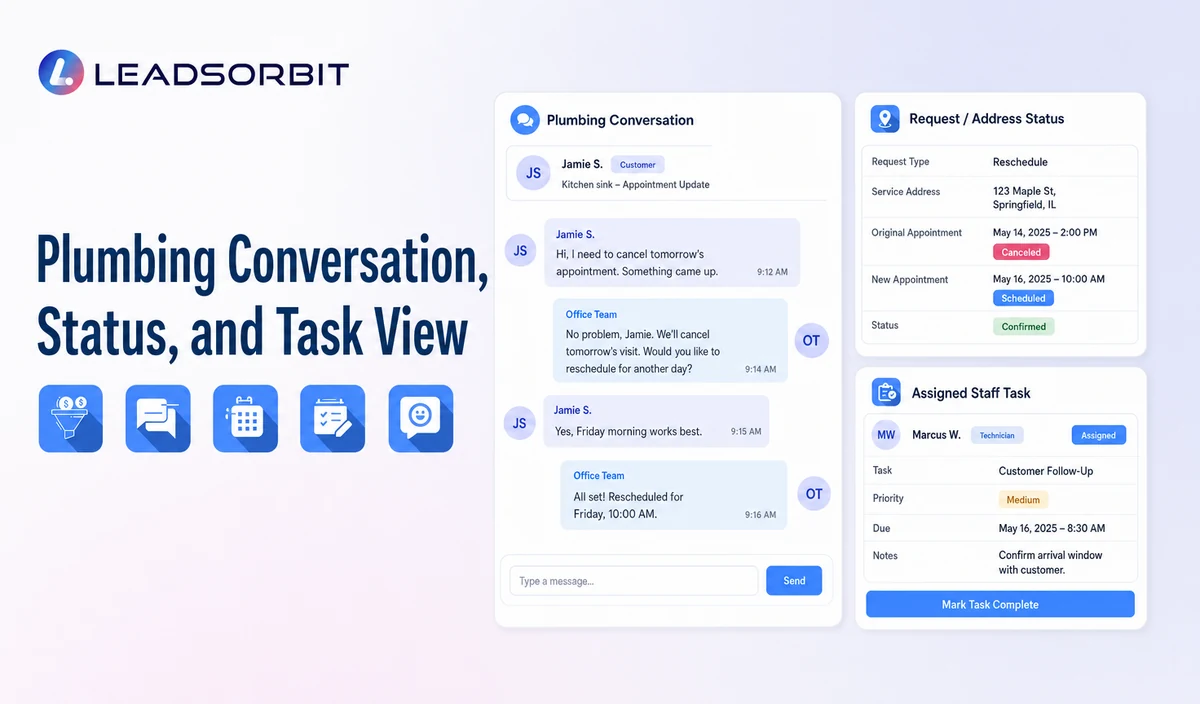
LEADSORBIT’s AI powered CRM helps businesses organize customer conversations, appointment activity, follow up workflows, tasks, and operational visibility through connected communication processes.
For plumbing companies managing cancellations and rescheduling requests, the workflow can support:
- Tracking customer conversations related to appointment changes.
- Organizing follow up tasks after cancellations.
- Maintaining visibility into customer requests.
- Supporting approved appointment workflows.
- Helping teams manage communication ownership.
AI Appointment supports appointment related workflows such as appointment requests, calendar connections, confirmations, reminders, rescheduling, and cancellation handling where configured.
Workflow AI can support structured automation rules, task creation, and communication workflows based on approved business processes.
Conversation AI supports configured conversation channels, customer communication visibility, routing, staff takeover, and CRM synchronization.
Exact channels, fields, calendars, appointment rules, integrations, permissions, retention settings, and workflow behavior require implementation validation.
LEADSORBIT is positioned as the communication, booking, follow up, CRM, review, and task management layer. It should not be represented as a complete field service management system, dispatch platform, technician tracking system, estimating system, invoicing system, inventory system, payroll system, accounting system, or work order platform.
Try LEADSORBIT free for 14 days
FAQs
The best approach is to confirm the cancellation status, stop outdated reminders, understand the customer’s preferred next step, and provide an approved path for rescheduling or staff assistance.
Final Thoughts
Plumbing cancellation and rescheduling follow up is not simply about sending another message after an appointment is missed. A reliable workflow helps businesses confirm accurate appointment information, communicate clearly, recover potential bookings, and provide customers with an easy next step.
The most effective approach combines organized automation with human decision making. Plumbing companies can use structured workflows to reduce confusion, maintain customer trust, and ensure every appointment request receives the right attention.
With the right communication process, cancellations become manageable workflow events instead of lost opportunities.
Start 14 days free trial to see how LEADSORBIT can support plumbing appointment workflows with conversations, booking requests, automation, tasks, and CRM visibility.

Start Your Free 14 Day Trial
Try LEADSORBIT and see how it captures missed calls, follows up instantly, and turns leads into booked appointments for your business.