
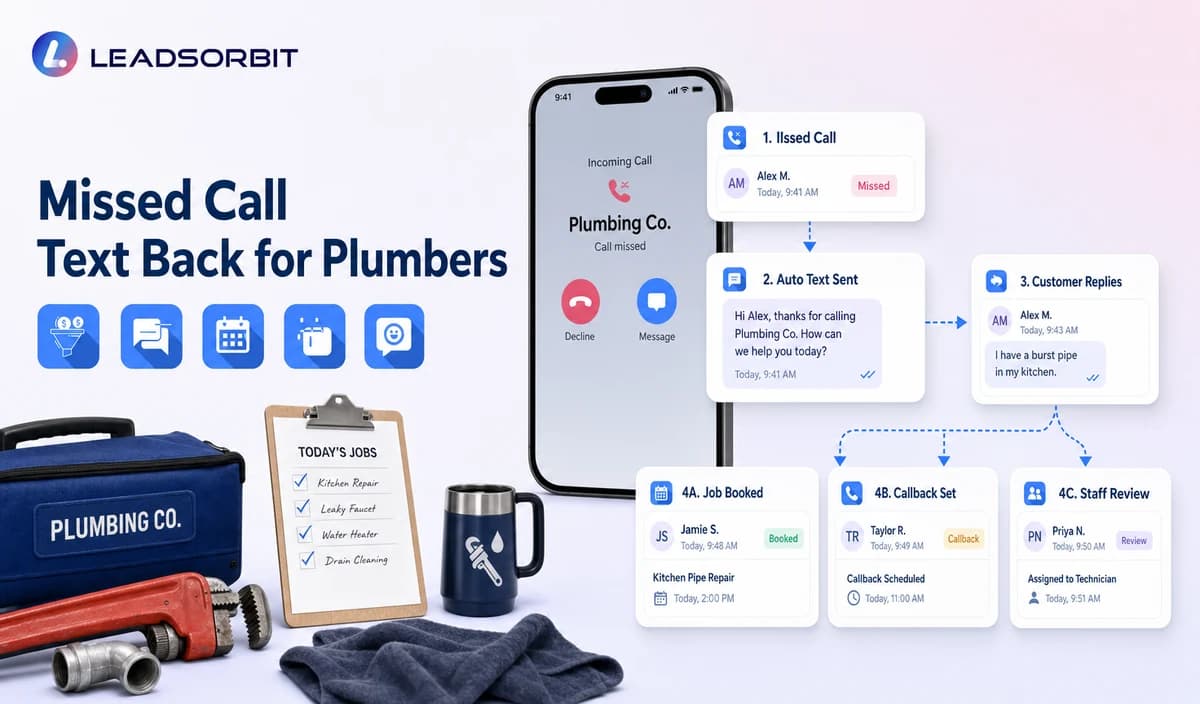

A phone call is often the first interaction between a customer and a plumbing company. When a homeowner notices a leaking pipe, clogged drain, water heater issue, or another plumbing concern, they usually want a quick response from a reliable professional.
However, plumbing companies are not always able to answer every call immediately. Office teams may be helping another customer, coordinating technicians, managing appointments, preparing estimates, or handling existing service requests. During busy periods, even a legitimate customer inquiry can become a missed opportunity if there is no follow up process in place.
A missed call text back for plumbers helps create a simple and reliable communication path after an unanswered call. Instead of leaving customers uncertain after reaching voicemail, the workflow can send an approved text message, confirm that the business received the call, collect basic information, and create the next step for the plumbing team.
This workflow supports a broader lead follow up automation for small business approach by helping businesses organize customer communication, track responses, and create consistent follow up processes.
A missed call text back workflow does not replace plumbing professionals or office staff. It supports the team by handling the initial communication step while keeping service decisions, pricing discussions, technical questions, and emergency assessments with qualified employees.

Why Missed Calls Are a Challenge for Plumbing Companies
For many plumbing businesses, phone calls are one of the most valuable sources of new service opportunities. Customers often call when they need immediate assistance or want to schedule professional help.
A missed call can create several challenges:
- The customer may not know if the business received the request.
- The office team may not have enough information to return the call effectively.
- Multiple missed calls can become difficult to organize during busy hours.
- Follow up responsibility may not be clear among team members.
- Customers may contact another plumbing company if they do not receive a response.
Plumbing companies receive many different types of calls, including:
- New service inquiries.
- Drain cleaning requests.
- Water heater questions.
- Fixture repair requests.
- Installation inquiries.
- Existing appointment updates.
- Estimate related questions.
- Service plan communication.
Each request requires a different response. A customer asking about an appointment change should not follow the same process as a new customer requesting service.
A missed call text back workflow helps create structure by identifying the customer request and guiding it toward the correct next action.
Who This Guide Is For
This guide is useful for:
- Plumbing business owners who want a better process for unanswered calls.
- Office managers managing customer communication and scheduling.
- Residential plumbing companies handling daily service inquiries.
- Commercial plumbing companies managing multiple customer requests.
- Multi location plumbing businesses that need consistent communication workflows.
It is especially useful for teams that already receive regular phone inquiries but need a better way to organize missed calls, callbacks, and customer responses.
What Is Missed Call Text Back Automation for Plumbers?
Missed call text back automation is a workflow that begins when a customer call is not answered.
Instead of allowing the customer request to stop at a missed call notification, the workflow creates an immediate communication opportunity.
A typical process includes:
- A customer calls the plumbing company.
- The call is unanswered based on approved business rules.
- An automated text message is sent.
- The customer receives a clear response option.
- Basic information is collected if the customer replies.
- A callback task or next action is created for the team.
For example: a homeowner calls a plumbing company after business hours because they need service information. The missed call workflow can send an approved message explaining that the company received the call and asking the customer to provide basic details.
The customer may provide:
- Name.
- Phone number.
- Service address.
- General reason for contacting the company.
- Preferred callback time.
The plumbing team can then review the request and respond according to the company’s approved process.
A Practical Missed Call Text Back Workflow
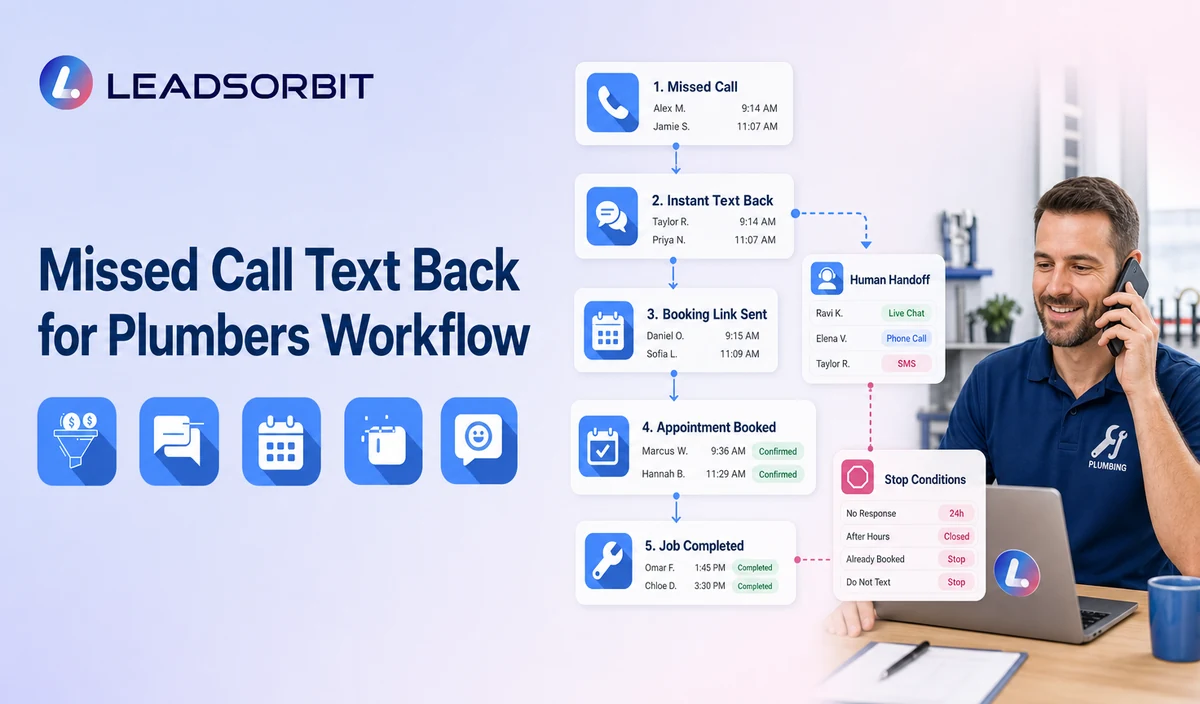
A successful workflow focuses on communication organization, not replacing human judgment.
| Stage | Workflow Action | Staff Responsibility | Stop or Escalation Rule |
|---|---|---|---|
| Missed Call Trigger | Identify unanswered calls based on approved workflow settings. | Review call rules and excluded situations. | Do not send unnecessary messages after completed communication. |
| Initial Text Response | Send an approved message identifying the plumbing company. | Maintain accurate messaging and contact details. | Stop if the customer has already been contacted. |
| Customer Information Capture | Collect basic details such as name, callback number, service address, and general request. | Review incomplete or incorrect information. | Do not collect unnecessary technical details. |
| Follow Up Assignment | Create a callback task or approved next step. | Ensure the responsible team member receives the request. | Escalate situations requiring human review. |
Why a Fast Response Matters After a Missed Call
Customers usually do not know why a business did not answer. They only know that they need help and are waiting for a response.
A simple acknowledgement can improve communication by:
- Confirming that the customer reached the correct business.
- Reducing uncertainty after an unanswered call.
- Giving customers a clear way to continue the conversation.
- Helping office teams receive organized information.
- Creating accountability for follow up actions.
The strongest plumbing communication workflows combine automation with human involvement. Automation helps capture and organize requests, while plumbing professionals continue handling technical decisions and customer specific situations.
Daytime, After Hours, and Failed Transfer Rules
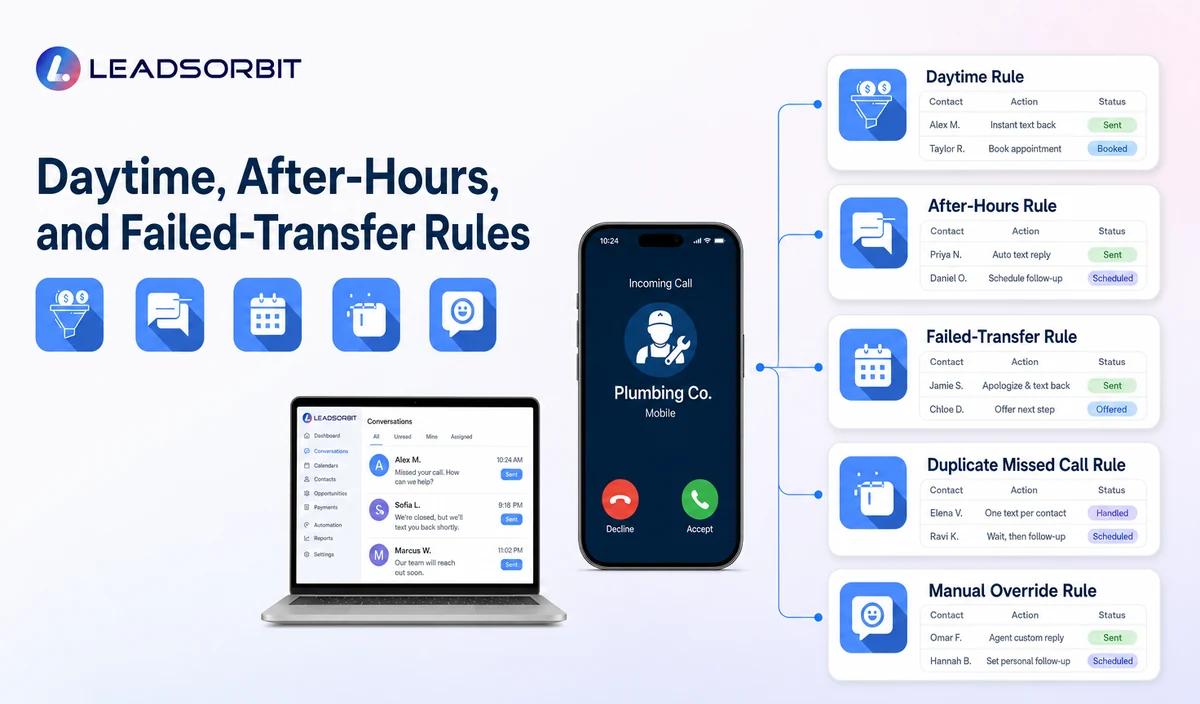
A missed call text back workflow should not treat every unanswered call the same way. The correct response depends on business hours, customer availability, communication preferences, and the company’s approved follow up process.
A plumbing company may receive calls during working hours when the office team is busy, or after hours when no team member is available. Creating different workflows for these situations helps maintain better customer communication.
Daytime Missed Call Workflow
During business hours, a missed call usually means the team is temporarily unavailable rather than closed.
For example:
A plumbing office manager may be helping another customer, speaking with a technician, or handling scheduling tasks when a new customer calls.
A daytime missed call text can:
- Confirm that the customer reached the correct plumbing company.
- Provide an option to request a callback.
- Collect basic customer details.
- Create a follow up task for the office team.
The goal is not to replace the phone conversation. The goal is to make sure the customer has a clear next step.
After Hours Missed Call Workflow
After hours communication requires additional care because customers may contact a plumbing company outside normal office availability.
An approved after hours workflow can:
- Confirm the business received the inquiry.
- Explain that the team will review the request according to the company process.
- Collect basic contact information.
- Create a follow up opportunity for the next available team member.
The workflow should not:
- Guarantee emergency response.
- Promise immediate technician availability.
- Provide technical plumbing advice.
- Make decisions about service urgency.
Emergency situations, safety concerns, and technical decisions should always follow the company’s approved process and involve qualified professionals when required.
Failed Transfer and Unanswered Callback Workflows
Sometimes a customer reaches the business but the conversation cannot be completed.
Examples:
- A transfer fails.
- The customer disconnects before speaking with someone.
- A team member cannot answer during the transfer.
- The customer requests a callback instead of waiting.
A structured workflow can help by:
- Recording the communication attempt.
- Sending an approved follow up message when appropriate.
- Creating ownership for the next action.
- Preventing repeated or duplicate outreach.
Clear ownership is important because a missed transfer should not become another forgotten customer request.
Practical Missed Call Text Back Scripts
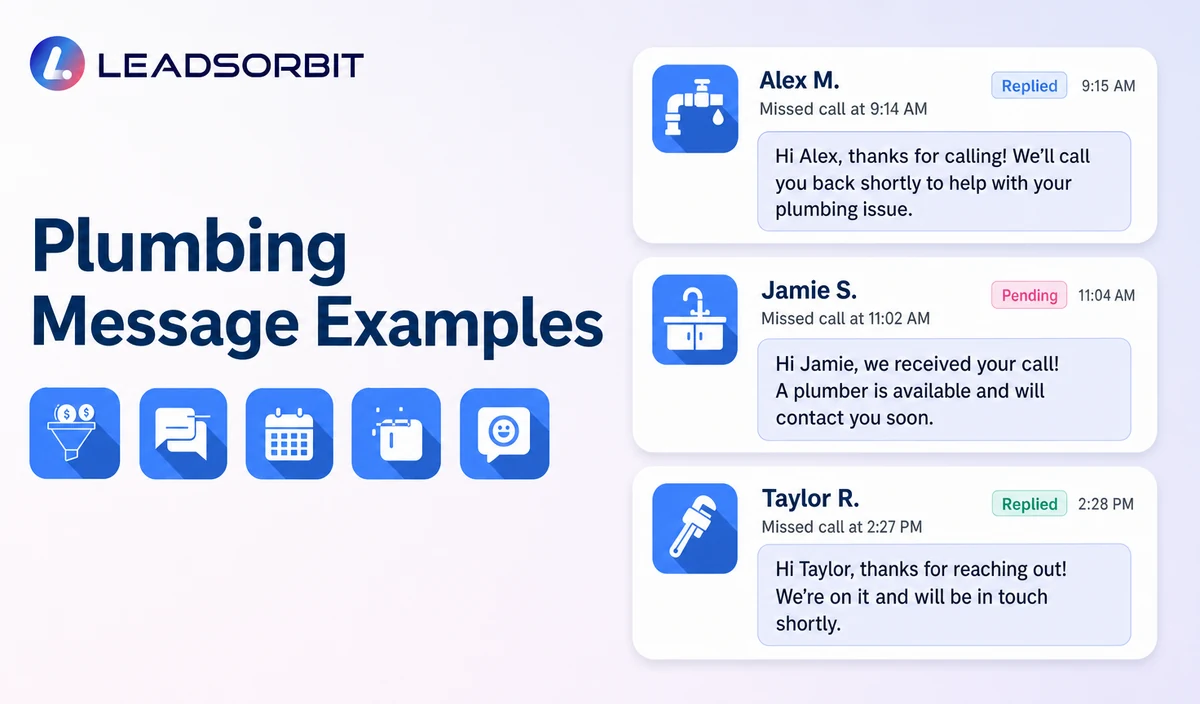
The message sent after a missed call should be clear, professional, and aligned with the plumbing company’s communication style.
Initial Missed Call Message
Callback Request Message
After Hours Message
Human Handoff Message
Important Boundaries for Missed Call Text Back Automation
A reliable communication workflow requires clear limits.
Missed call text back automation should not:
- Diagnose plumbing problems.
- Determine whether a situation is an emergency.
- Recommend repairs.
- Provide technical instructions.
- Make pricing decisions.
- Confirm technician availability without verification.
- Collect unnecessary personal information.
The workflow should support communication while allowing plumbing professionals to handle decisions that require experience and expertise.
This approach improves reliability because customers receive a response without creating false expectations.
Privacy, Consent, and Customer Communication
Plumbing businesses handle customer information when responding to missed calls, scheduling requests, and follow up conversations.
This information may include:
- Customer name.
- Phone number.
- Service address.
- Communication preferences.
- Appointment details.
- Conversation history.
- General service request information.
Businesses should collect only the information needed for the communication workflow and maintain appropriate controls for access, storage, and usage.
SMS communication should follow applicable consent and opt out requirements. Customers should have a clear way to stop receiving messages, and businesses should maintain records of communication preferences.
A missed call workflow should also separate operational communication from promotional messaging. A customer requesting plumbing service should receive information related to their request rather than unrelated marketing messages.
LEADSORBIT supports communication workflows, follow up management, CRM visibility, reviews, booking processes, and customer tasks. It should not be presented as a replacement for plumbing operations systems, dispatch management, technician tracking, accounting, pricing systems, or other specialized business tools unless separately verified.
Common Plumbing Missed Call Workflow Mistakes
Many businesses create missed call automation but overlook important workflow details.
Common mistakes include:
Sending the Same Message to Every Caller
Different customers have different needs. A new customer request, existing appointment question, and estimate inquiry may require different next steps.
Collecting Too Much Information
The first message should make communication easier, not create a long form experience.
Collect only the information needed for the next action.
No Clear Ownership
A customer response should always have a responsible team member or workflow.
Without ownership, automation may collect information without creating progress.
Continuing After Human Contact
Once a team member has taken over communication, automated messages should stop to avoid confusion.
Using Unverified Information
Business hours, service areas, appointment availability, and response messages should always remain accurate.
Missed Call Text Back Implementation Checklist
Before launching this workflow, plumbing companies should:
- Define when a missed call message should be triggered.
- Create approved daytime and after hours messages.
- Identify the information needed from customers.
- Define callback ownership.
- Connect follow up tasks with responsible team members.
- Create stop conditions after customer response or human takeover.
- Review SMS consent and opt out requirements.
- Test different scenarios before activating the workflow.
A well planned workflow helps businesses maintain consistent communication without removing human involvement.
What to Measure
Plumbing companies can evaluate missed call text back performance by reviewing:
- Number of missed calls received.
- Text messages successfully delivered.
- Customer replies.
- Callback requests created.
- Follow up tasks completed.
- Requests requiring human assistance.
- Opt out requests.
- Communication errors.
These insights help businesses understand whether the workflow is improving customer communication and where adjustments may be needed.
How LEADSORBIT Supports Plumbing Missed Call Workflows
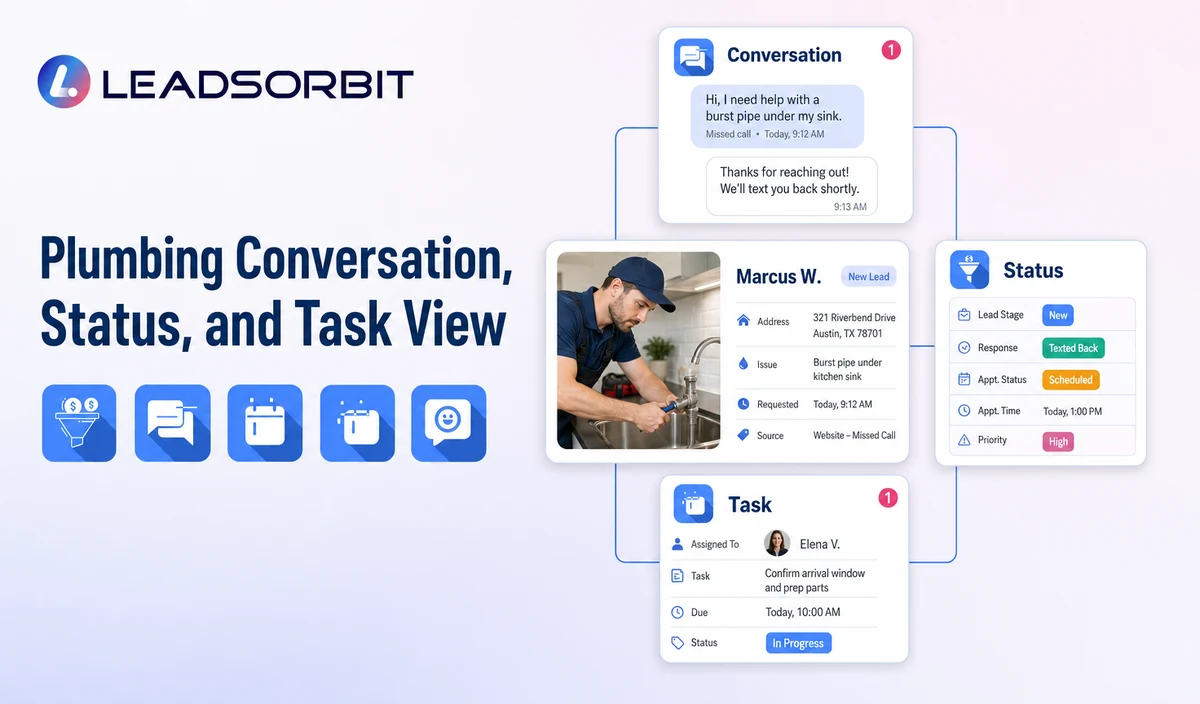
LEADSORBIT’s AI powered CRM helps plumbing businesses organize customer conversations, follow ups, booking activity, tasks, and communication workflows.
Relevant capabilities include:
Workflow AI
Supports configurable triggers, conditions, messages, timing, tasks, and stop rules for customer communication workflows.
Conversation AI
Helps manage customer conversations, communication history, routing, and human handoff workflows.
AI Receptionist
Supports approved call handling workflows, customer information capture, and communication processes where configured.
The exact channels, fields, messaging providers, integrations, permissions, and business rules require implementation validation.
Start 14 Days Free Trial
Start 14 days free trial to explore how LEADSORBIT can support plumbing communication workflows with follow ups, conversations, tasks, booking processes, and CRM visibility.
Try LEADSORBIT free for 14 days
FAQs
Missed call text back for plumbers is a communication workflow that sends an approved text message after an unanswered call and helps collect information for the next customer response step.
Final Thoughts
A missed call text back workflow helps plumbing companies create a reliable communication process when phone calls cannot be answered immediately.
The strongest workflows focus on fast acknowledgment, accurate information collection, clear ownership, and proper human involvement. Automation should support the plumbing team by organizing customer communication while leaving technical decisions to experienced professionals.
Start 14 days free trial to explore how LEADSORBIT can support plumbing communication workflows with follow ups, conversations, tasks, booking processes, and CRM visibility.

Start Your Free 14 Day Trial
Try LEADSORBIT and see how it captures missed calls, follows up instantly, and turns leads into booked appointments for your business.