
Most businesses do not lose leads because the customer has no interest. They lose leads because of simple lead follow up mistakes.
The reply came too late. The team forgot to call back. The lead received one message and then nothing. The CRM stage was never updated. Or the business kept sending the same follow up even after the person had already booked. These mistakes are common, especially in small businesses where the owner, front desk, sales team, and marketing team are all busy.
The good news is that most of these mistakes are fixable. You do not need a complicated system. You need a clear lead follow up strategy, better follow up timing, and simple workflow automation that keeps every lead moving.
If you are still building your full system, I recommend reading the main guide on Lead Follow Up Automation first. This post focuses only on the mistakes that quietly kill conversions and how to correct them.
Mistake 1: Waiting Too Long To Respond
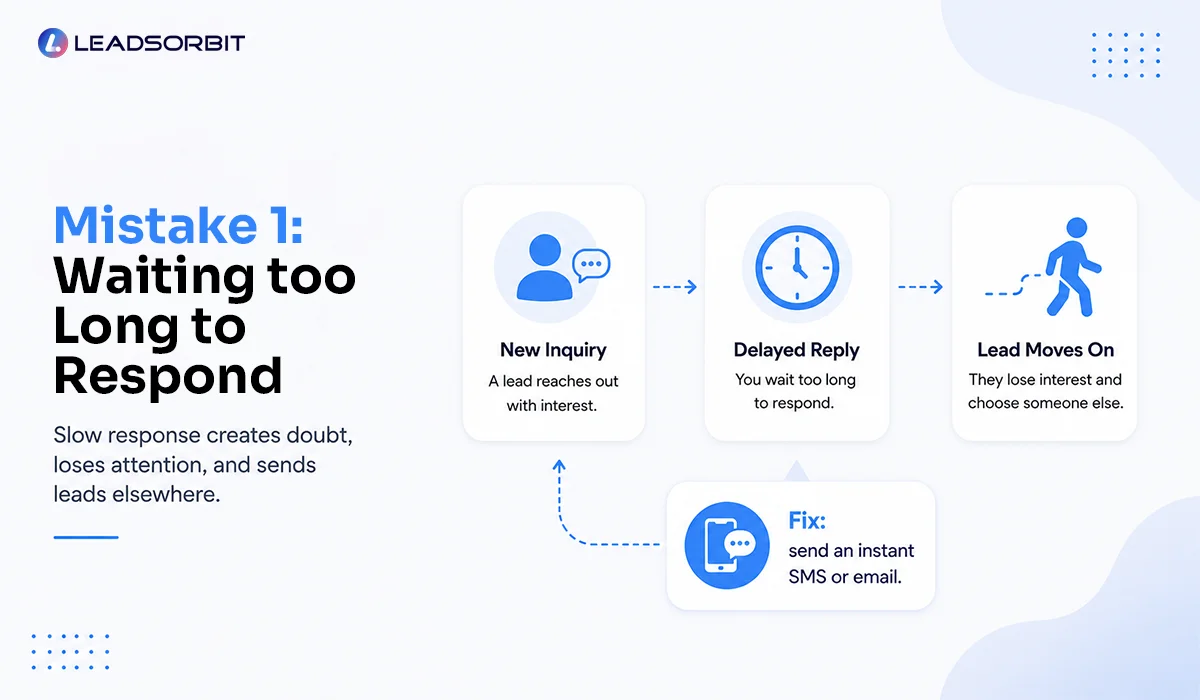
The biggest follow up mistake is slow response. When someone fills out a form, calls your business, starts a chat, or asks about an appointment, they are showing interest in that moment. If your business waits hours or days to reply, the lead may move on, forget, or contact another provider.
This happens often in appointment based businesses. A chiropractic clinic may receive a new patient inquiry while the front desk is helping people in the office. A dental practice may get a form submission after hours. By the time someone follows up the next day, the lead may have already found another option.
The fix is simple: your first response should not depend only on a person being available. Use automation to send an instant SMS or email as soon as the lead comes in. Your team can still follow up personally, but the lead should not sit without a response.
A simple first reply can say: “Hi {{first_name}}, thanks for reaching out to {{business_name}}. We received your request. Would you like help scheduling an appointment?”
This is where speed to lead matters. The first response does not have to close the sale. It just needs to acknowledge the inquiry and open the conversation. With Workflow AI, this first response can trigger automatically when a lead enters the CRM.
Mistake 2: Following Up Only Once
Many businesses send one message, make one call, or leave one voicemail, then stop. That is not enough. People are busy. They miss calls. They read a text and forget to reply. They may still be interested, but they need another reminder or a simpler next step.
This does not mean you should chase people aggressively. It means your follow up sequence should give the lead more than one chance to respond.
A practical correction is to use a light 3 touch structure:
- First touch: confirm the inquiry and invite a reply.
- Second touch: follow up politely if there is no response.
- Third touch: ask if they still need help or want the request closed for now.
Keep it simple. The goal is not to overwhelm the lead. The goal is to make sure one missed call or one unread message does not end the opportunity. A good follow up process feels helpful, not pushy.
Mistake 3: Using The Same Follow Up For Every Lead
Not every lead is the same. Some people are ready to book now. Some are asking questions. Some are comparing options. Some are only researching. Some have already spoken with your team but have not confirmed a time.
If every lead receives the same message, your follow up can feel disconnected. For example, a dental lead asking about treatment pricing should not receive the exact same message as someone who already clicked a booking link. A chiropractic lead asking about availability should not be treated the same as someone who stopped responding after three attempts.
The fix is to organize your lead pipeline clearly. You do not need 20 stages. But you should know whether a lead is new, contacted, engaged, appointment requested, booked, no response, or long term follow up.
This helps your team send the right message based on where the lead actually is. A marketing automation CRM can make this easier because the workflow can change based on the lead’s stage, reply, or action.
Mistake 4: Not Giving The Lead A Clear Next Step
A lot of follow up messages are polite but weak. They say things like: “Just checking in.”
That is not wrong, but it is incomplete. The lead may not know what to do next. Should they call? Reply? Book online? Wait for someone? Ask a question? Every follow up should make the next step clear. Instead of only saying: “Just checking in.”
Say: “Hi {{first_name}}, just checking in. Would you like me to send the booking link, or would you prefer a call from our team?”
That gives the lead two easy options. For appointment based businesses, this matters a lot. People often delay booking because the next step feels unclear or inconvenient. Your follow up best practices should include one rule: every message should move the conversation forward.
Mistake 5: Letting Leads Sit In The Wrong CRM Stage
A CRM is only useful if it reflects what is actually happening. If a booked lead is still sitting in “New Lead,” your team may send the wrong follow up. If a no response lead is still marked as “Interested,” the pipeline becomes confusing. If a lead says “not interested” but no one updates the CRM, your team may keep contacting them.
This creates bad customer experience and internal confusion. The fix is to keep pipeline movement simple. For most small businesses, the team should update the lead stage whenever one of these things happens:
- The lead replies.
- The lead books.
- The lead does not respond after follow up.
- The lead says they are not interested.
You do not need a complicated process. You just need consistent stage movement. This is one of the most important parts of workflow automation for small businesses because it keeps your team aligned.
Mistake 6: Depending Only On Manual Memory
Many teams rely on someone remembering to follow up. That may work for a few leads per week. It does not work when lead volume grows.
The front desk gets busy. The owner is handling operations. The sales rep is on another call. A sticky note gets lost. A spreadsheet is not updated. A lead falls through. This is not a people problem. It is a system problem.
The fix is to create automatic reminders and tasks. If a new lead comes in, the CRM should create a task. If the lead does not respond, the system should remind the team or trigger the next step. If the lead books, the system should move them into the right workflow.
Conversation AI also helps because conversations stay centralized. Your team can see messages from different channels in one place instead of switching between inboxes. When follow up depends only on memory, mistakes are expected. When follow up is supported by automation, the process becomes more reliable.
Mistake 7: Not Nurturing Leads Who Are Not Ready Yet
Some leads will not convert right away. That does not mean they are bad leads. A chiropractic lead may be interested but wants to check their schedule. A dental lead may need time to discuss treatment with family. Some leads may want to compare options before booking.
If your team marks every unbooked lead as lost too early, you lose future opportunities. This is where lead nurturing automation helps.
Instead of chasing the person every day, move them into a light nurture flow. This could include helpful reminders, service education, review highlights, or a simple check in later.
For example, a dental practice can send a helpful message about what to expect before a consultation. A chiropractic office can send a short note reminding the lead that the team is available when they are ready.
LEADSORBIT supports follow up workflows for both chiropractic businesses and dental practices, where lead nurturing, appointment reminders, and conversations are part of the same system. The goal is not to chase. The goal is to stay visible and helpful.
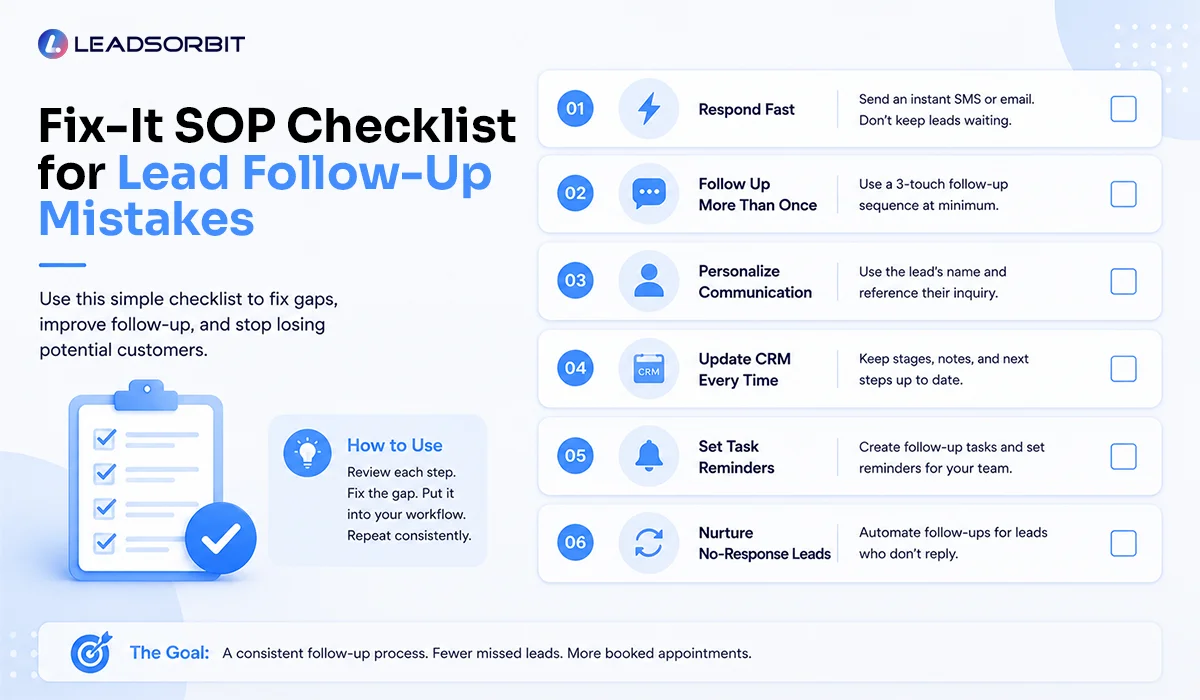
Fix It SOP Checklist For Lead Follow Up Mistakes
Use this checklist to clean up your follow up process.
1. Capture
- Make sure all leads enter one CRM.
- Connect website forms, chat, calls, and ad leads.
- Add the lead source so your team knows where the inquiry came from.
2. Respond
- Send an instant first response by SMS or email.
- Keep the first message short and clear.
- Give the lead one easy next step.
3. Follow Up
- Do not stop after one attempt.
- Use a simple 3 touch follow up sequence.
- Add a team call task for high intent leads.
4. Control
- Move leads into the correct CRM stage.
- Stop sales follow up when a lead books.
- Move no response leads into nurture instead of forgetting them.
This checklist is not meant to replace your full system. It is a quick way to find and fix the most common conversion leaks.
What To Track Without Overcomplicating It
You do not need a heavy reporting dashboard to start improving follow up.
Begin with a few simple checks:
- How quickly new leads receive the first response
- How many leads are still sitting in New Lead or No Response
- How many leads book after the first, second, or third touch
These numbers help you see whether your follow up timing and process are improving. Once your team becomes consistent, you can add deeper reporting later.
How LEADSORBIT Helps Fix These Follow Up Mistakes
LEADSORBIT helps small businesses avoid common lead follow up mistakes by connecting lead capture, conversations, workflows, and CRM pipeline stages in one system.
- With Workflow AI, you can automate first responses, follow up tasks, no response workflows, nurture flows, appointment reminders, and internal notifications.
- With Conversation AI, your team can manage conversations in one place, instead of losing messages across SMS, email, chat, calls, and social channels.
Together, these tools help your business respond faster, stay organized, and give every lead a clear next step.
A simple system can make a big difference. To see how these follow up workflows can work inside your business, you can book a demo with LEADSORBIT.
Try LEADSORBIT free for 14 days
FAQs
The most common mistakes are responding too slowly, following up only once, using the same message for every lead, not giving a clear next step, failing to update CRM stages, and forgetting leads who are not ready yet.
Final Thoughts
Here are the main takeaways:
- Lead follow up mistakes are easy to miss because they usually happen quietly.
- A lead waits too long. A call is not returned. A message has no clear next step. A CRM stage is not updated. A warm lead is forgotten because they were not ready today.
- Individually, these mistakes may look small. Together, they can cost your business real conversions.
- The fix is not to work harder manually. The fix is to build a better process.
- Start with the basics: respond quickly, follow up more than once, use the right message for the right stage, and keep your CRM clean. Then use automation to support your team so the process stays consistent.
To see how LEADSORBIT can help you fix these follow up gaps with workflows, conversations, and automation:

Start Your Free 14 Day Trial
Try LEADSORBIT and see how it captures missed calls, follows up instantly, and turns leads into booked appointments for your business.
Personal Message from Faisal Zulfiqar
Most small businesses already have enough interest coming in. The real opportunity is often hidden in the follow up process. When you fix response time, pipeline clarity, and simple follow up discipline, your existing leads can start producing better results.