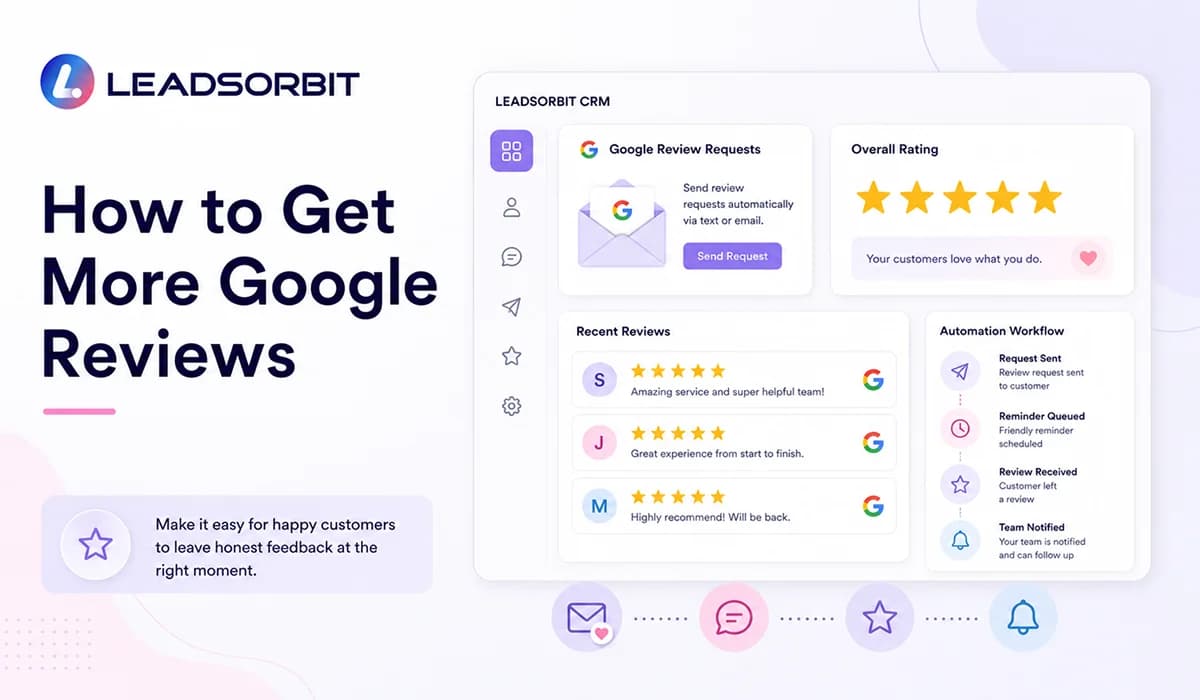

Getting more Google reviews is not about pushing customers or chasing ratings. For a small business, the real goal is to make it easy for real customers to share honest feedback at the right moment.
Most happy customers will not leave a review unless the process is simple. They may appreciate your service, but then they get busy, leave the location, or forget about the request. That is why timing, message clarity, and follow up matter.
This guide explains why Google reviews matter, when to ask, how to ask without sounding pushy, and how automation can help you build a stronger review process. For the broader strategy, read Online Reputation Management for Small Business.
Why Google Reviews Matter
Google reviews matter because they often appear when people are already comparing local businesses. A potential customer may search your business name, check your Google Business Profile, look at your star rating, and scan recent comments before they call, book, or visit.
For local and appointment based businesses, reviews can influence trust before your team ever speaks to the customer. A strong review profile can make your business feel active, reliable, and easier to choose.
Google says reviews can help businesses stand out and give potential customers helpful information, and its official guidance also explains best practices for requesting and replying to reviews. You can review the Google Business Profile review guidance for platform specific details.
- They help potential customers understand the experience of past customers.
- They support local trust when people are comparing similar businesses.
- They give business owners useful feedback about service quality.
- They create more confidence before someone books or calls.
- They help your team see what customers appreciate and where the process needs improvement.
The point is not to collect perfect reviews only. A healthy review profile should reflect real customer experiences and show that your business pays attention to feedback.
When to Ask for a Google Review
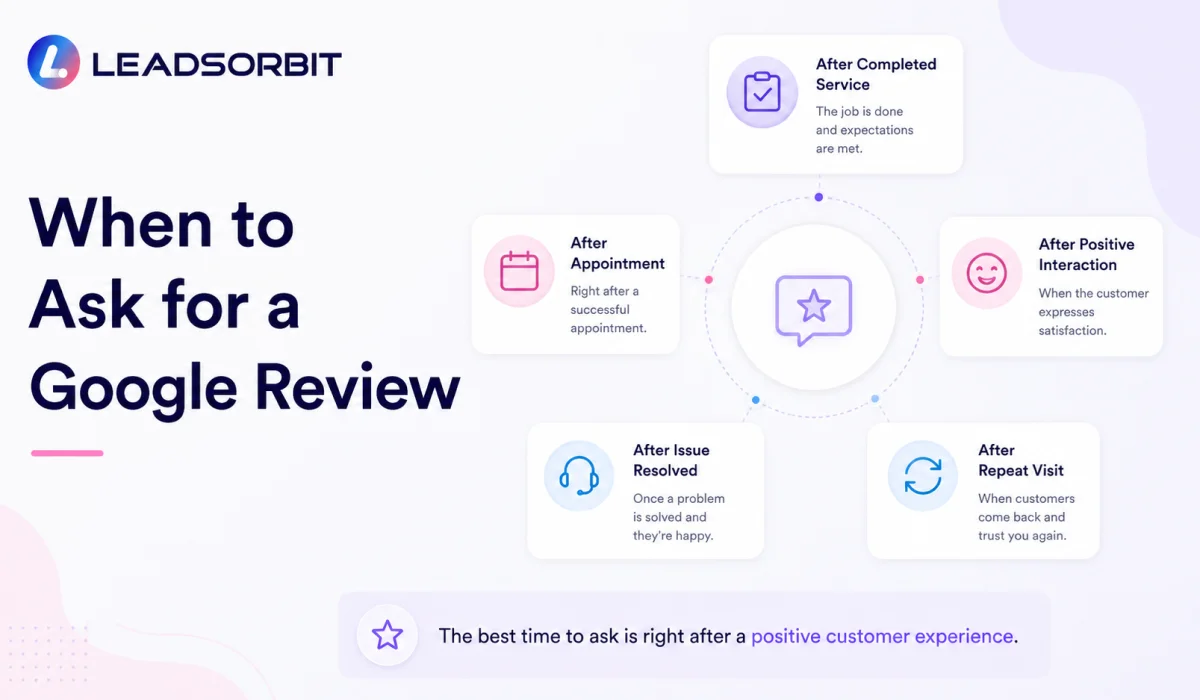
The best time to ask for a Google review is when the customer has just had a clear experience with your business. If the request comes too late, the customer may forget the details. If it comes too early, they may not have enough experience to share.
For service businesses, review timing should be connected to the customer journey. That means your team should know which moments are appropriate and which moments should be avoided.
- After a completed appointment or service visit.
- After a successful consultation or customer support interaction.
- After a positive conversation where the customer clearly seems satisfied.
- After an issue has been resolved professionally.
- After a repeat customer returns or completes another booking.
The timing should feel natural. A review request should not interrupt the customer experience. It should come after value has been delivered and the customer has a clear reason to share feedback.
How to Ask Customers for Reviews
The best review request is short, polite, and easy to act on. Customers should understand why you are asking, where to click, and that their honest feedback is welcome.
Avoid complicated instructions. If the customer has to search for your business, find the review section, and figure out the next step alone, many people will not complete it. A direct review link or QR code can make the process easier.
- Thank the customer first.
- Ask for honest feedback, not only a positive review.
- Keep the message short and clear.
- Use a direct Google review link when possible.
- Make the request feel personal to the interaction.
- Give the customer an easy way to ask for help if there is an unresolved issue.
A good request should sound human. It should not feel like a generic blast message sent only to improve ratings. The customer should feel that their feedback matters.
Google Review Request Templates
Templates help your team stay consistent, but they should still feel natural. The goal is to give the customer a simple next step without creating pressure.
Below are practical templates your team can adapt based on the channel and business type.
SMS template

Email template
Hi {{first_name}}, thank you for trusting us. Your feedback helps our team improve and also helps other customers understand what to expect. If you would like to share your experience, you can leave a Google review here: {{google_review_link}}
After appointment template
After issue resolution template
These templates should be adjusted for your tone, industry, and customer relationship. For a deeper template library, this pillar should later link to the dedicated guide on Review Request Templates for Small Businesses.
How Automation Helps Collect More Reviews
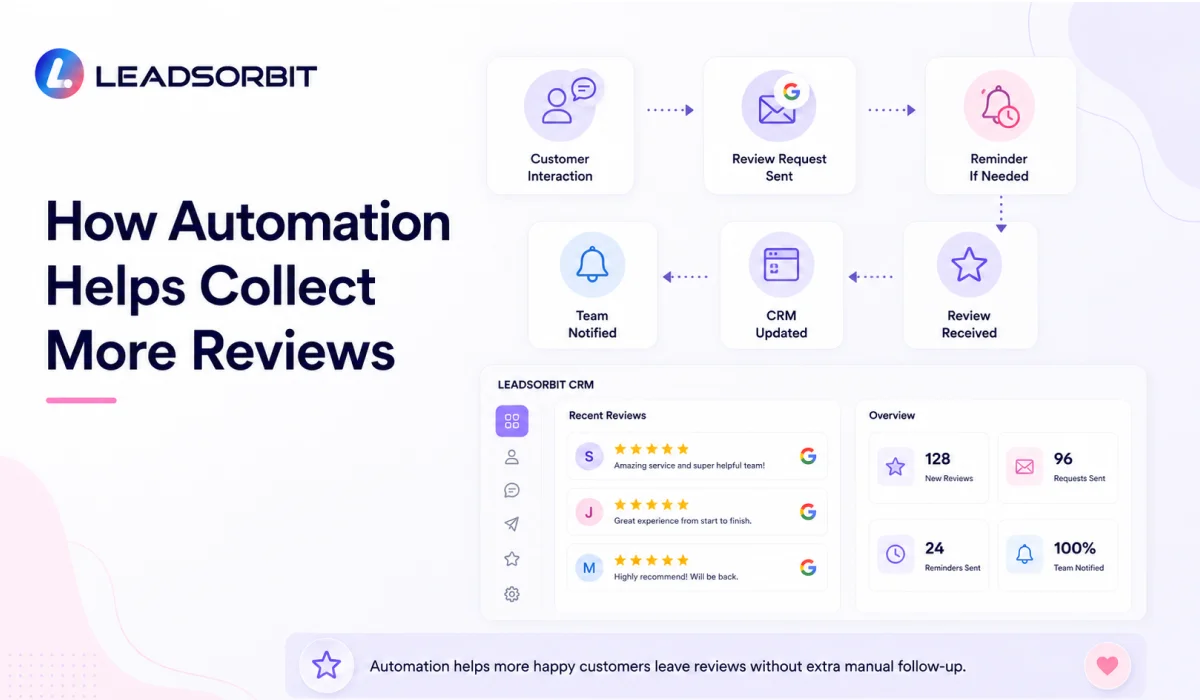
Automation helps because most review opportunities are missed during busy days. The team may intend to ask, but then calls, appointments, messages, and daily operations take priority. A CRM can make review requests part of the workflow instead of depending only on memory.
This is where Reviews AI and Workflow AI can support the process. A completed appointment, successful service, or customer follow up can trigger the right review request without forcing the team to manually remember every step.
- Send review requests after completed appointments or services.
- Pause requests when a customer still needs help.
- Track whether a request was sent by SMS, email, or chat.
- Notify the team when a new review is received.
- Keep review activity visible inside the customer record.
- Help the team respond faster when feedback needs attention.
Automation should support real customer relationships, not replace them. If a customer is unhappy, confused, or waiting for support, the system should help the team respond first instead of immediately asking for a review.
Mistakes to Avoid When Asking for Reviews
Getting more reviews should never come at the cost of trust. Small businesses need a process that is consistent, honest, and compliant with platform rules.
Google states that offering incentives in exchange for customers posting, changing, or removing reviews is prohibited under its policy, and the FTC provides guidance for marketers around online reviews and endorsements. Review the FTC online reviews guide when building your internal process.
- Do not buy fake reviews.
- Do not offer discounts, gifts, or rewards in exchange for reviews.
- Do not ask only happy customers while filtering out unhappy customers.
- Do not pressure customers to change or remove negative reviews.
- Do not use copied or fake customer language.
- Do not send repeated requests too aggressively.
- Do not ignore negative feedback while asking for more positive reviews.
A strong review process should make feedback easier, not manipulated. Long term reputation is built when customers can trust that reviews are real and the business is listening.
How LEADSORBIT Helps Small Businesses Get More Google Reviews
LEADSORBIT is built as an AI powered CRM that helps small businesses connect review requests, follow up, customer conversations, and reputation visibility in one system. Instead of asking the team to remember every review opportunity manually, the process can be connected to appointment and customer workflows.
A small business can use LEADSORBIT to send review requests after meaningful customer moments, track requests inside the CRM, monitor new feedback, and keep the team aware when a response is needed.
- Send review requests through SMS, email, or chat workflows.
- Connect review requests to completed appointments or service stages.
- Track whether review requests were sent and followed up.
- Keep review activity visible inside the CRM.
- Notify the team when new reviews or replies need attention.
- Support a cleaner online reputation management process.
If you want to see how LEADSORBIT can help your business collect more reviews while keeping follow up organized, you can Book a Demo.
Try LEADSORBIT free for 14 days
FAQs About Getting More Google Reviews
Ask real customers at the right time, make the process simple with a direct review link, and use polite follow up after completed services or appointments. Automation can help make the process consistent.
Final Thoughts
Getting more Google reviews is not about chasing stars. It is about building a consistent, honest process that makes it easy for real customers to share feedback after they have experienced your business.
The most practical system is simple. Ask at the right time. Use clear messages. Make the review link easy to access. Avoid incentives and pressure. Monitor feedback. Respond when needed. Then use automation to make the process repeatable without making it feel robotic.
For small businesses, reviews can support trust, calls, bookings, and local decision making. When review requests are connected to your CRM and customer journey, your team can build reputation in a more organized and professional way.

Start Your Free 14 Day Trial
Try LEADSORBIT and see how it captures missed calls, follows up instantly, and turns leads into booked appointments for your business.
Personal Message From Faisal Zulfiqar
My recommendation is to keep review requests simple and honest. A happy customer should not have to work hard to leave a review, and your team should not have to remember every request manually.
At the same time, reviews should never be forced or manipulated. The best long term reputation comes from real customer experiences, better service, timely follow up, and a system that helps your team stay consistent.