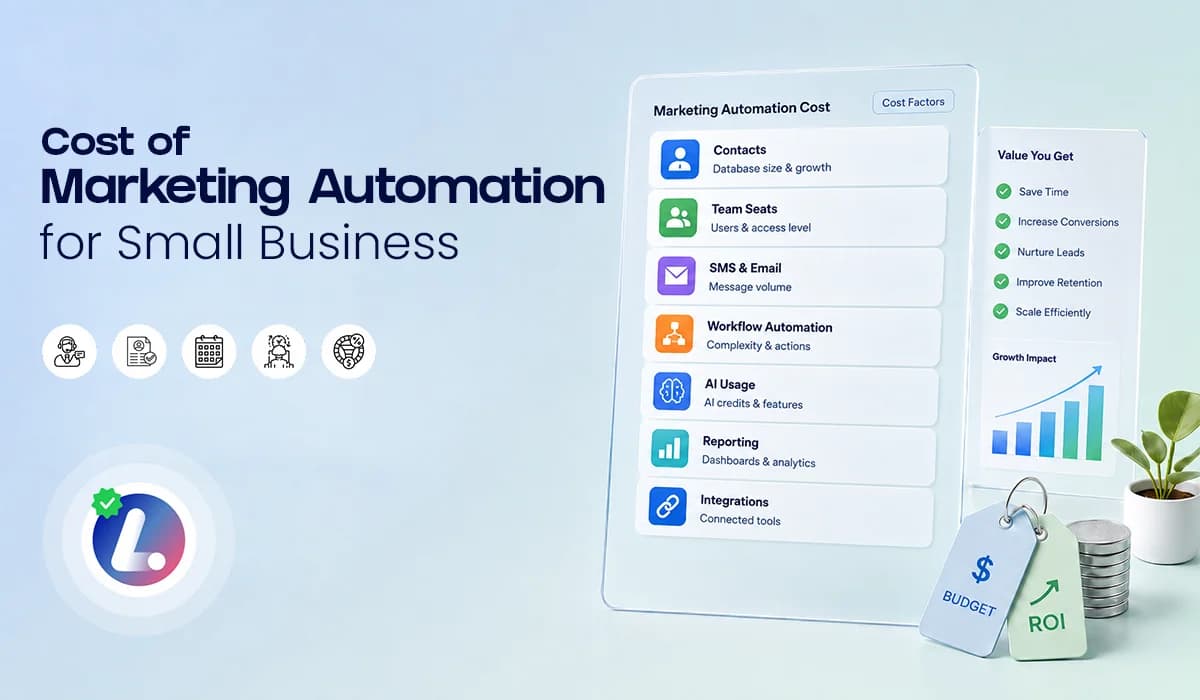

The cost of marketing automation for small business should be judged by one simple question: Is the system helping you capture, follow up, and convert more leads without creating more confusion for your team? Many business owners pay for automation tools but still lose leads.
Why? Because the tool is not aligned with the real follow up process. Leads still sit in different places. Messages still get missed. The team still forgets to follow up. The CRM pipeline is still unclear. And the owner still cannot see what is happening.
That is when marketing automation becomes an expense instead of a growth system. The right marketing automation CRM should help your business respond faster, organize conversations, automate follow up, and support your team with clear workflows.
This blog will help you understand what affects marketing automation pricing, what should be included, what hidden costs to watch for, and how to choose the right tier without overbuying. For the full follow up framework behind this topic, you can also read the main guide on Lead Follow Up Automation.
Why Automation Cost Should Be Tied To Follow Up Value
Marketing automation should not be evaluated only by software features. It should be evaluated by what it helps your business do better. If the system helps you respond to new leads faster, keep conversations organized, create team tasks, move leads through pipeline stages, and nurture unbooked leads, then the cost has a clear purpose.
If the system only stores contacts or sends occasional emails, it may not solve the real problem. For small businesses, the biggest value usually comes from improving the lead journey. A lead reaches out. The system replies. The team is notified. The conversation is tracked. The lead is moved to the right stage. Follow up continues if they do not respond. That is where lead follow up automation becomes useful. You are not just paying for software. You are paying for a more consistent process.
What Determines The Cost Of Marketing Automation
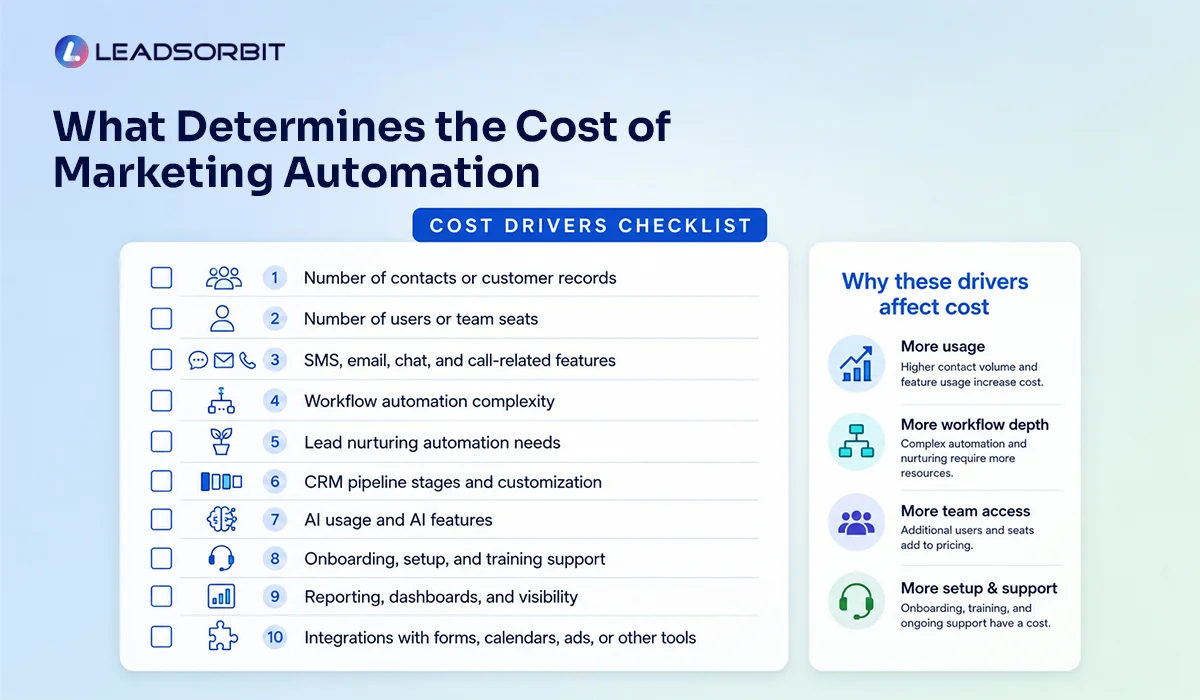
The cost can vary depending on what your business needs the system to handle. Some businesses need a simple follow up setup. Others need multiple users, more channels, AI features, advanced workflows, and deeper reporting. Instead of looking only at the monthly price, look at what drives the cost.
Cost Drivers Checklist:
- Number of contacts or customer records
- Number of users or team seats
- SMS, email, chat, and call related features
- Workflow automation complexity
- Lead nurturing automation needs
- CRM pipeline stages and customization
- AI usage, such as AI conversations or AI Employee features
- Onboarding, setup, and training support
- Reporting, dashboards, and visibility
- Integrations with forms, calendars, ads, or other tools
These drivers matter because two plans may look similar on the surface but support very different levels of execution.
A lower tier plan may be enough for a small team that only needs basic lead capture and follow up. A growing business may need more automation, more users, more AI support, and better pipeline control. The right plan should match the business process, not just the budget.
What A Good Marketing Automation Plan Should Include
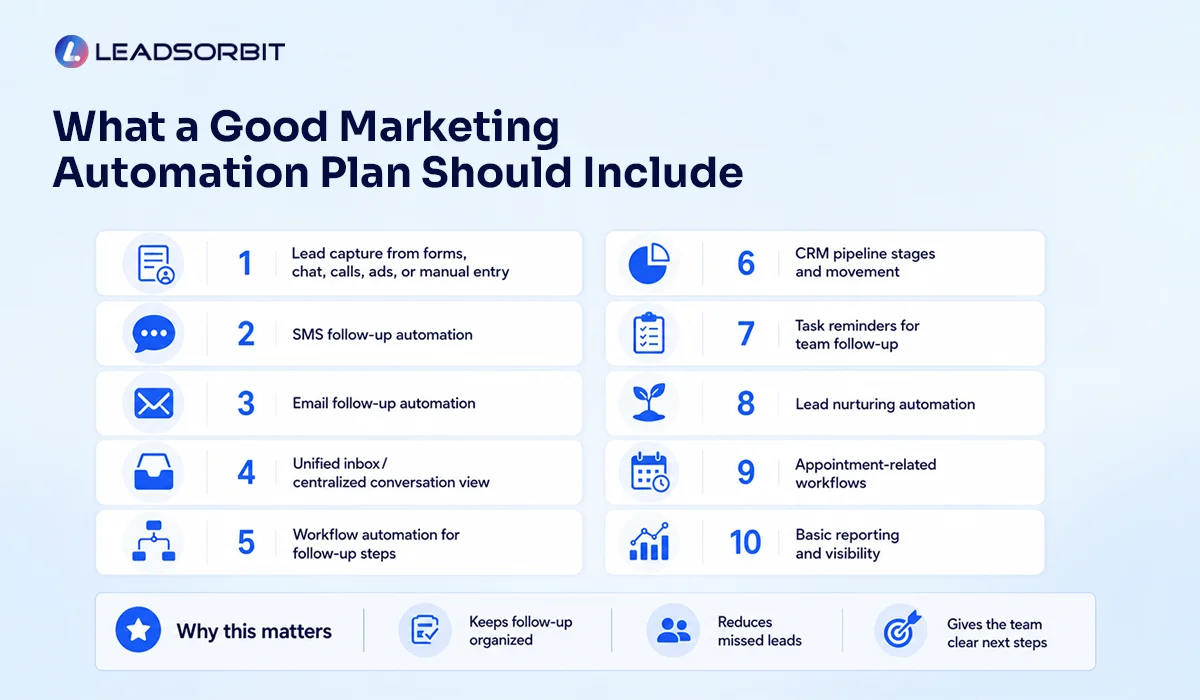
A good plan should help your business manage the core follow up journey. It should not only give you tools. It should give you a workable system. At minimum, a strong marketing automation CRM should support lead capture, messaging, workflows, pipeline stages, and team visibility.
What Should Be Included:
- Lead capture from forms, chat, calls, ads, or manual entry
- SMS follow up automation for fast first responses
- Email follow up automation for detailed communication
- A unified inbox or centralized conversation view
- Workflow automation for small business follow up steps
- CRM pipeline stages for lead status and movement
- Task reminders for team follow up
- Lead nurturing automation for unbooked or quiet leads
- Appointment related workflows where relevant
- Basic reporting so owners can see what needs attention
This is the practical value you should expect. If your system does not help your team know who needs follow up, what was already sent, and what should happen next, then the cost may not be justified. With Workflow AI, the goal is to automate the repeatable steps after a lead enters the CRM, so your team does not depend only on memory or manual reminders.
How To Choose The Right Tier
Choosing the right tier is not about starting with the biggest plan. It is about matching the plan to your stage of growth. A starter setup may be enough if your business needs basic lead capture, simple SMS and email follow up, and a clean CRM pipeline. A growth focused setup may be better if you have multiple lead sources, several team members, more follow up workflows, and a need for better conversation management.
A scale focused setup may be needed if your business has multiple locations, higher lead volume, more automation needs, AI support, and deeper reporting expectations. The key is to avoid both extremes. Do not underbuy to the point where the system cannot support your follow up process. Do not overbuy features your team is not ready to use.
The right tier should help your team take the next practical step. If you want to compare LEADSORBIT plan options, you can review plans here.
How To Evaluate ROI Without Overcomplicating It
You do not need a complicated financial model to decide whether automation is helping.
Start with a few simple questions:
- Are new leads receiving a faster first response?
- Are fewer leads being forgotten or left without a next step?
- Are more conversations turning into appointments or real sales opportunities?
These questions keep the focus on business value. Marketing automation is useful when it improves follow up consistency, reduces manual gaps, and helps your team act faster.
Once your process is stable, you can go deeper into reporting by lead source, campaign, pipeline stage, and booked appointments.
Chiropractic And Dental Mini Examples
For a chiropractic office, the cost of automation should be connected to how well the system handles new patient inquiries, missed calls, booking requests, reminders, and follow up for people who do not respond right away.
If the system helps the clinic reply faster and keep every new patient inquiry visible, the value is easier to understand. For a dental practice, automation cost should be evaluated around consultation requests, treatment questions, appointment booking links, and ongoing patient communication.
A dental team may not need a complicated system at the beginning, but they do need one that keeps lead conversations organized and prevents appointment opportunities from being missed.
LEADSORBIT supports follow up workflows for chiropractic businesses and dental practices, where lead capture, follow up, appointment movement, and communication all need to work together. The best plan is the one that fits how your business actually follows up.
How LEADSORBIT Fits Into Marketing Automation Cost
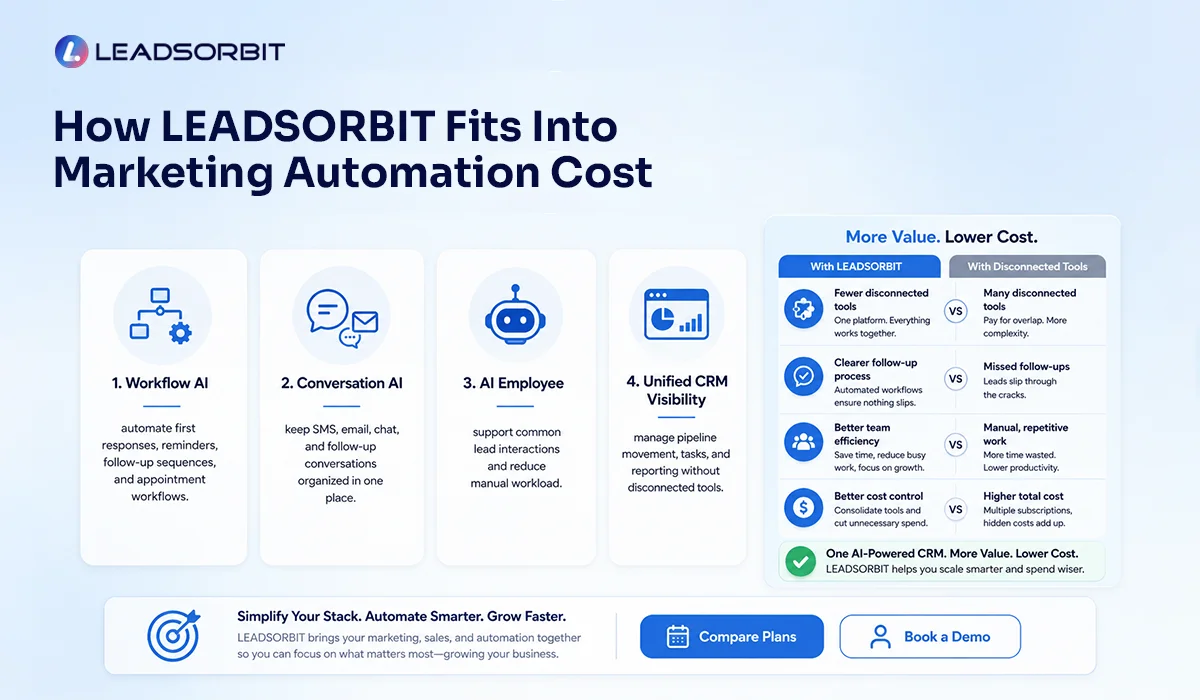
LEADSORBIT is designed to help small businesses manage lead capture, follow up, conversations, workflows, and pipeline visibility from one AI powered CRM. With Workflow AI, your business can automate first responses, task reminders, follow up sequences, appointment workflows, and lead nurturing automation.
With Conversation AI, your team can keep customer conversations organized across channels, so follow up does not get scattered. AI Employee can also support businesses that want AI powered help with responding, guiding, and managing common lead interactions.
Together, these tools help reduce the need for disconnected systems and give your team a clearer follow up process. To compare plans, visit our plans page. And if you want help choosing the right setup, you can book a demo here.
Try LEADSORBIT free for 14 days
FAQs
The cost depends on factors like contacts, users, messaging channels, workflow complexity, AI usage, onboarding, integrations, and reporting needs.
Final Thoughts
- The cost of marketing automation for small business should not be judged by price alone. It should be judged by fit, value, and execution. A good system helps your business capture leads, respond quickly, organize conversations, automate follow up, move leads through pipeline stages, and reduce missed opportunities.
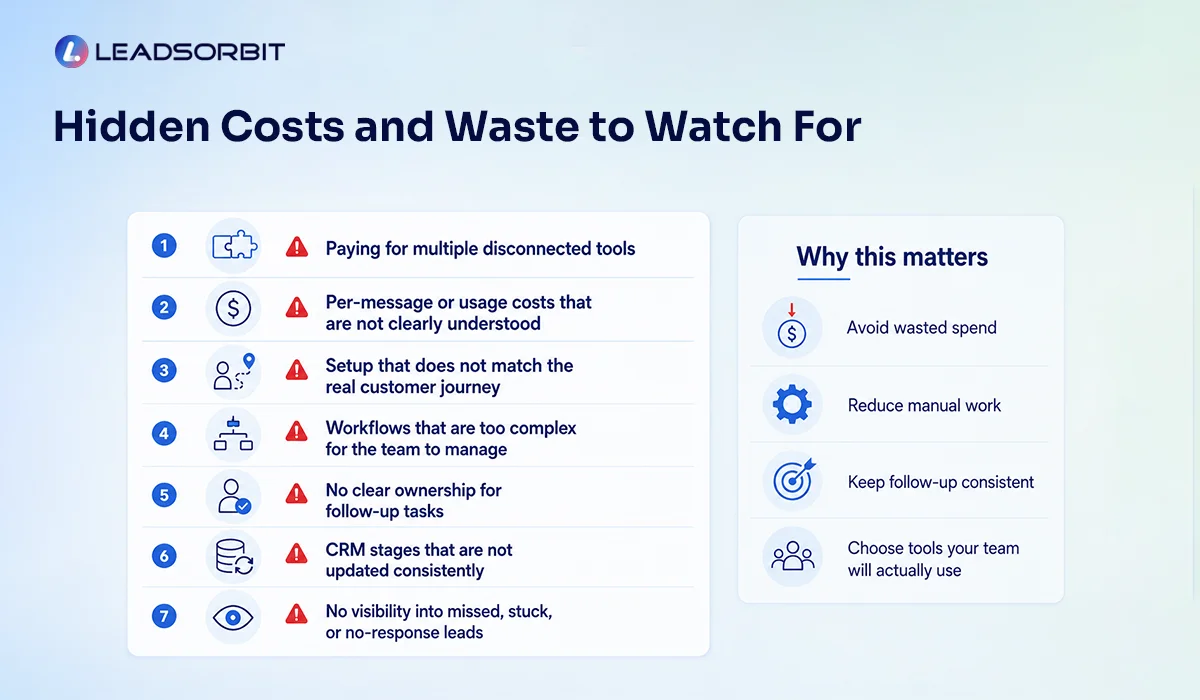
- A weak system adds more tools, more confusion, and more manual work. Before you choose a plan, look at what is included, what your team will actually use, and whether the system supports your real follow up process.
To review LEADSORBIT plan options, visit our plans page. To see how LEADSORBIT can support your lead follow up automation, workflows, and conversations, you can also book a demo here.

Start Your Free 14 Day Trial
Try LEADSORBIT and see how it captures missed calls, follows up instantly, and turns leads into booked appointments for your business.
Personal Message from Faisal Zulfiqar
Automation should not feel like another cost sitting on your business. It should help your team move faster, stay organized, and follow up with more confidence. Choose the plan that fits your process, your team, and your next stage of growth.