
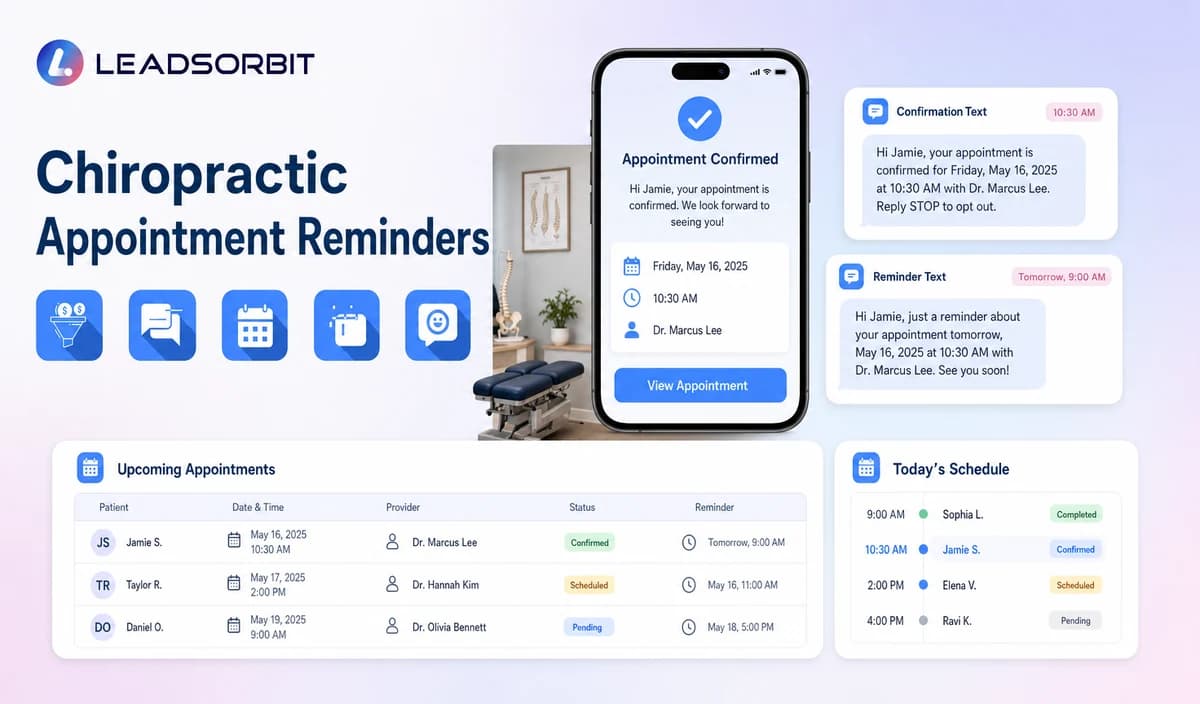

A good reminder does more than repeat the appointment time. It helps the patient confirm the visit, understand the location or arrival step, and change the appointment without starting a long phone exchange. For the clinic, the workflow should update the calendar, stop obsolete messages, and create staff visibility when the patient needs help.
This guide provides chiropractic-specific reminder timing and templates. The general framework belongs to appointment reminder texts, while the commercial chiropractic destination remains LEADSORBIT for chiropractic clinics.

Who This Guide Is For
- Chiropractic clinics that want consistent confirmation and reminder messages.
- Front-desk teams managing new-patient appointments, recurring visits, reschedules, and cancellations.
- Clinic owners who want reminder replies and calendar changes visible in the CRM.
- Teams that need different wording for new-patient, recurring, same-day, and missed-visit situations.
- Healthcare organizations configuring HIPAA-enabled administrative communication workflows.
Reminder Timing Should Match the Appointment Journey
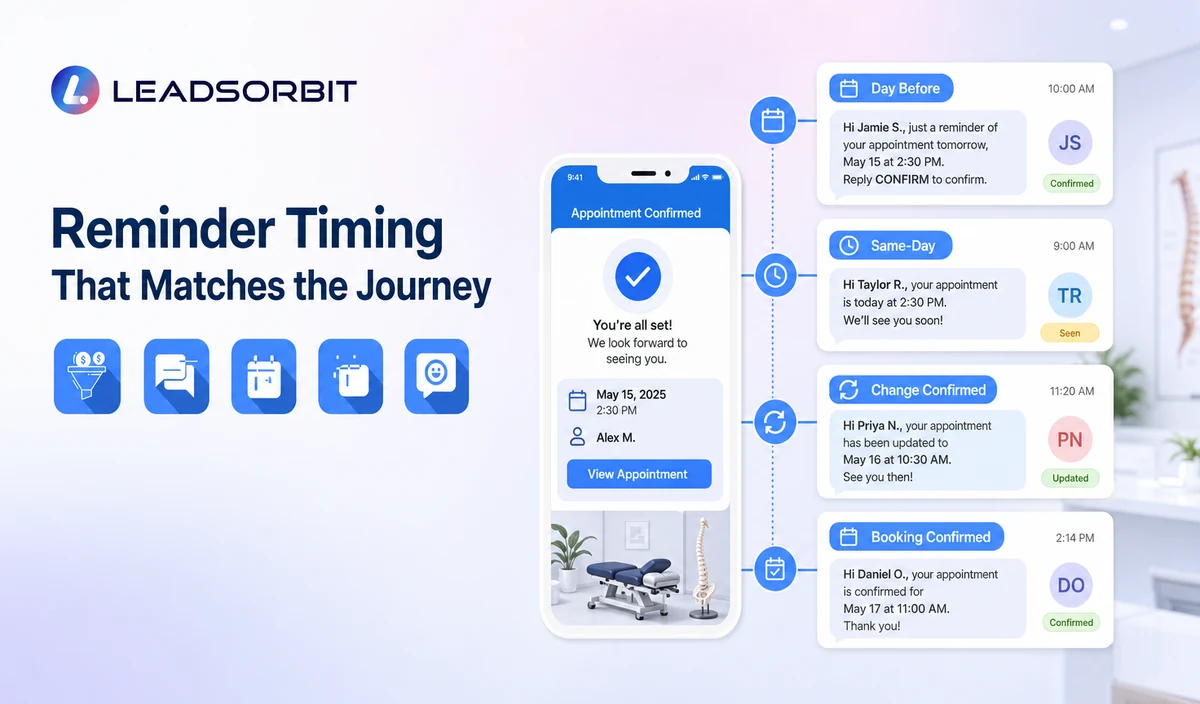
There is no universal reminder schedule for every clinic. The right timing depends on appointment type, booking lead time, office hours, communication consent, and the patient’s ability to act on the message.
| Reminder point | Main purpose | Useful content | Stop or change rule |
|---|---|---|---|
| Booking confirmation | Confirm that the appointment exists. | Clinic, date, time, location, approved change path. | Replace if the appointment changes. |
| Day-before reminder | Give the patient time to confirm or reschedule. | Date, time, location, confirmation option, approved arrival guidance. | Stop after cancellation or reschedule. |
| Same-day reminder | Reduce confusion close to the visit. | Time, location, concise arrival instruction, contact option. | Do not send after the appointment is cancelled. |
| Recurring-visit reminder | Confirm the next scheduled visit without overloading the message. | Date, time, location, change path. | Use the correct appointment record. |
| Change confirmation | Confirm the new status after reschedule or cancellation. | New time or cancellation confirmation and next approved step. | Suppress obsolete reminder sequence. |
| Missed-visit follow up | Acknowledge that the visit did not occur and offer a respectful next step. | Rescheduling or staff callback option. | Use the separate no show recovery workflow. |
Reminder Wording by Appointment Type
The core message can stay consistent, but the administrative guidance may change by appointment type. The clinic should use approved labels and avoid exposing sensitive details in the message.
| Appointment type | Useful reminder emphasis | Avoid |
|---|---|---|
| New-patient appointment | Location, approved arrival time, confirmation, and change path. | Symptoms, diagnosis, treatment promises, or detailed intake instructions. |
| Recurring appointment | Date, time, location, and simple reschedule option. | Repeating unnecessary personal or clinical information. |
| Staff-reviewed appointment | Clarify that the team confirmed the final time. | Implying the original request was automatically booked. |
| Multi-location appointment | State the correct location and directions link. | Assuming the patient remembers which location was selected. |
| Rescheduled appointment | State the new valid time and that it replaces the earlier appointment. | Allowing the old reminder sequence to continue. |
Booking Confirmation Template
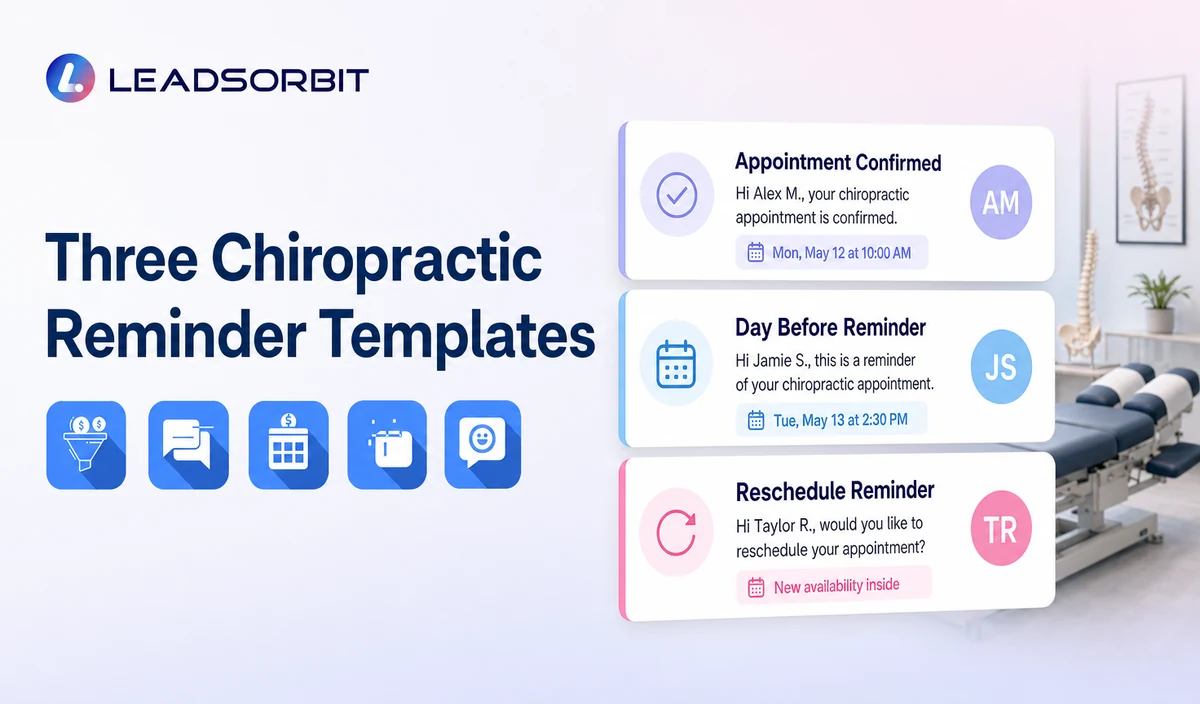
Day-Before Reminder Templates
New-Patient Appointment
Recurring Appointment
Same-Day Reminder Template
Rescheduling and Cancellation Templates
Reschedule Requested
Reschedule Confirmed
Cancellation Confirmed
Arrival Guidance: Keep It Useful and Minimal
Arrival guidance may include parking, entrance, office location, approved check in timing, or what administrative documents the clinic asks the patient to bring. Avoid placing clinical details, treatment instructions, or sensitive information in a general reminder.
- Use the exact clinic name and location.
- State an approved arrival time only when needed.
- Provide a simple directions or parking link.
- Explain the confirmation or change action.
- Keep the message readable on a phone.
- Use a staff-help option for exceptions.
A Practical Reminder Workflow
| Stage | Workflow action | Staff responsibility | Stop condition |
|---|---|---|---|
| 1. Valid booking | Create the correct reminder sequence from the approved appointment record. | Review appointment type, patient contact preference, and exceptions. | Do not start reminders for an unconfirmed request. |
| 2. Confirmation | Send the approved booking confirmation. | Handle failed delivery or unclear replies. | Stop obsolete messages after a change. |
| 3. Day-before reminder | Send the appropriate new-patient or recurring template. | Review reschedule/cancel requests. | Stop after cancellation, reschedule, opt out, or staff takeover. |
| 4. Same-day reminder | Send concise timing and location guidance when approved. | Monitor HELP or exception replies. | Do not send after the scheduled time or invalid status. |
| 5. Reply handling | Interpret approved actions such as confirm, reschedule, cancel, or help. | Own ambiguous or sensitive replies. | Move complex requests to staff. |
| 6. Status update | Update calendar, CRM status, task, and next message. | Correct conflicts and duplicate sequences. | Suppress the old workflow after a new valid status. |
| 7. Missed visit | Move to the separate recovery process where appropriate. | Apply respectful rescheduling and stop rules. | Do not keep sending pre-visit reminders. |
How Reminder Replies Should Update the Workflow
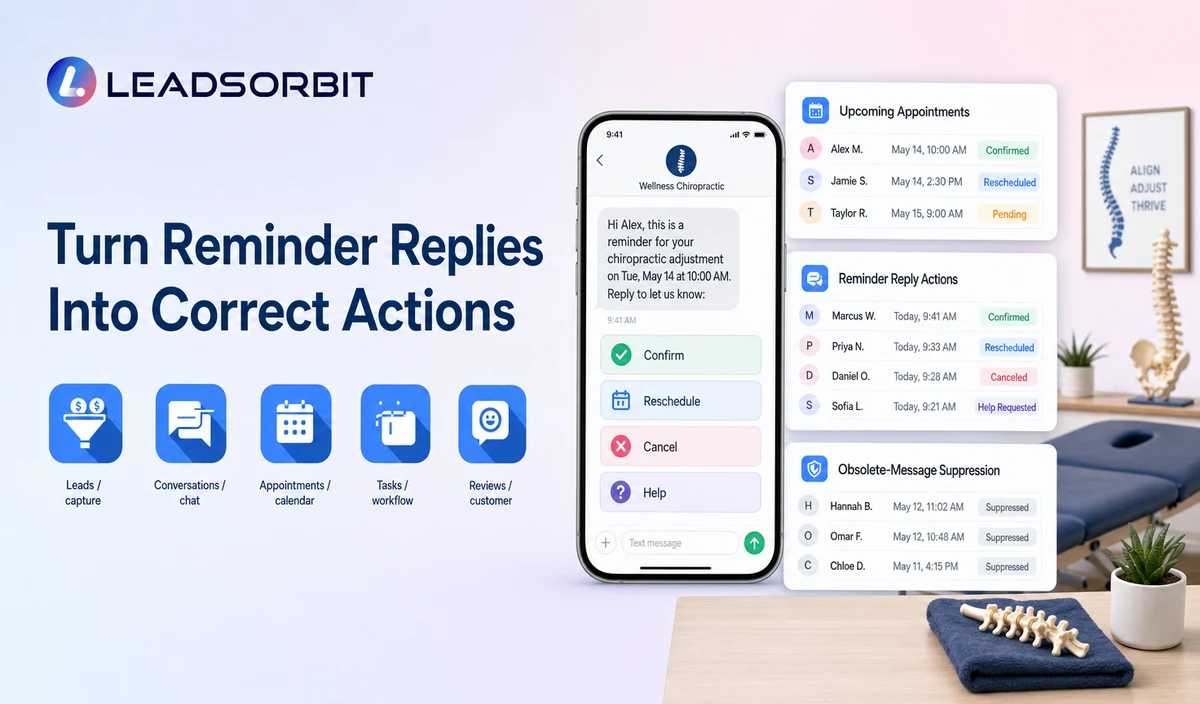
A reminder is only useful when the reply changes the appointment or creates a clear staff task. The system should not collect a response and leave the calendar unchanged.
| Patient reply | Required workflow action | Human review |
|---|---|---|
| Confirm | Update the approved confirmation status and stop duplicate confirmation prompts. | Review only when the status conflicts with the calendar. |
| Reschedule | Open the approved change path or create a scheduling task. | Required for unavailable times, provider exceptions, or failed booking links. |
| Cancel | Update the cancellation status and stop all obsolete reminders. | Review when the clinic has a special cancellation process. |
| HELP or question | Create a visible staff task with the existing appointment context. | Required for unclear, sensitive, or complex requests. |
| Opt out | Stop applicable automated messages and retain the opt-out status. | Review only if another permitted communication path is needed. |
| Unexpected clinical detail | Do not analyze or continue routine automation. | Move to the approved human process and avoid unnecessary repetition. |
Reply handling should update the calendar, CRM status, conversation history, and task ownership together. When those systems are disconnected, the patient may receive an obsolete reminder even after contacting the clinic.
Consent, Opt-Outs, and PHI Context
The FCC’s TCPA guidance discusses consent and revocation requirements for certain automated communications. Clinics should verify their exact message type, consent source, technology, and jurisdiction with qualified advisers.
LEADSORBIT supports HIPAA-compliant administrative workflows for eligible healthcare organizations through HIPAA-enabled HighLevel subaccounts. Compliant use depends on maintaining the active HIPAA package, applicable agreements, approved account configuration, user permissions, integrations, retention settings, and the healthcare organization’s own procedures.
Reminder data—including names, dates, times, locations, appointment status, and replies—may be PHI depending on context. Use minimum contact and operational information, review each integration separately, and avoid unnecessary clinical details in messages, appointment titles, shared calendars, or workflow notes.
Common Reminder Mistakes
- Sending reminders from an outdated or incorrect calendar record.
- Treating an appointment request as a confirmed appointment.
- Using the same message for new-patient and recurring visits when instructions differ.
- Continuing obsolete reminders after rescheduling or cancellation.
- Including too much sensitive or clinical information.
- Using a reply option the system or staff cannot support.
- Failing to assign HELP, reschedule, cancellation, or failed-delivery replies.
- Sending promotional content inside an operational reminder without proper review.
- Promising a numeric reduction in no-shows without evidence.
Reminder Setup Checklist
- Define valid appointment statuses and appointment types.
- Confirm calendar source, time zone, location, provider, and duration.
- Approve confirmation, day-before, same day, recurring, reschedule, and cancellation templates.
- Use only supported reply actions.
- Assign staff owners for HELP, failed delivery, reschedule, and cancellation replies.
- Stop outdated sequences after appointment changes.
- Confirm consent, opt out, permissions, retention, and integration requirements.
- Avoid unnecessary clinical details in messages and calendar fields.
- Test daylight-saving changes, time zones, duplicate bookings, failed messages, and staff takeover.
- Review patient and staff feedback after launch.
See the Reminder Workflow With Your Clinic’s Timing
Book a Demo to map your confirmation, day-before and same day reminders, reply actions, rescheduling, cancellation, staff tasks, and stop rules inside LEADSORBIT.
What to Measure
- Confirmations received through the approved action.
- Failed or undelivered reminders.
- Reschedule and cancellation requests routed correctly.
- Obsolete messages suppressed after changes.
- HELP or exception replies without an owner.
- Duplicate reminder sequences.
- Opt-outs and complaints.
- Calendar and CRM status consistency.
- Staff feedback about manual reminder work.
How LEADSORBIT Supports Chiropractic Appointment Reminders
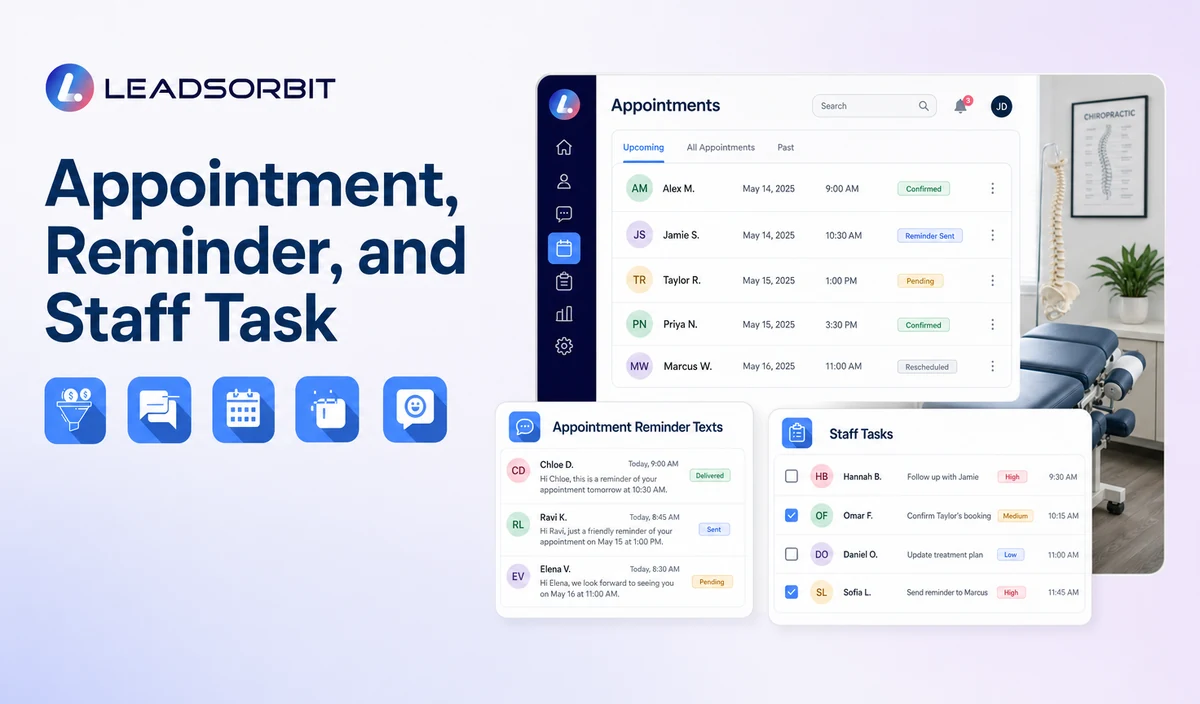
LEADSORBIT’s AI powered CRM can connect appointment status, reminders, replies, rescheduling, tasks, and conversation history.
AI Appointment: supports booking, calendar connection, confirmations, reminders, rescheduling, and cancellation.
Workflow AI: supports timing, conditions, messages, tasks, and stop rules.
Conversation AI: supports reply visibility, routing, human takeover, and CRM synchronization.
CRM records and tasks: provide context, owner, next action, and status visibility.
Exact reminder timing, reply keywords, channels, calendar behavior, permissions, recording/transcription, retention, and integrations must be confirmed during configuration.
Try LEADSORBIT free for 14 days
Frequently Asked Questions
Include the clinic name, valid appointment date and time, location, approved confirmation or change action, and only the minimum arrival information needed.
Final Thoughts
Chiropractic appointment reminders should make the next step obvious: confirm, arrive, reschedule, cancel, or ask for help. The workflow should use accurate appointment data and stop immediately when the status changes.
Book a Demo to see how LEADSORBIT can connect chiropractic bookings, reminders, reply handling, rescheduling, cancellation, and staff ownership.

Start Your Free 14 Day Trial
Try LEADSORBIT and see how it captures missed calls, follows up instantly, and turns leads into booked appointments for your business.