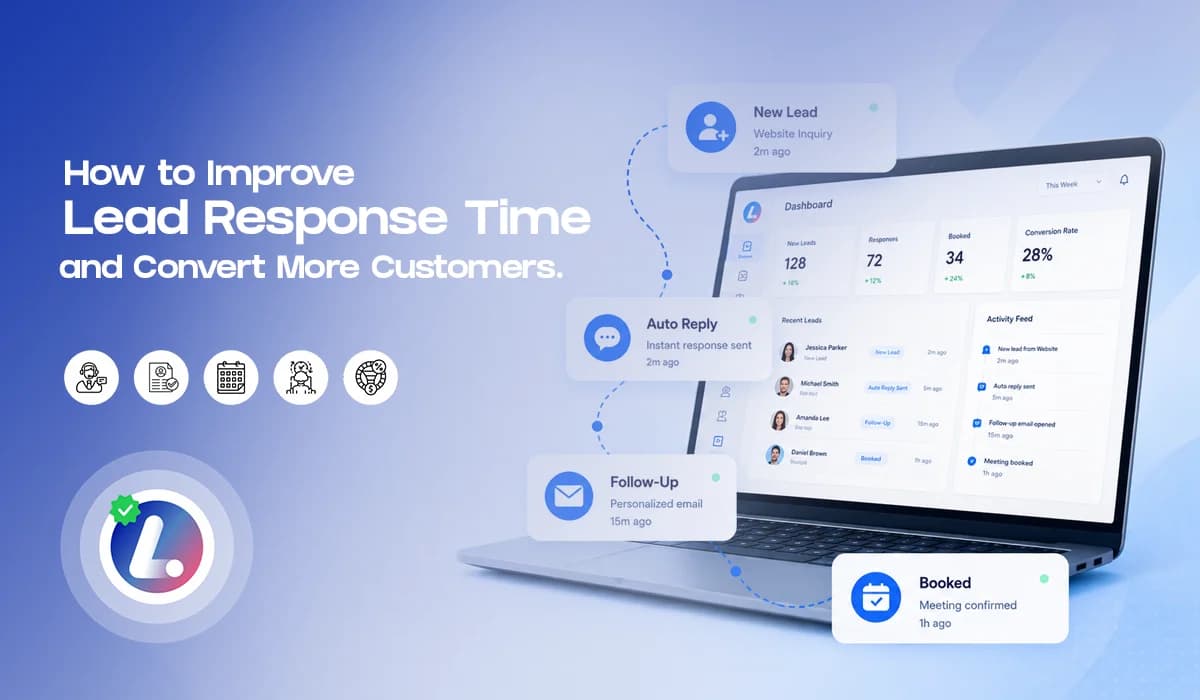

Lead response time for small businesses is one of the simplest things to improve, but it is also one of the easiest things to ignore. A new lead comes in. The team is helping customers. The front desk is on another call. The owner is in a meeting. The inquiry is seen, but the reply is delayed.
By the time someone follows up, the lead may already be distracted, comparing options, or speaking with another business. This is why speed to lead matters.
For small businesses, better response time does not always require a bigger team. It requires a clear lead follow up strategy, simple timing rules, and the right automation to support your team when they are busy.
This guide will help you understand what good follow up timing looks like, how to create a simple response policy, and how SMS, email, and CRM workflows can help you reply faster without sounding robotic. For the full system behind this topic, you can also read the main pillar guide on Lead Follow Up Automation.
Why Lead Response Time Matters
When someone reaches out to your business, they are usually in an active decision moment. They may need an appointment. They may have a question. They may be comparing providers. They may be ready to book but need one small push. If your business responds quickly, the lead feels acknowledged. If your business responds late, the lead may feel ignored. This is especially important for appointment based businesses.
A chiropractic clinic may receive a new patient inquiry while the front desk is checking in patients. A dental practice may receive a treatment question after hours. In both cases, the lead does not always know whether anyone received their request. A fast first response removes that uncertainty. The goal is not to close everything instantly. The goal is to open the conversation while the lead is still interested.
Slow Follow Up Is Usually A System Problem
Many small business owners assume slow follow up happens because the team is careless. Most of the time, that is not true. The team is usually busy. They are answering calls, handling customers, managing appointments, solving problems, and switching between different tools.
Slow follow up happens when there is no clear system. Leads may be coming from forms, calls, chat, ads, email, and Google. If those leads are not organized in one place, someone has to manually check every source. That is where delays happen. A marketing automation CRM helps because it gives your business one place to capture, view, and respond to inquiries. But the CRM alone is not enough. You also need simple rules for what happens when a lead comes in.
A Simple Response Timing Rule
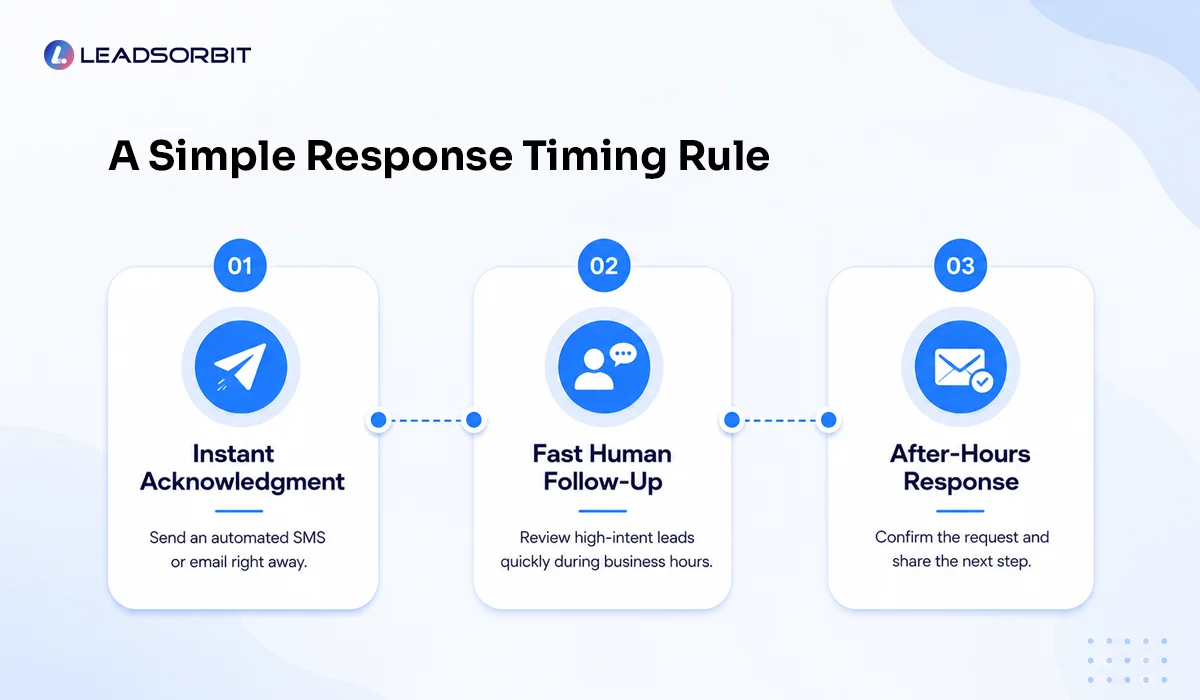
Every business should have a basic response timing rule. It does not need to be complicated.
Here is the practical way to think about it:
- New leads should receive an instant automated acknowledgment.
- High intent leads should get personal follow up as quickly as possible.
- After hours leads should receive a helpful message before the next business day.
This simple rule gives your team clarity. The automated message handles the first response. The team handles the real conversation. The CRM keeps everything organized.
For example, if someone submits a dental appointment request at 9:00 PM, they should not have to wait until morning to know their message was received. An automated response can confirm the request and share the next step.
If someone contacts a chiropractic office during a busy hour, the same logic applies. The lead should get a quick reply, even if the front desk cannot call immediately. That is the practical side of speed to lead.
What The First Response Should Do
The first response should not try to explain everything. It should do three things clearly:
- Confirm that the inquiry was received.
- Make the lead feel acknowledged.
- Offer one easy next step.
That is enough. Many businesses make the first response too long. They add too many details, too many links, or too many questions. This can slow down the conversation. A better first response is short and helpful.
For example:

This message works because it is simple. It confirms the request and invites action. With Conversation AI, your business can respond to inquiries faster and keep conversations organized across channels. That means your team does not have to search through different inboxes just to see who needs attention.
Response SLA Mini Policy For Small Businesses
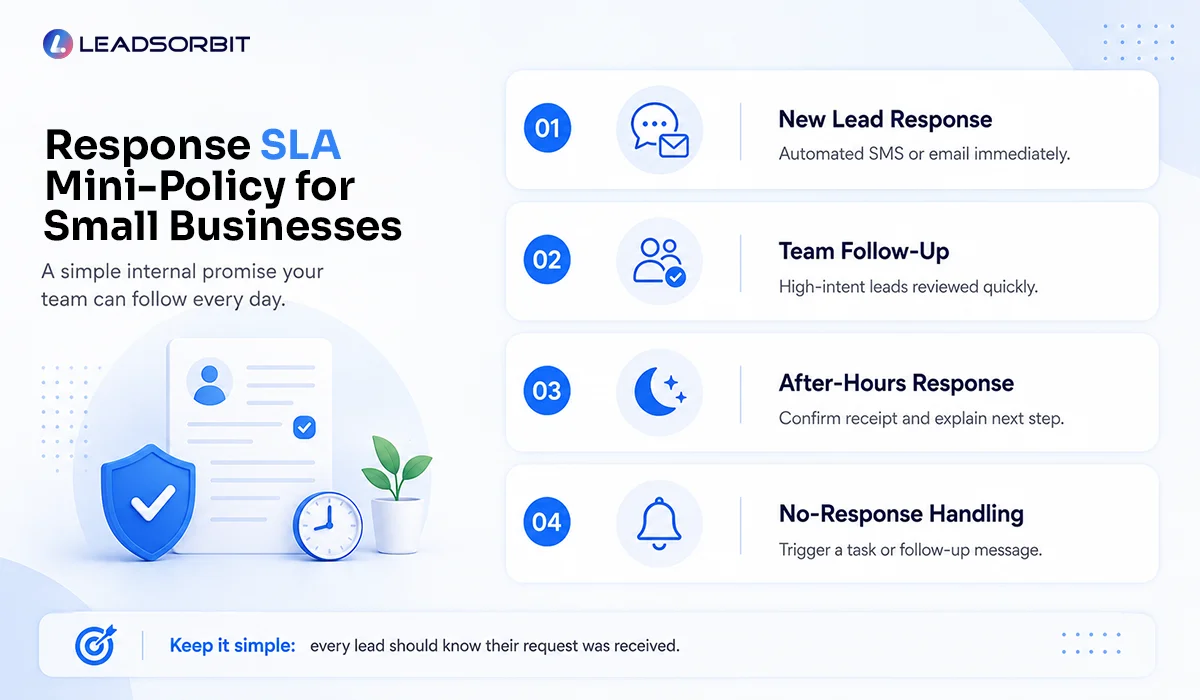
For a small business, a simple response SLA mini policy may look like this:
1. New Lead Response
A response SLA is simply an internal promise for how quickly your team should respond. You do not need to make it complicated or corporate. For a small business, a simple response SLA mini policy may look like this:
2. Team Follow Up
High intent leads should be reviewed by the team as soon as possible during business hours, especially if they asked about pricing, availability, booking, or service details.
3. After Hours Response
After hours leads should receive an automated message confirming that the request was received and explaining what will happen next.
4. No Response Handling
If the lead does not reply, the CRM should trigger a follow up task or message instead of leaving the lead untouched. This kind of policy helps your team avoid confusion. Everyone knows what should happen first, what requires human attention, and what automation should handle.
First Response Templates
Here are simple first response templates you can use as a starting point. Do not overcomplicate them. The first message should feel natural and easy to answer.
SMS Template For A New Lead
SMS Template For A Missed Inquiry
Email Template For A New Inquiry
Hi {{first_name}},
Thank you for reaching out to {{business_name}}.
We received your request and our team will be happy to help. You can reply to this email with your question, or use the link below to choose a time that works for you.
{{booking_link}}
Thank you,
{{business_name}} Team
These templates are intentionally simple.
The purpose is not to replace your full follow up process. The purpose is to make sure the lead gets a fast and helpful first response.
Try LEADSORBIT free for 14 days
What To Do When Your Team Is Busy
This is where many small businesses struggle. They know fast follow up matters, but they do not always have someone available to respond immediately. The answer is not to expect your team to do everything manually. The better approach is to split the responsibility:
- Automation handles the acknowledgment.
- Your team handles the real conversation.
- Your CRM tracks the next step.
For example, Workflow AI can send the first SMS, create a team task, notify the right person, and move the lead into the correct pipeline stage. This means a lead is not ignored just because your team is busy. It also gives your team a clear place to start when they become available.
A simple workflow like this can be enough to improve response time without adding more pressure to your staff. To see how this can work inside LEADSORBIT, you can Book a Demo.
Chiropractic And Dental Examples
Lead response time matters in every service business, but it is especially important when the customer is trying to book an appointment. For a chiropractic office, a new patient may contact the clinic because they are in discomfort and want to know when they can come in. If the clinic replies late, that person may keep searching.
For a dental practice, a lead may ask about availability, insurance, treatment options, or consultation timing. If the first response is delayed, the lead may lose confidence or move to another provider. This does not mean the team has to answer every question instantly. It means the business should acknowledge the inquiry quickly and make the next step clear.
LEADSORBIT supports this type of follow up process for both chiropractic businesses and dental practices, where lead capture, appointment requests, reminders, and conversations all need to work together.
What To Track Without Making Reporting Complicated
You do not need a large reporting system to start improving lead response time.
Start with a few simple checks:
- How quickly new leads receive the first response
- How many leads are still waiting for team follow up
- How many leads book after receiving a fast reply
These numbers help you see whether your process is improving. Once your response system is consistent, you can go deeper into pipeline reporting, conversion tracking, and campaign level performance.
But in the beginning, focus on one question: Are new leads getting a fast and clear first response?
How LEADSORBIT Helps Improve Lead Response Time
LEADSORBIT helps small businesses respond faster by connecting conversations, workflows, and CRM activity in one system.
With Conversation AI, your team can manage inquiries across SMS, email, chat, calls, and other channels from a centralized conversation view. This helps reduce missed messages and gives your team a clearer picture of each lead.
With Workflow AI, you can automate the first response, create team tasks, send follow up messages, and move leads through your process based on what happens next.
Together, these tools help your business respond quickly without depending only on manual effort. The result is a smoother experience for your leads and a more organized process for your team.
FAQs
Lead response time is the amount of time it takes your business to respond after a new lead contacts you through a form, call, chat, ad, email, or other channel.
Final Thoughts
Here are the main takeaways:
- Lead response time is one of the simplest parts of follow up to improve.
- You do not need to rebuild your entire business process to start.
- You need a clear first response, a simple timing rule, and a CRM workflow that supports your team when they are busy.
- Start with one goal: make sure every new lead receives a fast, helpful reply.
- From there, you can improve your follow up strategy, add better timing rules, and build stronger automation around your team’s daily process.
To see how LEADSORBIT can help your business respond faster, manage conversations, and automate follow up workflows, start with the most practical step:

Start Your Free 14 Day Trial
Try LEADSORBIT and see how it captures missed calls, follows up instantly, and turns leads into booked appointments for your business.
Personal Message from Faisal Zulfiqar
A fast response does not mean your team has to be under pressure all day. It means your system should support them. When automation handles the first reply and your team handles the relationship, the lead experience becomes much better.